 English
 中文简体
 русский
 عربى


Used as a disconnector switch in ring main units, ensuring reliable switching.
See Details
What Type of Circuit Breaker Do I Need? How to Match Rating and Trip Unit
Content
- 1 Check the Load First, Then the Breaker
- 2 Frame Size Sets the Ceiling, the Trip Unit Sets the Behaviour
- 3 B, C or D: Choosing the Trip Curve
- 4 MCB, MCCB or ACB: Where Your Numbers Land
- 5 When Accessories Change the Type You Order
- 6 Inside the Case: What Produces the kA Rating
- 7 Above 1600 A: The Current Path Matters as Much as the Breaker
- 8 Frequently Asked Questions
- 8.1 What type of circuit breaker do I need for a motor?
- 8.2 What is the difference between MCB, MCCB and ACB?
- 8.3 How do I work out what size circuit breaker I need?
- 8.4 What breaking capacity in kA do I need?
- 8.5 How do I choose between B, C and D trip curves?
- 8.6 Do I need a shunt trip or an auxiliary contact?
- 9 From Selection to Sourcing
A 400 A feeder breaker and a 16 A lighting breaker sit on the same catalog page, look almost identical in a photograph, and cannot be swapped. The type you need is decided by six things: system voltage, continuous load current, trip characteristic, pole count, short-circuit breaking capacity, and what the circuit must do beyond carrying current, such as tripping remotely, reporting status or being pulled out for service. Get those six right and the catalog narrows itself. Get one wrong and the result is either a breaker that never trips or one that trips every time a compressor starts.
What follows is the order in which experienced panel builders check them, working backwards from the load to the part number.
Check the Load First, Then the Breaker
Breaker selection begins with a measurement, not a catalog. Add up the continuous current of everything the circuit will carry, then apply the 1.25 factor that wiring codes use for continuous duty. That margin exists because terminals, cable and the breaker itself all run warmer at full load than a paper calculation suggests. Ambient temperature matters just as much: a breaker inside a hot enclosure carries less than its nameplate rating, and manufacturers publish derating tables for exactly that reason.
Once the current, the voltage and the prospective fault current at the point of installation are known, the frame size and the trip unit mostly choose themselves.
| Check | What to establish | How it changes the answer |
|---|---|---|
| System voltage | 230 V single phase, 400/415 V three phase, 690 V, or DC | Fixes the series, the pole count, and whether a DC-rated device is required |
| Continuous current | Calculated or measured load, multiplied by 1.25 for continuous duty | Sets the frame size, from 16 A miniature devices up to 6300 A air breakers |
| Trip characteristic | Type B, C or D, or an electronic long-time and short-time setting | Decides whether motor inrush trips the breaker on start |
| Poles | 1P, 2P, 3P or 4P, and whether the neutral must be switched | Affects isolation, residual-current protection and enclosure space |
| Breaking capacity | Prospective short-circuit current at the installation point | Roughly 6 kA in a domestic board, 36 to 65 kA in a plant |
| Function beyond switching | Remote trip, status signal, withdrawal for service | Moves the selection from a plain MCB to an MCCB with accessories |
Frame Size Sets the Ceiling, the Trip Unit Sets the Behaviour
Frame size is the moulded case and the current path inside it: contacts, terminals and arc chute. It defines the highest current the breaker is built to carry. A 250 AF breaker does not have to be ordered at 250 A. The same case accepts trip units from roughly 100 A upwards, and a 400 AF case is often specified where the load is smaller, simply because the fault level or the cable cross-section demands the larger body.
Bar length shows the continuous current ceiling of each common frame size.
Two practical points catch people out. First, a breaker with a 250 A trip unit inside a 400 AF case is not a 400 A breaker, and that distinction matters during inspection. Second, if the breaker feeds a cable or busbar rated below the frame rating, the conductor becomes the limiting component in the circuit, which is a design decision rather than a breaker selection.
B, C or D: Choosing the Trip Curve
Every thermal-magnetic breaker has two sensing elements. The thermal element handles overloads with an inverse-time response, and the magnetic element handles short circuits almost instantly. The instantaneous part is what separates the curve types. Under IEC 60898-1 conventions, Type B trips magnetically between 3 and 5 times rated current, Type C between 5 and 10, and Type D between 10 and 20.
Magnetic trip thresholds by curve type, expressed as multiples of rated current.
The rule is to pick the lowest magnetic threshold that still rides through normal inrush. Motors draw several times full-load current for a fraction of a second during start, which is why motor circuits usually land on Type D or an electronic trip unit with an adjustable short-time delay. Transformers, capacitor banks and welding equipment have similar profiles. Choose too low and the breaker trips on every start. Choose too high and a genuine short circuit may be cleared slowly, or lose selectivity against the device upstream.
MCB, MCCB or ACB: Where Your Numbers Land
Once current and fault level are known, the family usually follows. Miniature circuit breakers cover roughly 0.5 A to 125 A with breaking capacities around 6 to 10 kA, fixed thermal-magnetic trips and a modest accessory range. Moulded case circuit breakers span roughly 16 A to 1600 A with breaking capacities from 16 kA to over 100 kA, adjustable trip units, and a wide accessory set. Air circuit breakers take over from about 630 A to 6300 A, use air-insulated arc chutes and are normally draw-out, which is why they dominate main incoming sections where maintenance without a full shutdown is expected.
Relative capability profile of the three breaker families, from miniature to air circuit breakers.
A simple way to read the chart: if the load is 250 A on a 400 V switchboard with a 36 kA fault level, an MCCB answers the question. If it is a 2500 A incoming section that must be racked out for maintenance, the answer is an ACB.
When Accessories Change the Type You Order
Two breakers with the same frame and the same rating can carry different product codes because of what is fitted inside and around them. A shunt trip opens the breaker on an external signal, which is how fire alarm interfaces and emergency stop circuits work. An auxiliary contact reports open or closed status back to a control system. An alarm contact indicates that the breaker tripped on a fault rather than being switched off by hand. An undervoltage release drops the breaker out when supply voltage collapses. Motor operators, plug-in devices and withdrawable units handle the mechanical side of the same problem.
Specify these at the ordering stage. Retro-fitting a trip unit or a contact block into an energised switchboard is slower and riskier than choosing the right configuration up front. If you are unsure which accessory belongs in which control scheme, our complete guide to MCCB accessories explains each one against the circuit it serves.
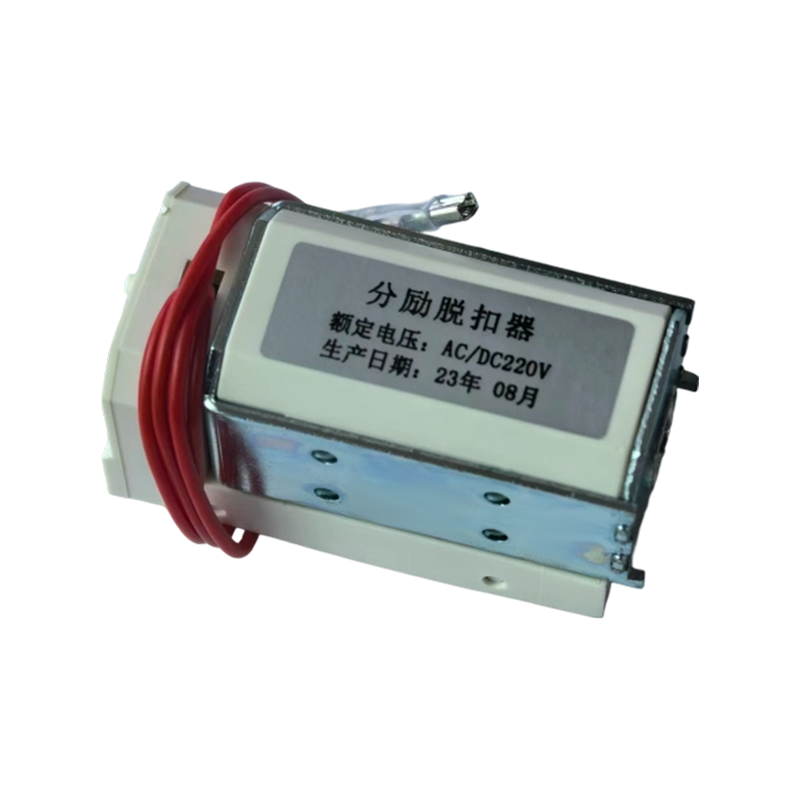 MCCB Shunt Trip Unit ManufacturerA shunt trip unit specifically designed for (1600A-6300A) low-voltage frame circuit breakers, used to provide the circuit breaker with a fast tripping function.View Product →
Inside the Case: What Produces the kA Rating
The number that matters most for safety, the rated short-circuit breaking capacity, is not a property of the plastic case. It comes from the contact and arc-quenching system inside: the moving and stationary contact assemblies, the arc chute that splits and cools the arc, and the insulated base frame that holds everything in alignment. A breaker rated 50 kA and one rated 25 kA can share the same external dimensions while using completely different internal parts.
Isometric cutaway: the internal assemblies that set a breaker's breaking capacity and service life.
Contact assemblies are consumables in a practical sense. Every interruption erodes a little contact material, and after heavy fault clearing the contact resistance and contact force are no longer what they were at the factory. Breaker manufacturers buy these parts in matched sets, and the same principle applies to repair work: moving contact, stationary contact and arc chute should be replaced together rather than one at a time.
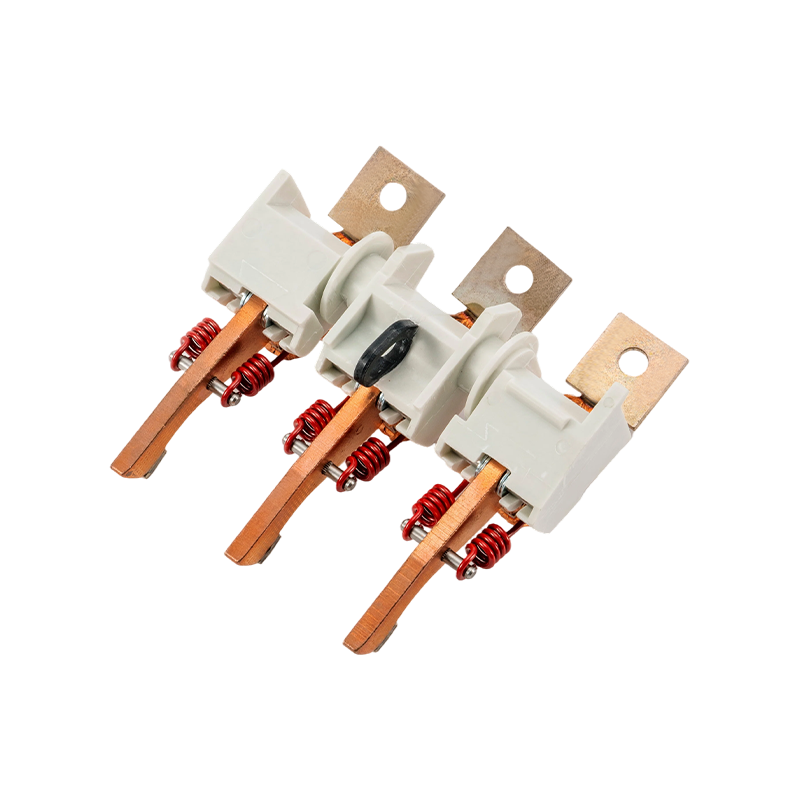 KYM-125/250/400/630/800 Molded Case Moving Contact AssemblyKYM-125/250/400/630/800 Molded Case Moving Contact AssemblyView Product →
Above 1600 A: The Current Path Matters as Much as the Breaker
On large frames the breaker is only part of the current path. Busbars, terminal blocks and plug-in contacts carry the same current and are subject to the same temperature-rise limits. A joint bolted to the wrong torque, or a copper bar with the wrong plating, becomes the hottest point in the switchboard long before the breaker itself complains. Matching the copper parts to the frame's continuous and short-time ratings is therefore part of breaker selection, not an afterthought. This is the reason ACB copper busbars, moving contact systems and array contactors are specified alongside the breaker rather than sourced separately afterwards.
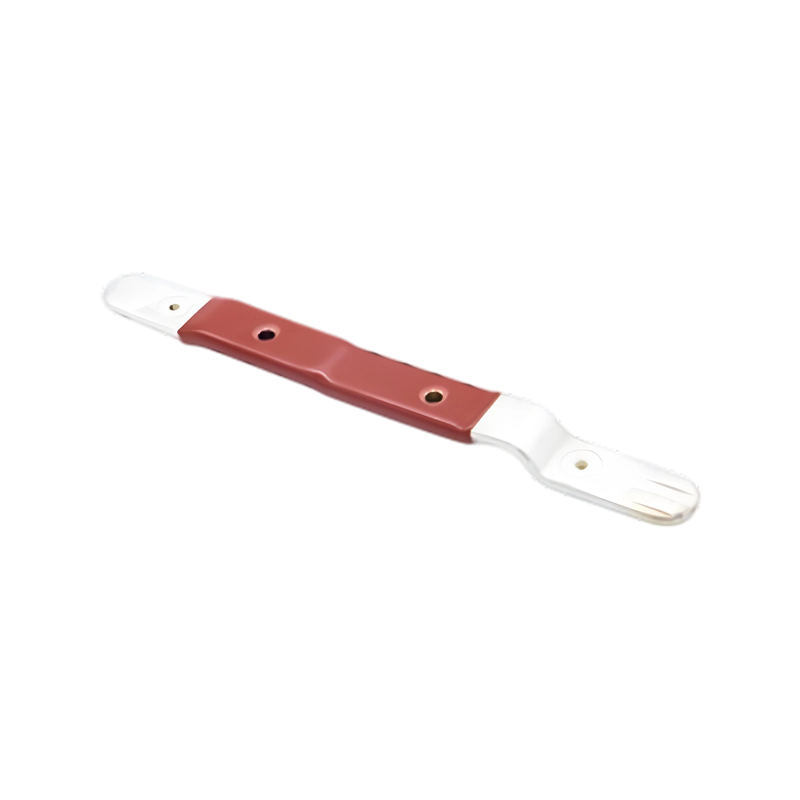
 Copper Bars and Copper BarsStamped Copper Busbar P09130-004-001View Product →
Frequently Asked Questions
What type of circuit breaker do I need for a motor?
A circuit breaker that will not trip on starting current. In practice that means a Type D characteristic or an MCCB with an adjustable magnetic setting, with overload protection handled by a separate thermal relay or motor protection device.
What is the difference between MCB, MCCB and ACB?
Current range, breaking capacity and adjustability. MCBs cover small final circuits with fixed trips, MCCBs cover distribution from about 16 A to 1600 A with adjustable trips and many accessories, and ACBs handle large incoming sections with draw-out construction.
How do I work out what size circuit breaker I need?
Calculate the load current, apply the 1.25 continuous-duty factor, then choose the next standard frame size above that figure. Confirm voltage, pole count and breaking capacity afterwards. Never size a breaker from the cable alone.
What breaking capacity in kA do I need?
At least the prospective short-circuit current at the point of installation, calculated by the designer. Domestic boards commonly sit near 6 kA, while industrial switchboards frequently require 36 kA, 50 kA or 65 kA.
How do I choose between B, C and D trip curves?
Type B suits resistive loads and long cable runs, Type C covers general distribution and mixed loads, and Type D is for motors, transformers and welding equipment with high inrush current.
Do I need a shunt trip or an auxiliary contact?
A shunt trip opens the breaker remotely or from a fire alarm signal. An auxiliary contact sends open or closed status to a control system, while an alarm contact tells you the breaker tripped on a fault rather than being switched off.
From Selection to Sourcing
Working out what type of circuit breaker you need is mostly a matter of discipline: current first, then voltage and poles, then trip curve, then breaking capacity, then the accessories that make the circuit do what the process requires. When the design is settled, the parts behind the rating matter just as much, from auxiliary and alarm contacts through shunt and undervoltage releases to complete moving contact assemblies, arc chutes and copper conductors for frames up to 6300 A.
If you are specifying components rather than complete breakers, contact our engineering team with your frame size, current rating and drawings, and we will confirm what fits.
Previous Post
Drawout Circuit Breaker Guide: Racking, Contact Systems and Component Choice
Next Post
AT and AF in Circuit Breakers: Ampere Trip Setting vs Ampere Frame Explained
Related products
-
-

Featuring a simple, compact structure with low power consumption and long service life, the BH(S)-1600~6300 closed electromagnet covers a customized series of mining circuit breaker products. Customiz...
See Details -
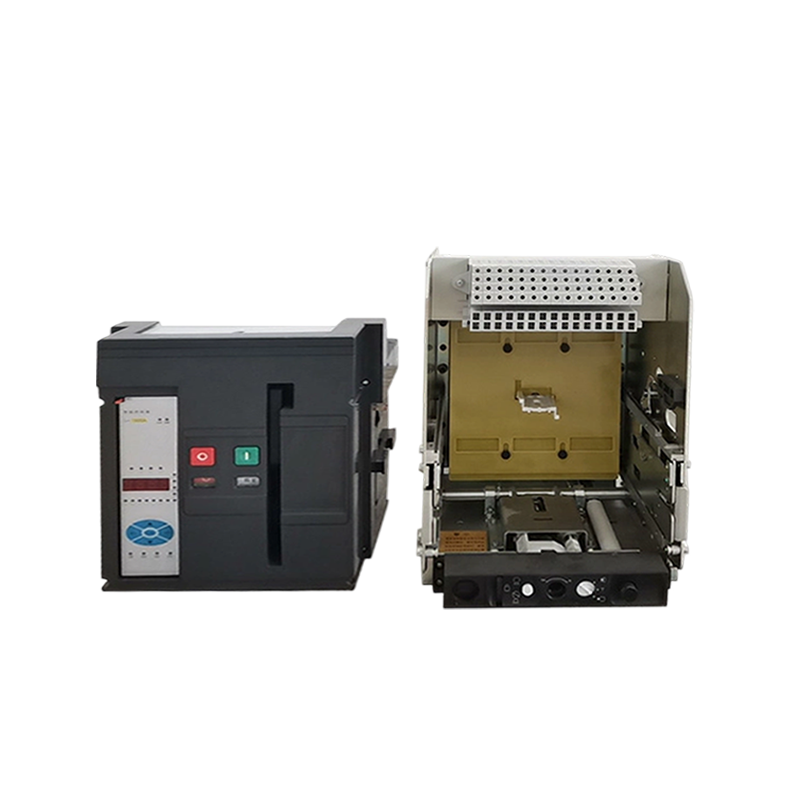
1.The circuit breaker provides safety protection, arc extinguishing, and interrupting functions, with defined electrical life and short-circuit withstand capability. 2.Multiple controller options are ...
See Details -
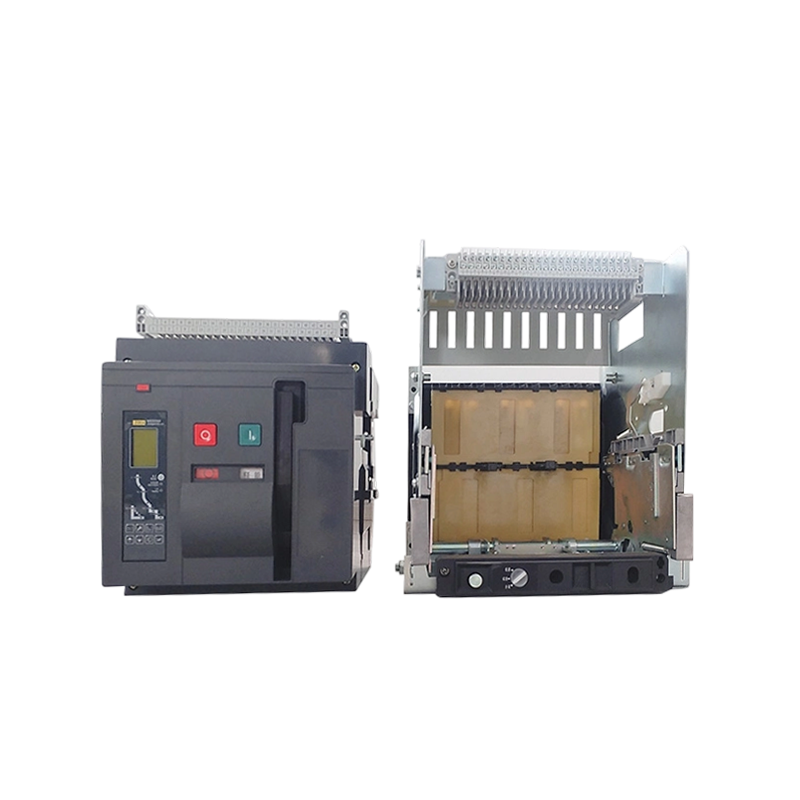
1.The circuit breaker provides safety protection, arc extinguishing, and interrupting functions, with defined electrical life and short-circuit withstand capability. 2.Multiple controller options are ...
See Details -
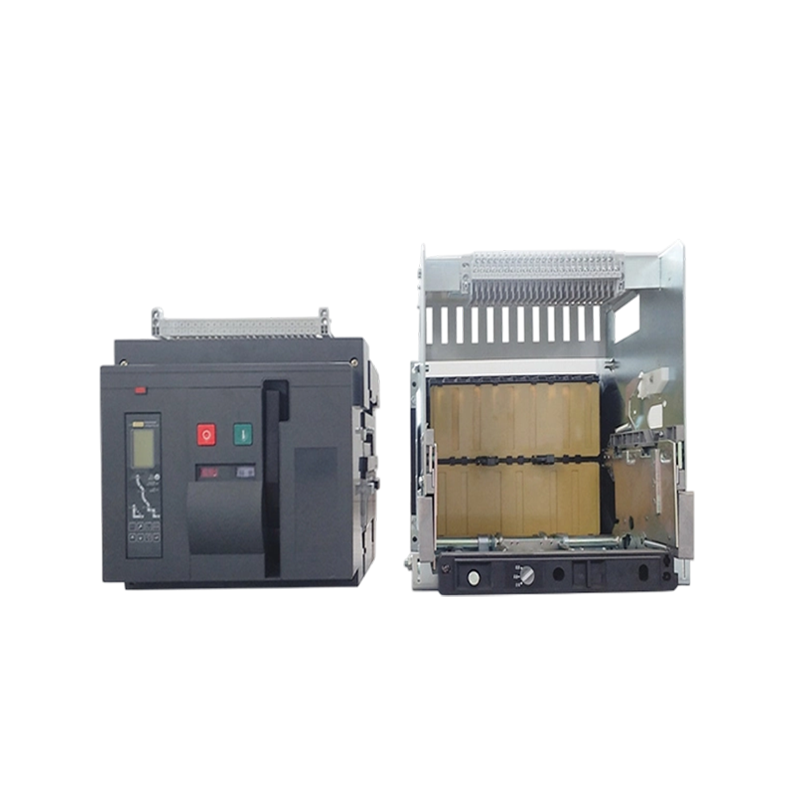
1. The circuit breaker offers safety protection, efficient arc extinguishing and interrupting, long electrical life, and short-term withstand capability. 2. The circuit breaker is available with a var...
See Details -
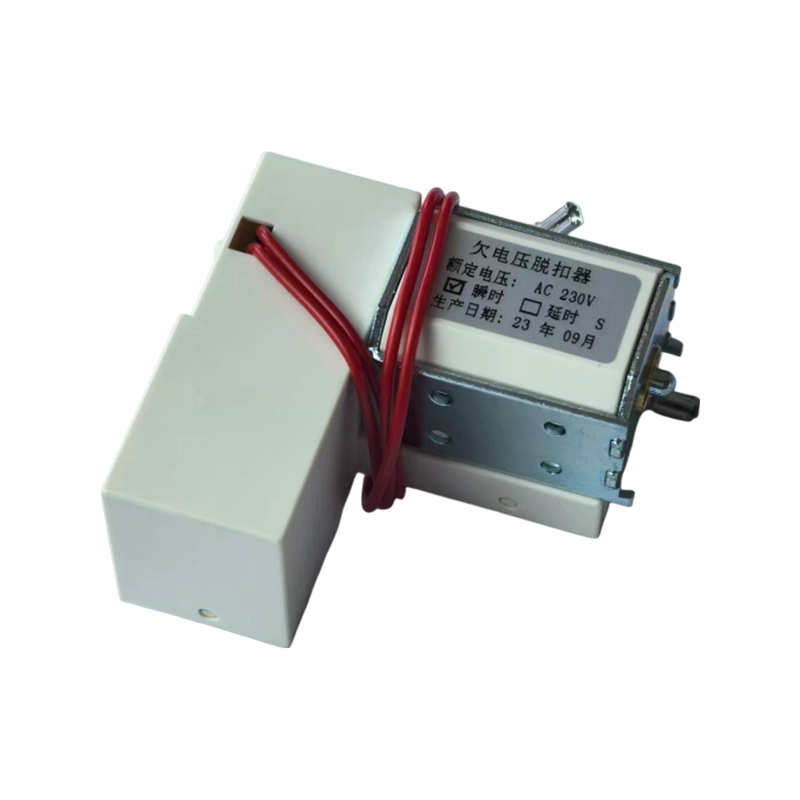
Featuring a simple, compact structure with low power consumption and long service life, the BH(S)-1600~6300 closed electromagnet covers a customized series of mining circuit breaker products. Customiz...
See Details

Copyright @ Kaiyuanfeng Electrical Machinery Manufacturing Co.,Ltd All Rights Reserved.
OEM MCCB Accessories Manufacturer
ISO Certified Circuit Breaker Factory
