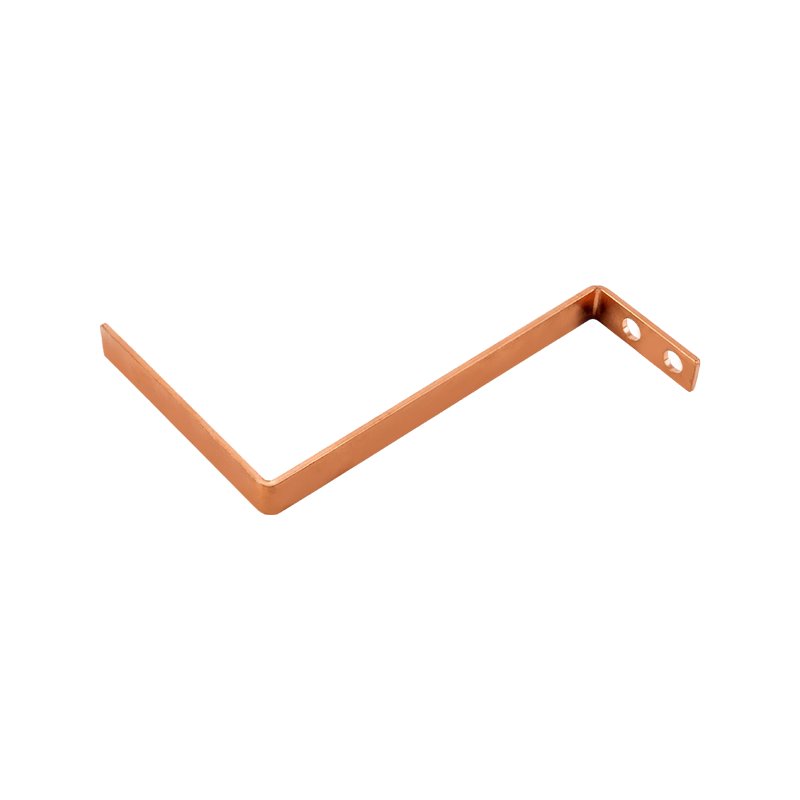
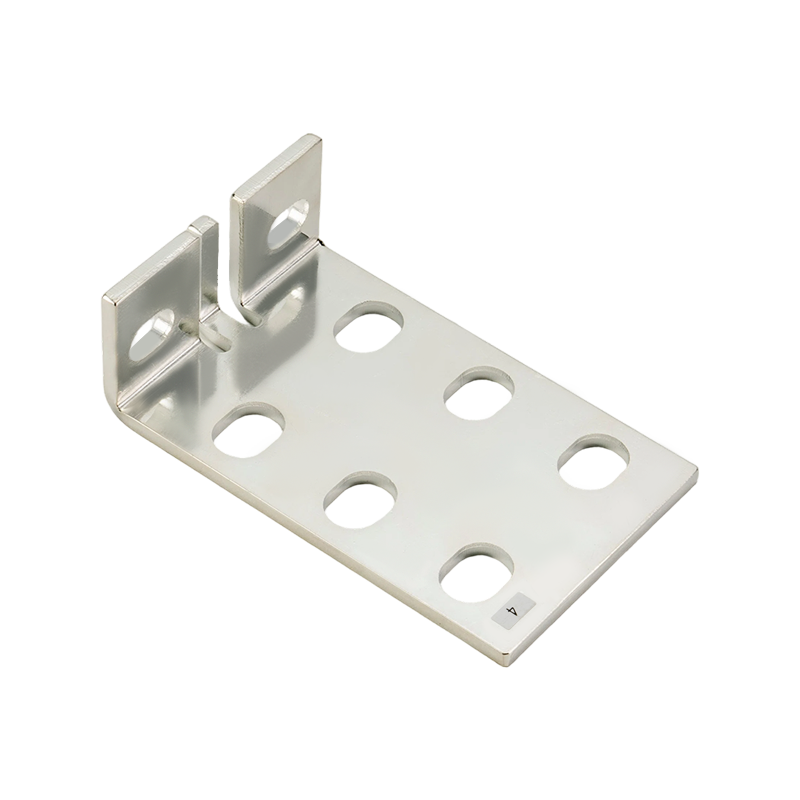
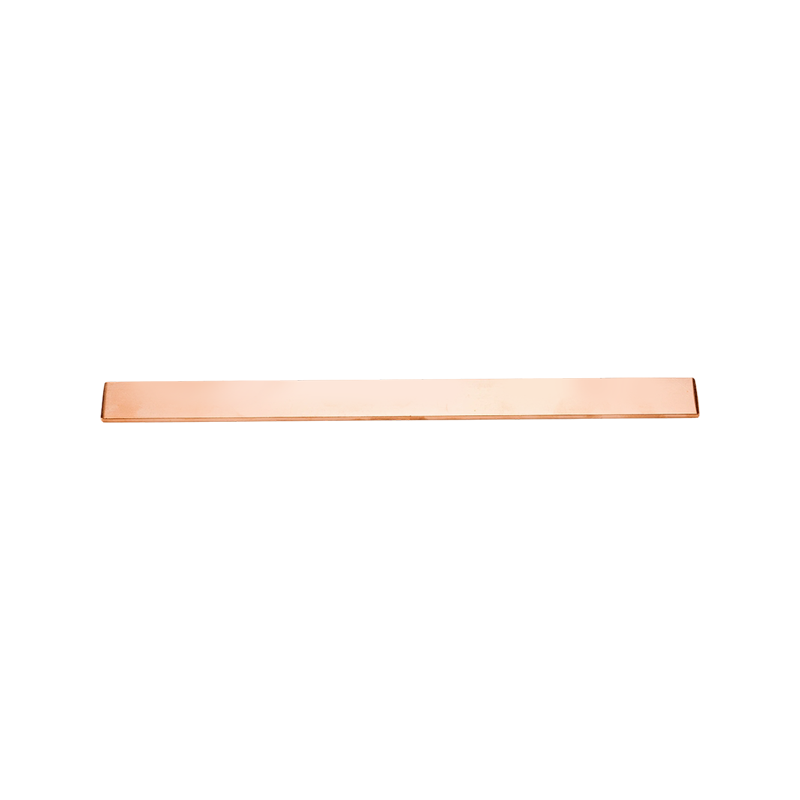
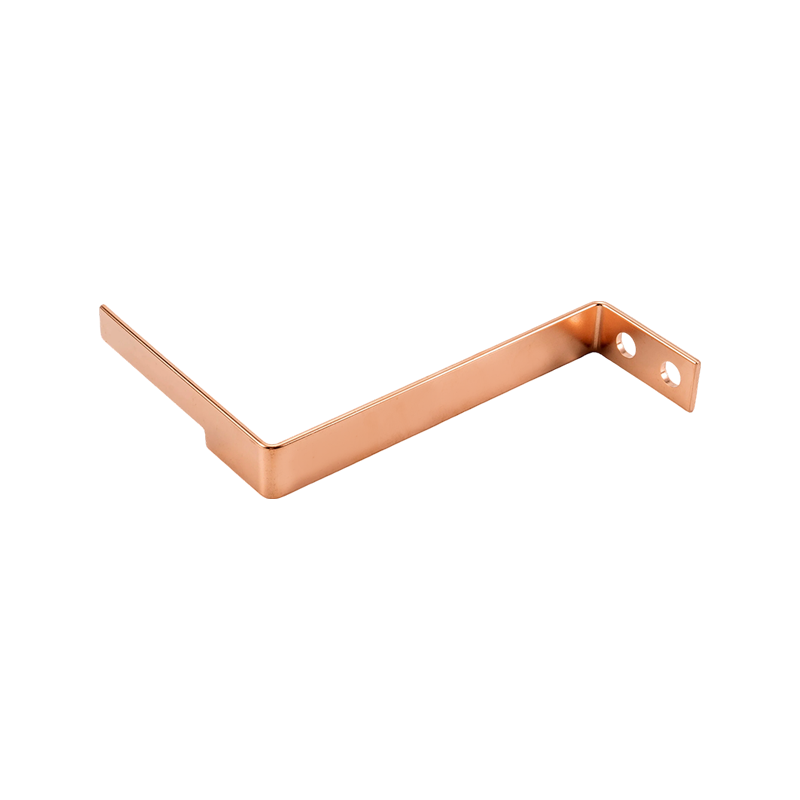
Stamped Copper Busbars and Copper Stamping Circuit Breaker Parts are precision electrical components manufactured from copper or copper alloys through stamping, bending, forming, and related metal-processing technologies. They are widely used in molded case circuit breakers (MCCBs), distribution equipment, switchgear, new energy systems, industrial control equipment, and low-voltage electrical assemblies.
Copper is widely selected for current-carrying components because of its high electrical conductivity, good thermal performance, ductility, and suitability for precision forming. For B2B manufacturers, the objective is not simply to produce a conductive metal part, but to achieve stable electrical performance, accurate dimensions, reliable mechanical strength, and repeatable mass production.
Stamped copper parts can integrate holes, slots, bends, mounting features, and connection surfaces into one component. Compared with assemblies made from multiple individually machined parts, this approach can reduce the number of components and improve manufacturing consistency when the design is suitable for stamping.
2. Why Is Copper Widely Used for Circuit Breaker Components?
(1) High Electrical Conductivity
Copper provides excellent electrical conductivity, making it suitable for busbars, terminals, connectors, current paths, and other conductive components. International annealed copper standard values are commonly used as reference points for electrical conductivity, with copper having approximately 58 MS/m conductivity at 20°C depending on the material grade and specification.
(2) Good Thermal Performance
Electrical current generates heat through resistance. A properly designed copper busbar can provide a low-resistance current path, helping manage conductive losses. However, actual temperature rise depends on cross-sectional area, current, contact resistance, enclosure conditions, ambient temperature, ventilation, and installation configuration rather than copper material alone.
(3) Excellent Formability
Copper and suitable copper alloys can be stamped and bent into complex geometries. This makes them suitable for circuit breaker components requiring multiple holes, bends, connection points, or mounting features within a compact footprint.
(4) Reliable Contact Performance
Smooth and accurately formed contact surfaces help support low and stable contact resistance. In circuit breaker applications, dimensional accuracy and surface condition are particularly important because poor contact quality can increase localized heating and affect long-term electrical reliability.
3. How Are Stamped Copper Busbars Manufactured?
- Material selection: Copper or copper alloy is selected according to conductivity, mechanical strength, forming requirements, corrosion resistance, and application conditions.
- Material preparation: Copper strip or sheet is prepared to the required thickness and width for stamping.
- Precision stamping: Progressive or dedicated stamping dies can form holes, slots, profiles, and other geometric features.
- Bending and forming: Secondary forming processes create the three-dimensional geometry required by the circuit breaker assembly.
- Surface treatment: Depending on the application, plating or other surface treatments may be considered to improve contact properties, corrosion resistance, or compatibility with mating components.
- Inspection: Dimensions, hole locations, flatness, bends, surface condition, and other critical characteristics are checked before shipment.
For high-volume B2B production, stamping can provide significant repeatability. For example, a circuit breaker manufacturer producing tens of thousands of components per month may benefit from dedicated tooling because the same die can repeatedly produce standardized geometry with controlled dimensions.
4. What Types of Copper Stamping Parts Are Used in Circuit Breakers?
Common copper stamping component types and their typical functions in electrical equipment.
| Copper Component |
Typical Function |
Important Requirements |
| Copper Busbar |
Main or auxiliary current path |
Conductivity, cross-section, flatness, dimensional accuracy |
| Terminal Connector |
Electrical connection between conductors |
Contact quality, hole position, mechanical strength |
| Copper Contact Part |
Conductive interface within the breaker |
Surface condition, conductivity, wear resistance |
| Formed Copper Link |
Connects different electrical sections |
Bend accuracy, insulation spacing, dimensional stability |
The exact geometry depends on the MCCB frame, rated current, pole configuration, internal structure, and connection design. For OEM production, copper parts are often developed from customer drawings or samples to ensure precise integration with the complete circuit breaker.
5. Stamped, Vulcanized, and Sleeved Copper Busbars for B2B Applications
Our copper busbar range supports various materials, with consistent conductivity and stable mechanical strength. They are available in stamped, vulcanized, and sleeved structures, suitable for high/low voltage power distribution, new energy systems, and industrial control equipment.
Made from pure copper, copper alloys, or custom-specified materials, these busbars feature precise manufacturing and reliable performance.
- Designed to adapt to diverse working conditions, balancing conductivity and mechanical strength for long-term stability and corrosion resistance.
- Tight dimensional tolerances ensure consistent hole positions, bends, and flatness, supporting reliable on-site assembly.
- Stamping, vulcanization, and sleeved processes enable flexible structural forms to meet varied design requirements.
- Smooth contact surfaces support low contact resistance and stable conductivity.
- Vulcanized and sleeved busbars include integrated insulation layers, supporting consistent insulation performance and controlled safety spacing.
This series supports diverse materials and manufacturing processes, with reliable performance and flexible customization options for power distribution, new energy, and industrial applications.
6. How to Choose Copper Busbars for MCCB and Power Distribution?
- Material grade: Select pure copper or an appropriate copper alloy according to conductivity and mechanical requirements.
- Thickness and width: Determine the cross-sectional dimensions according to the current-carrying requirement and thermal design.
- Hole accuracy: Ensure mounting and connection holes align accurately with terminals, fasteners, and mating components.
- Bending geometry: Confirm bend radius, angle, orientation, and dimensional tolerances for correct assembly.
- Insulation structure: Determine whether bare, sleeved, or vulcanized construction is suitable for the required insulation and spacing.
- Surface treatment: Evaluate whether the application requires plating or another surface treatment for the electrical interface.
- Production volume: For high-volume requirements, dedicated stamping tooling can improve consistency and production efficiency.
A practical example is a high-current MCCB busbar requiring multiple mounting holes and two precise bends. Instead of producing each feature through separate machining operations, a progressive stamping and forming process can integrate several features into one repeatable manufacturing sequence. This can help reduce assembly steps and improve dimensional consistency.
Jiangsu Kaiyuanfeng Electrical Machinery Manufacturing Co., Ltd. is a Molded Case Circuit Breaker Accessories Manufacturer and Wholesale Copper Stamping Circuit Breaker Parts Company, established in Taizhou in August 2013 with an initial registered capital of 5 million yuan. The company is a manufacturer of key circuit breaker components, integrating R&D, design, production, sales, and service.
The company adheres to the core values of "building a solid foundation through steadiness, expanding horizons via perseverance, and forging integrity with responsibility", and upholds the founding principle of "integrity, win-win collaboration, and pioneering the future". Guided by the philosophy that "technological innovation drives progress and quality service supports development", customer requirements are incorporated into processes from R&D through manufacturing.
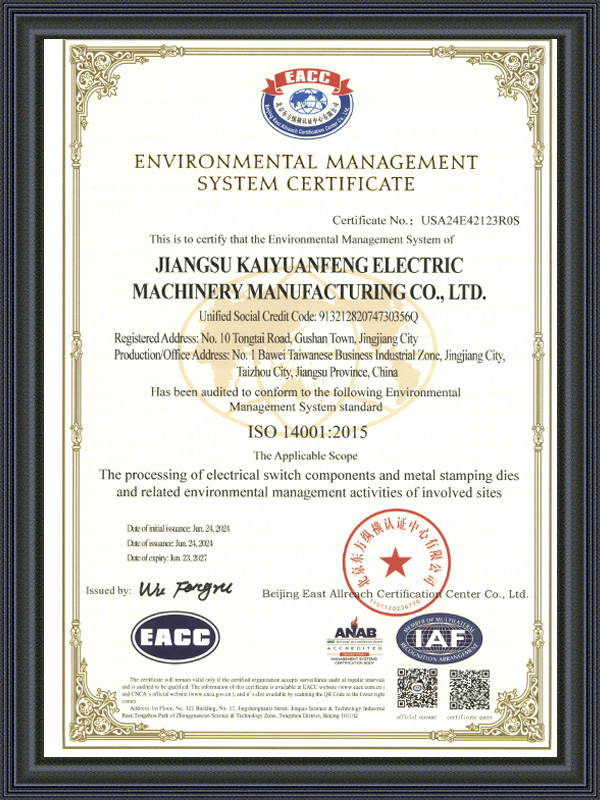
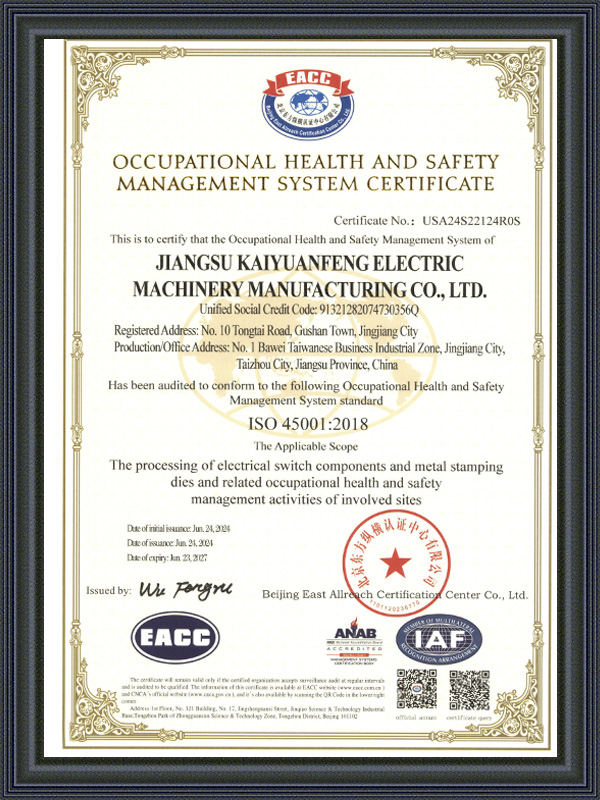
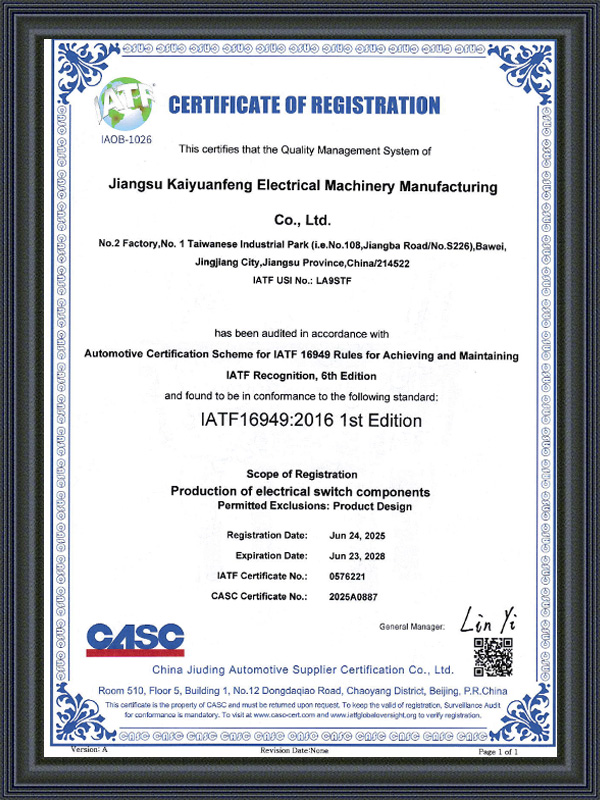
Its innovation is supported by 28 related patents, addressing key industry challenges in circuit breaker component development and manufacturing. The company has obtained ISO certification and implements a management system aligned with international standards to support operational efficiency and quality assurance.
For OEMs, MCCB manufacturers, electrical wholesalers, switchgear companies, and system integrators, the company can support customized copper stamping components based on technical drawings, samples, material requirements, dimensional specifications, and production volumes. This makes it suitable for both standardized copper busbar sourcing and project-specific circuit breaker component development.
8. Common Questions About Stamped Copper Busbars and Copper Stamping Circuit Breaker Parts
Q1. What are stamped copper busbars used for?
Stamped copper busbars are used to carry and distribute electrical current within switchgear, MCCBs, distribution boards, power supplies, new energy equipment, and industrial control systems. Stamping allows manufacturers to integrate holes, slots, bends, and mounting features into the busbar. This makes stamped busbars particularly suitable for high-volume OEM applications where repeatable dimensions and efficient assembly are important.
Q2. Why is copper preferred for circuit breaker busbars?
Copper combines high electrical conductivity with good thermal performance, ductility, and formability. These characteristics make it suitable for current-carrying parts that need to fit into compact electrical assemblies. However, busbar performance also depends on cross-sectional dimensions, contact resistance, connection quality, ambient conditions, and thermal design. Selecting copper alone does not guarantee a particular current-carrying capacity.
Q3. What is the difference between stamped copper busbars and machined copper parts?
Stamping uses dedicated dies and presses to form sheet or strip material at high repeatability, while machining removes material through cutting operations. Stamping is generally advantageous for larger production volumes and components with repeated holes, profiles, and bends. Machining can be more flexible for prototypes or complex geometries with lower quantities. The appropriate process depends on geometry, tolerance, material, annual volume, tooling investment, and production schedule.
Q4. How thick should a copper busbar be?
There is no universal thickness for copper busbars. Required thickness and width depend on continuous current, permissible temperature rise, ambient temperature, enclosure conditions, ventilation, conductor arrangement, short-circuit withstand requirements, and applicable standards. For example, two busbars with the same cross-sectional area can have different thermal behavior if their installation conditions differ. Engineers should size busbars based on the complete electrical and thermal design rather than using a single thickness rule.
Q5. Can copper busbars be customized according to drawings?
Yes. Custom copper busbars can be manufactured according to 2D drawings, 3D models, samples, or specified dimensions. Customization can include copper grade, thickness, width, hole diameter, hole position, bend angle, bend radius, flatness, surface treatment, insulation sleeve, vulcanized insulation, and packaging. For OEM orders, providing a detailed drawing with critical tolerances is recommended because even a few millimeters of positional deviation can affect assembly in compact circuit breaker structures.
Q6. Are stamped copper parts suitable for MCCB manufacturing?
Yes. Stamped copper parts are widely suited to MCCB manufacturing when the material, geometry, electrical rating, and mechanical requirements are properly engineered. They can be used for busbars, conductive links, terminals, connection components, and other current-carrying structures. Precision stamping is especially useful for mass production because it can maintain consistent hole positions, bends, and profiles across large production batches.
Q7. What copper material is best for stamped circuit breaker parts?
The best material depends on the required balance of electrical conductivity, strength, formability, corrosion resistance, and cost. High-conductivity copper is often selected for current-carrying applications, while copper alloys may be considered when higher mechanical strength or specific forming characteristics are required. Buyers should specify the required material standard and electrical or mechanical properties rather than simply requesting "copper" for an OEM component.
Q8. What should I provide when ordering copper stamping circuit breaker parts wholesale?
For an accurate quotation, provide the part drawing or sample, copper material grade, thickness, dimensions, tolerances, hole specifications, bend requirements, surface treatment, insulation requirements, annual quantity, packaging requirements, and target application. MCCB manufacturers should also provide the relevant breaker model or assembly drawing when possible. These details allow the supplier to evaluate tooling requirements, production capacity, quality-control points, and unit cost more accurately.
Q9. How can I reduce the cost of stamped copper busbars for OEM production?
Cost can often be optimized by improving material utilization, reducing unnecessary secondary operations, designing efficient stamping layouts, standardizing material thicknesses, and selecting suitable tooling based on annual volume. For example, a high-volume part may justify progressive stamping tooling, while a small prototype batch may be more economical with simpler tooling. Buyers should evaluate total production cost, including material utilization, tooling, secondary processing, inspection, and logistics, rather than comparing the stamping price alone.

 English
  中文简体
中文简体  русский
  عربى
عربى