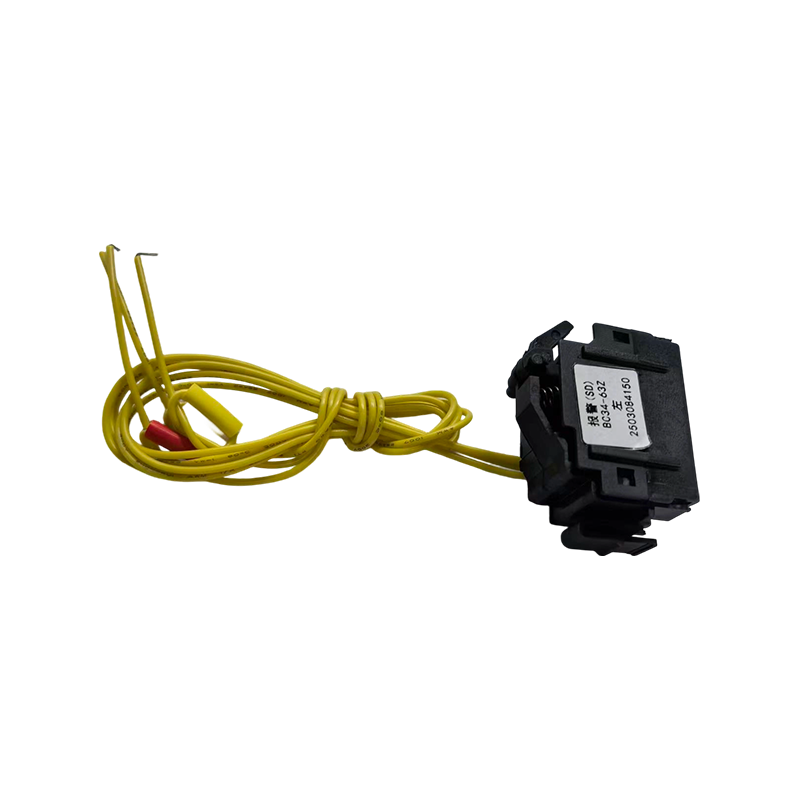
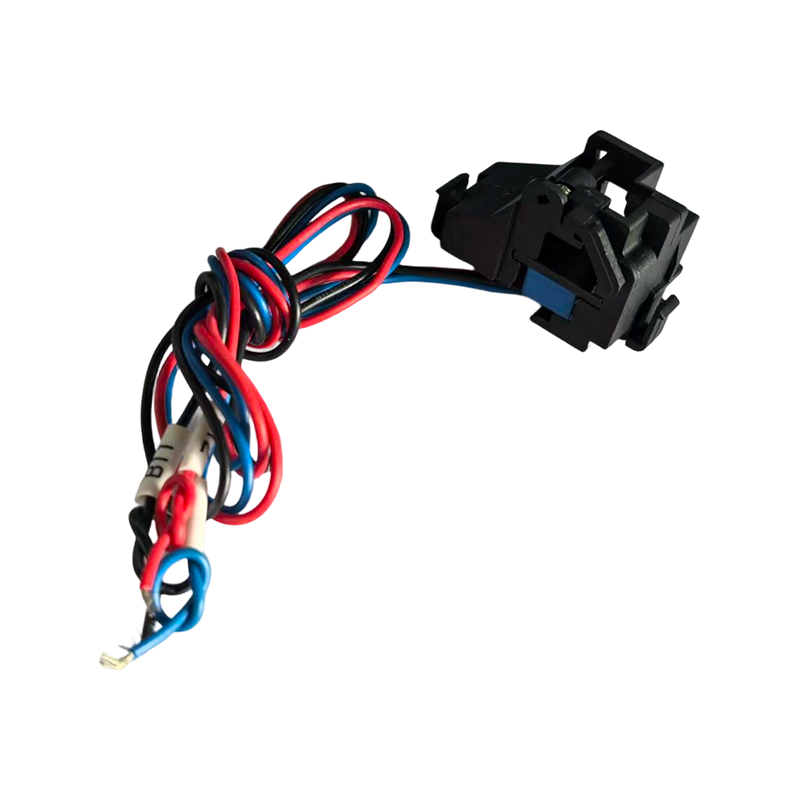
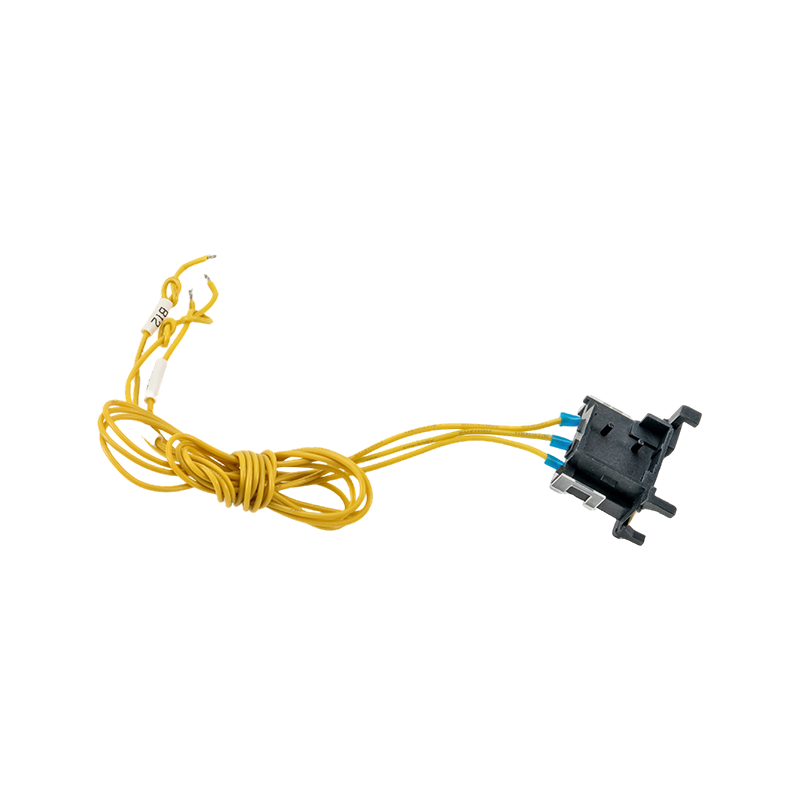
An MCCB alarm contact, also known as a trip alarm contact, is an electrical accessory installed inside or alongside a molded case circuit breaker (MCCB). Its primary function is to provide a remote signal when the circuit breaker trips because of a fault or another defined trip event. This allows control panels, PLCs, building management systems, and remote monitoring platforms to identify a breaker trip without requiring an operator to inspect the electrical cabinet manually.
The alarm contact provides a fault alarm output signal when a circuit breaker trips due to an operating fault. It also provides remote status information for the circuit breaker. In practical B2B applications, this function is particularly valuable in industrial automation, data centers, commercial buildings, manufacturing lines, HVAC systems, power distribution panels, and other installations where electrical downtime can create significant operational costs.
Unlike an ordinary auxiliary contact that primarily monitors whether an MCCB is ON or OFF, an alarm contact is designed to identify a trip or alarm condition. Depending on the MCCB design, alarm contacts may respond to overload, short-circuit, ground-fault, shunt-trip, undervoltage-trip, or other specified trip conditions. The exact behavior must always be verified against the manufacturer's circuit breaker and accessory documentation.
2. MCCB Alarm Contact vs Auxiliary Contact: What Is the Difference?
(1) Auxiliary Contact for ON/OFF Status
An MCCB auxiliary contact generally monitors the position of the main circuit breaker contacts. It can be connected to a PLC, indicator lamp, relay, or monitoring system to show whether the MCCB is open or closed. This is commonly identified as an OF or auxiliary switch function.
(2) Alarm Contact for Trip Status
An MCCB alarm contact, often identified as an SD or trip indication contact on some product families, focuses on the occurrence of a trip event. For example, Schneider Electric documentation distinguishes OF contacts for open/closed position from SD contacts for trip indication and SDE contacts for electrical-fault trip indication. The exact designation varies by MCCB manufacturer and product series.
Typical functional differences between MCCB auxiliary and alarm contacts.
| Feature |
Auxiliary Contact |
Alarm Contact |
| Main purpose |
ON/OFF status indication |
Trip or fault indication |
| Typical signal |
Breaker position |
Breaker trip event |
| Common applications |
PLC, interlocking, status panel |
Alarm panel, PLC, BMS, remote monitoring |
| Typical B2B benefit |
Remote operating-state visibility |
Faster fault notification and troubleshooting |
3. Why Are MCCB Alarm Contacts Important for Industrial Electrical Systems?
(1) Faster Fault Identification
In a large distribution cabinet containing dozens of MCCBs, identifying the source of a power interruption can take considerable time if technicians have to inspect each breaker. An alarm contact can transmit the trip condition directly to a control system, reducing unnecessary inspection and improving maintenance response.
(2) Better Remote Monitoring
For unmanned substations, production lines, pump stations, HVAC plants, and data-center electrical rooms, remote alarm signaling is especially useful. A dry-contact signal can be connected to a PLC digital input, relay interface, alarm annunciator, or building management system, depending on the electrical design.
(3) Improved Maintenance Efficiency
Consider a factory with 20 MCCBs distributed across several production lines. If one breaker trips during an unattended period, an alarm contact can identify the affected breaker through the control system. Maintenance personnel can then investigate the relevant circuit instead of checking all 20 breakers individually.
4. How Should an MCCB Alarm Contact Be Selected for B2B Projects?
For OEMs, electrical distributors, panel builders, system integrators, and industrial equipment manufacturers, selecting an MCCB alarm contact requires more than checking physical dimensions. The contact must be compatible with the specific MCCB frame, internal mechanism, installation position, and control circuit.
- Check MCCB compatibility: Confirm the frame size, model series, pole configuration, and accessory mounting position.
- Confirm contact configuration: Determine whether the project requires normally open (NO), normally closed (NC), or changeover contacts.
- Verify electrical ratings: The alarm contact's voltage, current, insulation, and utilization characteristics must match the connected control circuit.
- Check trip behavior: Establish whether the contact responds to electrical faults only or to additional trip operations such as shunt trip, undervoltage release, or push-to-trip operation.
- Evaluate installation requirements: For OEM production, consistent terminal configuration, dimensions, wiring method, and mechanical actuation are important for repeatable assembly.
5. What Applications Use MCCB Alarm Contacts?
MCCB alarm contacts are suitable for a broad range of commercial and industrial electrical systems where remote fault indication is required. Typical B2B applications include:
- Industrial control cabinets and machine electrical panels
- Factory power distribution systems
- Data centers and critical power distribution
- Commercial buildings and building management systems
- HVAC control and power distribution panels
- Water treatment, pumping, and infrastructure equipment
- OEM machinery and automated production equipment
In a typical automated production line, an MCCB alarm contact can be wired to a PLC digital input. When the breaker reaches the defined alarm state, the PLC can trigger an HMI message, warning lamp, event log, or remote notification. This creates a practical connection between conventional circuit protection and modern industrial monitoring.
6. How Does an MCCB Alarm Contact Support Smart Electrical Maintenance?
Modern electrical maintenance increasingly depends on remote status information rather than manual inspection alone. MCCB alarm contacts provide a simple hardware interface between the circuit breaker and a supervisory control system. They can be integrated into PLC-based automation, alarm annunciation, BMS, and other monitoring architectures.
It is important to understand that an alarm contact normally provides an indication signal rather than the protection function itself. The MCCB trip unit and main contacts perform the actual interruption of the protected circuit. The alarm contact communicates the resulting condition to another control or monitoring device.
For projects requiring more detailed fault information, engineers may need a dedicated fault-trip indication contact or electronic trip-unit communication function. Therefore, procurement teams should define the required alarm logic before ordering accessories in bulk.
7. Jiangsu Kaiyuanfeng Electrical Machinery Manufacturing Co., Ltd. MCCB Alarm Contact Manufacturing Capability
Jiangsu Kaiyuanfeng Electrical Machinery Manufacturing Co., Ltd. is a MCCB Auxiliary Contact Manufacturer and Wholesale MCCB Auxiliary Contact, established in Taizhou in August 2013 with an initial registered capital of 5 million yuan. It is a manufacturer of key circuit breaker components, integrating R&D, design, production, sales, and service.
The company adheres to the core values of "building a solid foundation through steadiness, expanding horizons via perseverance, and forging integrity with responsibility", and upholds the founding principle of "integrity, win-win collaboration, and pioneering the future". Guided by the philosophy that "technological innovation drives progress and quality service supports development", customer requirements are incorporated into processes from R&D to manufacturing.
Its innovation capabilities are supported by 28 related patents, addressing key industry challenges in circuit breaker component manufacturing. The company has also obtained ISO certification and implements a management system aligned with international standards to support operational efficiency and quality assurance.
With over a decade of industry experience, Jiangsu Kaiyuanfeng Electrical Machinery Manufacturing Co., Ltd. maintains a customer-centric approach, focusing on reliable products and attentive service to establish long-term partnerships. For electrical component distributors, MCCB manufacturers, panel builders, OEMs, and system integrators, customized alarm contact solutions can support different circuit breaker designs, control requirements, and procurement volumes.
8. Common Questions About MCCB Alarm Contacts
Q1. What is an MCCB alarm contact?
An MCCB alarm contact is an accessory that provides a remote electrical indication when an MCCB enters a defined trip or alarm state. It is commonly connected to a PLC, relay, alarm panel, BMS, or other monitoring equipment. Unlike the MCCB itself, the alarm contact does not interrupt the main power circuit; it communicates the status of the breaker to an external control system.
Q2. What is the difference between an MCCB alarm contact and an auxiliary contact?
An auxiliary contact normally indicates the MCCB's main contact position, such as ON or OFF. An alarm contact is intended to indicate a trip or alarm condition. In some product families, these functions are identified by different designations such as OF for auxiliary status and SD or SDE for trip or electrical-fault indication. Because terminology varies by manufacturer, the exact MCCB datasheet should be checked before purchasing.
Q3. Can an MCCB alarm contact be connected to a PLC?
Yes, an MCCB alarm contact can commonly be connected to a PLC digital input when the contact's electrical characteristics are compatible with the PLC control circuit. A typical application uses the contact's NO, NC, or changeover output to provide a discrete trip signal. Engineers should verify the contact rating, PLC input voltage, wiring method, isolation requirements, and applicable circuit protection before commissioning.
Q4. Does an MCCB alarm contact detect overload and short circuit trips?
It depends on the specific MCCB and alarm-contact design. Some trip indication contacts respond to a wider range of trip operations, while dedicated fault-trip contacts may specifically indicate electrical faults such as overload or short circuit. For example, some current MCCB accessory architectures distinguish general trip indication from overcurrent fault indication. Therefore, buyers should confirm the required trip logic with the manufacturer before selecting an accessory.
Q5. What contact configuration is commonly used for MCCB alarm contacts?
Common configurations include normally open (NO), normally closed (NC), and changeover contacts. A changeover arrangement can provide both NO and NC signaling depending on the circuit design. Some commercial MCCB indication contacts use a common-point changeover arrangement. However, the exact terminal configuration and electrical rating depend on the MCCB accessory model, so the manufacturer's wiring diagram should be used for final installation.
Q6. How do I choose an MCCB alarm contact for an OEM project?
Start by identifying the exact MCCB frame and model, then confirm the accessory mounting location, trip indication logic, contact configuration, rated control voltage and current, terminal arrangement, insulation requirements, operating temperature, and certification requirements. For bulk OEM procurement, buyers should also evaluate dimensional consistency, mechanical durability, production capacity, quality-control procedures, sample approval, packaging, and customization capability. Providing the MCCB model and application requirements to the manufacturer is usually the fastest way to verify compatibility.

 English
  中文简体
中文简体  русский
  عربى
عربى