 English
 中文简体
 русский
 عربى


Used as a disconnector switch in ring main units, ensuring reliable switching.
See Details
What Is Interrupting Rating of Circuit Breakers? Definition, Standards & Selection Guide
Content
- 1 What Exactly Is Interrupting Rating (IR)?
- 2 Why Interrupting Rating Matters — A Real-World Scenario
- 3 How Interrupting Rating Is Tested and Defined
- 4 Common Confusion: Interrupting Rating vs. Short-Circuit Current Rating (SCCR)
- 5 Selecting the Right Interrupting Rating for Your Application
- 6 Why Component Quality Affects Interrupting Performance
- 7 Frequently Asked Questions
- 8 Summary: Key Takeaways
Interrupting rating is the maximum fault current a circuit breaker can safely interrupt without failing catastrophically. If the available short-circuit current at the breaker location exceeds its interrupting rating, the breaker may arc, explode, or fail to clear the fault — a serious safety and equipment hazard. The 2023 NEC requires that every overcurrent protective device have an interrupting rating not less than the maximum available fault current at its line terminals. This guide explains the definition, testing standards, selection process, and common pitfalls related to interrupting rating, with practical examples relevant to electrical engineers, panel builders, and facility managers.
What Exactly Is Interrupting Rating (IR)?
Interrupting rating, also called breaking capacity, is the highest short-circuit current (in RMS symmetrical amperes) that a circuit breaker can safely clear at a specified voltage under standard test conditions. It is stamped on the breaker nameplate, e.g., "10 kA @ 240 V" or "65 kA @ 480 V". This rating is verified by UL 489 (North America) or IEC 60947-2 (international) testing.
The term must not be confused with ampere rating (continuous current the breaker carries without tripping) or short-circuit current rating (SCCR) of a complete assembly. Interrupting rating applies to the breaker itself; SCCR applies to the entire panel or equipment. According to UL 508A, the interrupting rating of the breaker sets an upper bound for the assembly SCCR, but other components may lower it.
For example, a typical molded case circuit breaker (MCCB) in a commercial panelboard may have a 25 kA interrupting rating at 480 V. If the available fault current at the panel is 30 kA, the breaker must be upgraded to a higher-rated unit (e.g., 65 kA) or current-limiting fuses must be added upstream.
Why Interrupting Rating Matters — A Real-World Scenario
Consider a 400 A distribution panel feeding a manufacturing line. An engineer calculates the short-circuit current at the main lugs as 35 kA RMS symmetrical. The panel's main breaker is a 400 A MCCB with a nameplate interrupting rating of 25 kA at 480 V. During a bolted fault, the breaker would attempt to interrupt a current 40% higher than its tested capability. The internal arc may not extinguish, leading to rupture, fire, or injury. This violation of NEC 110.9 (Interrupting Rating) is a common finding in arc-flash hazard studies.
Proper interrupting rating selection is not just code compliance — it is the foundation of electrical safety. The breaker must have sufficient interrupting rating for every point in the system, including downstream feeder breakers and branch breakers. When replacing a breaker, always verify the interrupting rating meets or exceeds the available fault current at that location.
How Interrupting Rating Is Tested and Defined
Testing follows UL 489 for molded-case breakers and UL 1066 for low-voltage power breakers. The test sequence includes:
- Open the breaker at rated voltage and maximum fault current (within its rating).
- Verify the arc extinguishes within rated clearing time (typically 1-3 cycles).
- No fire, no mechanical damage that prevents further safe operation.
- After the test, the breaker must still carry rated continuous current and trip within calibration.
The interrupting rating is usually stated for a specific voltage. At lower voltage, the same breaker may have a higher interrupting rating (e.g., 65 kA at 240 V vs. 25 kA at 600 V). This is because arc energy is proportional to voltage. Always use the interrupting rating at the actual system voltage.
Key Standards to Know
| Standard | Scope | Key Requirement |
|---|---|---|
| NEC 110.9 | All electrical installations | Interrupting rating ≥ available fault current |
| UL 489 | MCCBs in North America | Mandatory testing at rated IR |
| IEC 60947-2 | Low-voltage switchgear | Rated short-circuit breaking capacity (Icu/Ics) |
| UL 508A | Industrial control panels | Panel SCCR limited by lowest component IR |
Common Confusion: Interrupting Rating vs. Short-Circuit Current Rating (SCCR)
Many specifiers use these terms interchangeably, but they are not the same. Interrupting rating is a property of an individual overcurrent protective device (breaker or fuse). Short-circuit current rating (SCCR) is a property of an entire assembly — panel, controller, or machine — as defined in UL 508A. The SCCR of an assembly is the maximum fault current it can withstand without failure, based on the short-circuit current ratings of its components (breakers, contactors, bus bars). A breaker with a high interrupting rating does not automatically give the panel a high SCCR; other components may limit it.
For example, a panel may contain a 65 kA-rated main breaker but a contactor rated for only 10 kA short-circuit current. The panel SCCR is 10 kA unless the contactor is protected by current-limiting devices. Understanding this distinction is critical for proper equipment labeling and arc-flash analysis.
Selecting the Right Interrupting Rating for Your Application
- Perform a short-circuit study to determine available fault current at each bus. Use software or IEEE 141 calculations. Typical utility transformer secondary fault currents range from 10 kA to 100 kA.
- Choose a breaker with interrupting rating at least equal to the calculated value. Add margin for future system growth (e.g., larger transformer or parallel generation).
- Consider series-rated combinations allowed by NEC 240.86. A downstream breaker with lower IR can be used if the upstream breaker limits the let-through energy. However, this requires listed series combination and careful engineering.
- Verify voltage compatibility. A 600 V breaker may have lower IR at 600 V than at 480 V.
- Inspect for coordination: while interrupting rating is about safety, selective coordination (NEC 700.27 for emergency systems) ensures only the upstream device clears a fault.
For high-fault locations such as main switchboards in industrial plants, low-voltage power circuit breakers (ACBs) with interrupting ratings of 65 kA to 200 kA are common. Many manufacturers offer draw-out ACBs with electronic trip units. The 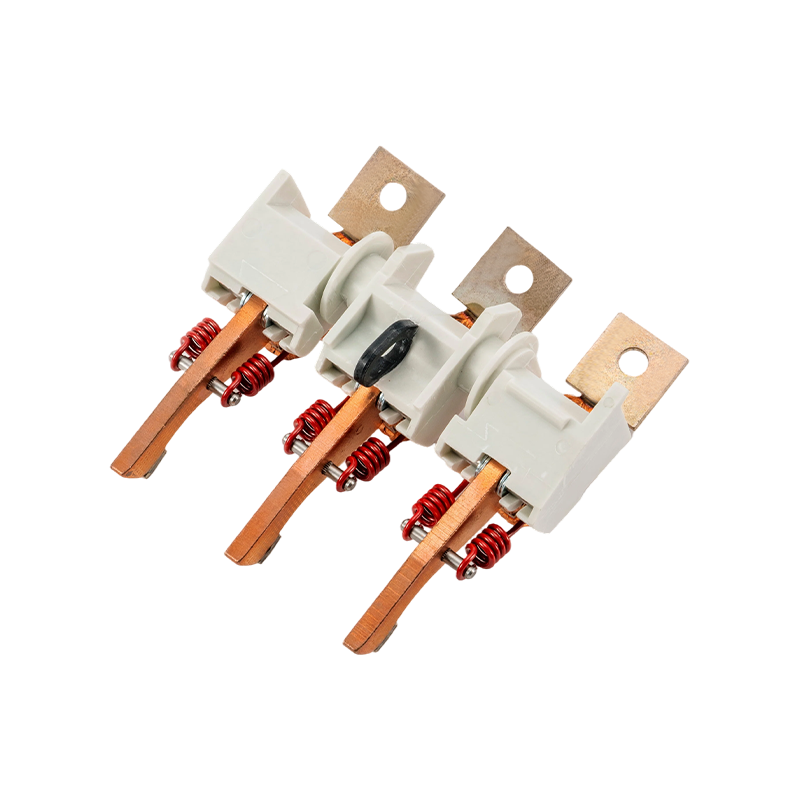 KYM-125/800 Molded Case Moving Contact Assembly for MCCBsThis moving contact assembly is a precision-engineered internal component designed for MCCBs in high-fault applications. Its quality directly affects interrupting performance, making it essential for OEMs and repair shops seeking reliable replacements.View Product → is one example of a precision-engineered internal component used in MCCBs designed for demanding applications.
Why Component Quality Affects Interrupting Performance
Interrupting rating is not just about the overall breaker design; it is also influenced by the quality of internal components — the arc chute, contact materials, contact pressure, and the trip mechanism. A poorly manufactured contact system can weld or fail to open quickly, reducing the effective interrupting capacity. For OEMs and repair shops, sourcing genuine, tested components is essential. Jiangsu Kaiyuanfeng specializes in MCCB internal parts such as arc chute assemblies, moving and stationary contacts, and shunt releases. These components are tested to match the original ratings of major breaker platforms. Using inferior replacements can void UL listing and reduce interrupting performance.
For example, the  KYM-125/800 MCCB Arc Chute Assembly with Deion PlatesThe arc chute assembly uses deion plates to cool and split arcs, directly enhancing the breaker's interrupting capability. It is a critical component for maintaining UL listing and ensuring safety in demanding electrical environments.View Product → uses deion plates designed to cool and split the arc, directly supporting the breaker's interrupting capability. Similarly, the enables remote tripping in emergency circuits where interrupting coordination is critical.
Frequently Asked Questions
Q1: What is the standard interrupting rating for residential circuit breakers?
A: Most residential miniature circuit breakers (MCB) have an interrupting rating of 10 kA at 120/240 V. In areas with high fault current (e.g., near transformer), some models offer 22 kA.
Q2: How do I find the interrupting rating of a circuit breaker?
A: It is printed on the breaker label, usually as "10,000 AIC" or "25 kA @ 480 V". Check the manufacturer documentation if the label is missing.
Q3: Can I use a breaker with a lower interrupting rating if protected by a fuse?
A: NEC allows series ratings where a downstream breaker with lower IR can be used if the upstream device (fuse or breaker) limits the let-through. However, the combination must be UL listed as a series combination.
Q4: What happens if a breaker opens a fault above its interrupting rating?
A: It may arc internally, explode, or fail to clear the fault, creating a severe safety hazard including fire and arc flash. Always ensure the breaker's IR exceeds the available fault current.
Q5: Is interrupting rating the same as breaking capacity in IEC standards?
A: Similar but not identical. IEC 60947-2 defines rated short-circuit breaking capacity (Icu) and service breaking capacity (Ics). Icu is the maximum breaking capacity; Ics is a percentage (e.g., 50% or 75%). UL uses interrupting rating directly.
Q6: How does interrupting rating affect arc flash incident energy?
A: A breaker with higher interrupting rating typically clears faster and reduces let-through energy, lowering incident energy and PPE requirements. However, arc flash analysis must consider clearing time, which varies with trip curve.
Q7: What is the maximum interrupting rating available for low voltage breakers?
A: Large low-voltage power circuit breakers (ACB) can have interrupting ratings up to 200 kA at 480 V. For molded case breakers, high-interrupting versions reach 100 kA at 480 V using current-limiting designs.
Q8: Does the interrupting rating change with temperature or altitude?
A: Yes, generally interrupting rating decreases at high altitudes (above 6600 ft) due to reduced air density affecting arc extinction. Manufacturers provide derating factors in their data sheets.
Summary: Key Takeaways
- Interrupting rating is the maximum short-circuit current a breaker can safely interrupt at rated voltage.
- It must be ≥ available fault current at every circuit location.
- Do not confuse with ampere rating or assembly SCCR.
- Proper component quality (arc chutes, contacts, trip units) is critical to maintain rated interrupting performance.
- Always consult a short-circuit study before selecting breakers for new installations or upgrades.
For more in-depth guidance, explore our complete guide to MCCB accessories and learn how each internal part contributes to overall safety and performance.
Previous Post
AT and AF in Circuit Breakers: Ampere Trip Setting vs Ampere Frame Explained
Next Post
Circuit Breaker Operating Time vs Tripping Time: What They Mean and Why They Matter
Related products
-
-
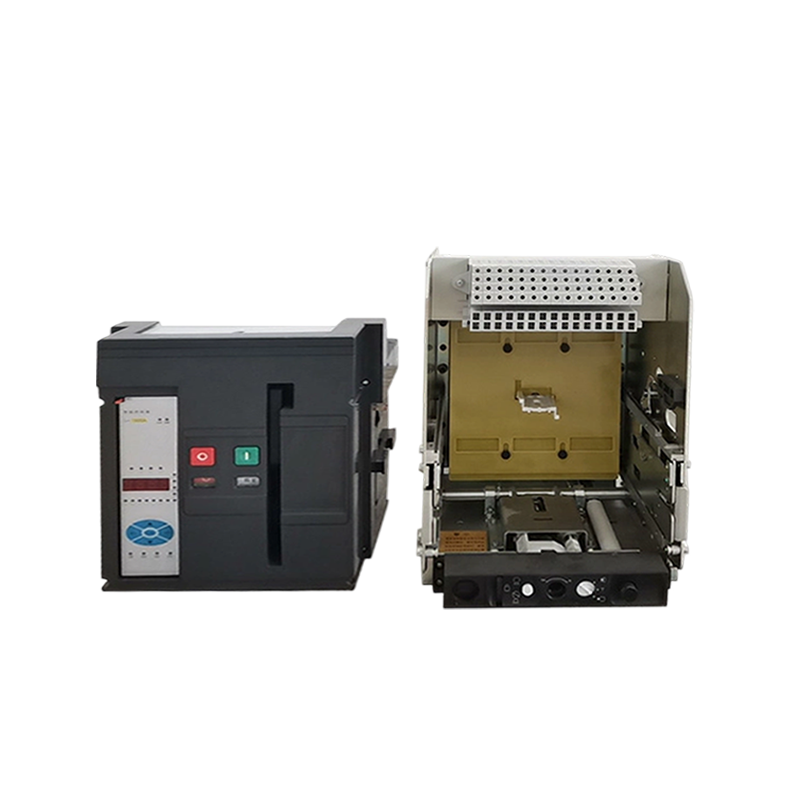
1.The circuit breaker provides safety protection, arc extinguishing, and interrupting functions, with defined electrical life and short-circuit withstand capability. 2.Multiple controller options are ...
See Details -
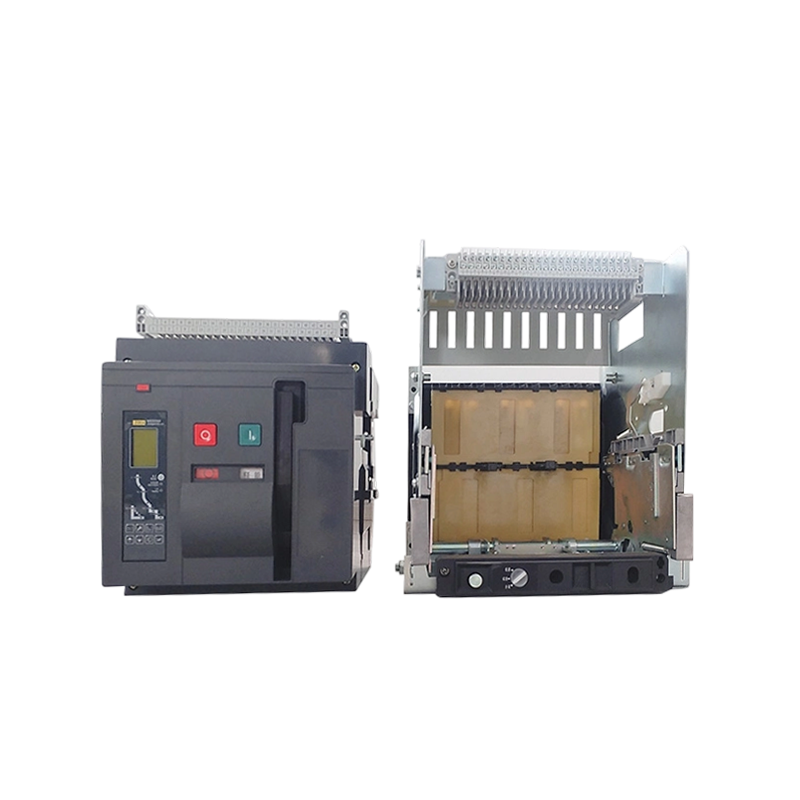
1.The circuit breaker provides safety protection, arc extinguishing, and interrupting functions, with defined electrical life and short-circuit withstand capability. 2.Multiple controller options are ...
See Details -
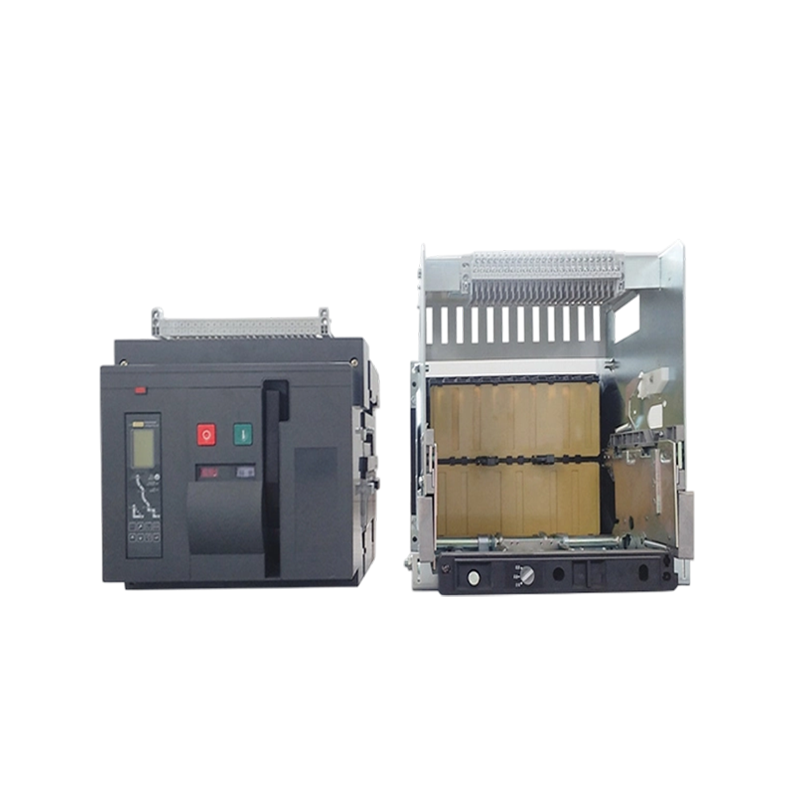
1. The circuit breaker offers safety protection, efficient arc extinguishing and interrupting, long electrical life, and short-term withstand capability. 2. The circuit breaker is available with a var...
See Details -

We are equipped with: A full range of welding machines Various riveting equipment Multiple assembly lines Complete testing equipment These assemblies are compatible with products from leading internat...
See Details -

Featuring a simple structure, this mechanism is driven by an electric motor with a gear reducer, delivering high torque, fast switching, and reliable operation. It supports both AC and DC power, with ...
See Details

Copyright @ Kaiyuanfeng Electrical Machinery Manufacturing Co.,Ltd All Rights Reserved.
OEM MCCB Accessories Manufacturer
ISO Certified Circuit Breaker Factory
