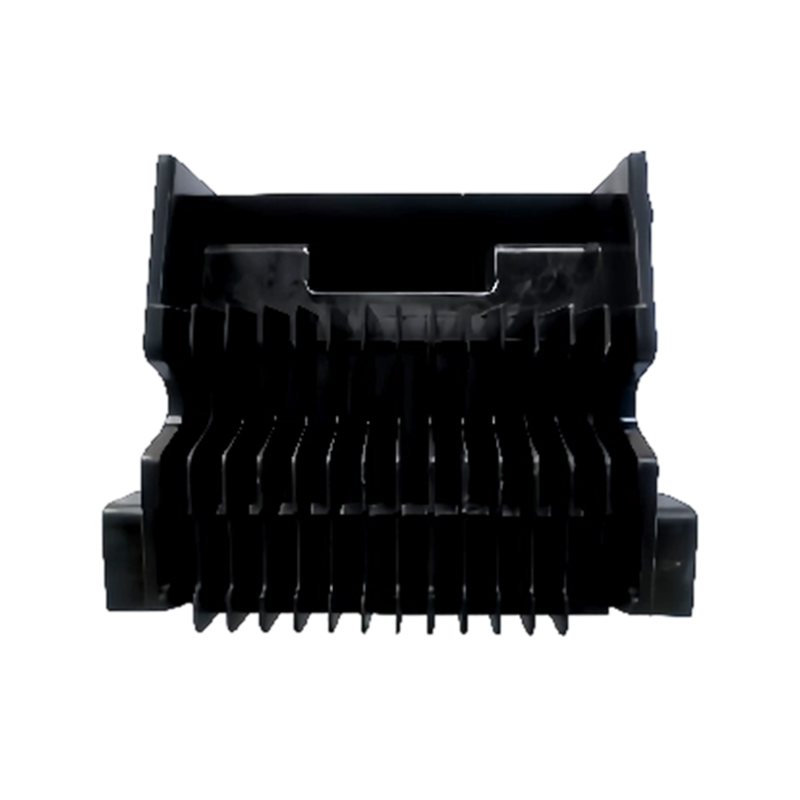
MCCB Contact Support Components are mechanical and insulating parts used to position, support, secure, and protect the contact system inside a molded case circuit breaker. Depending on the breaker construction, these components may include contact supports, insulating supports, contact holders, brackets, separators, fasteners, and other precision parts that work with moving contacts, stationary contacts, bridge contacts, springs, and the operating mechanism.
For MCCB manufacturers and electrical equipment OEMs, contact support components are not simply auxiliary hardware. Accurate positioning and stable mechanical support directly influence contact alignment, contact pressure, electrical resistance, switching consistency, and long-term reliability. A small dimensional error can become significant when several poles must operate simultaneously and repeatedly.
The current international reference is IEC 60947-2:2024, the sixth edition of the standard for low-voltage circuit-breakers. It applies within its defined scope to circuit breakers with rated voltages up to 1,000 V AC or 1,500 V DC. The 2024 edition replaced the previous 2016 edition and Amendment 1:2019 and introduced technical revisions covering areas including isolation suitability, dielectric testing, EMC tests, individual-pole breaking-capacity testing, and power-loss measurement.
2. Why Are MCCB Contact Support Components Important?
(1) Maintaining Accurate Contact Alignment
A contact support component keeps the contact assembly in its intended position during normal operation and fault conditions. Correct alignment helps ensure that contact surfaces engage evenly. If a support component is incorrectly dimensioned, contact pressure may become uneven, increasing localized resistance and heating.
(2) Supporting Mechanical Stability
MCCB contacts repeatedly open and close during service, maintenance, testing, and fault interruption. Contact supports must therefore withstand mechanical movement, vibration, spring forces, and electromagnetic forces generated during high-current fault events. Consistent mechanical strength is particularly important for mass-produced MCCBs.
(3) Improving Electrical and Thermal Performance
Contact support components indirectly contribute to electrical performance by maintaining the correct geometry of conductive interfaces. Because heat generated by a resistive connection follows P = I²R, even a small increase in contact resistance can become important at high current. For example, an additional 100 μΩ at 400 A corresponds to approximately 16 W of heat generation at that connection.
3. Types of MCCB Contact Support Components
The exact construction varies according to MCCB frame size, current rating, pole configuration, contact structure, and manufacturer design. Common support components can be categorized as follows:
- Contact holders for positioning moving or stationary contact elements.
- Insulating supports for maintaining electrical separation between conductive components.
- Metal brackets and support plates for mechanically securing the contact system.
- Contact separators for maintaining required clearances between poles.
- Precision fasteners, pins, rivets, and mounting components used in contact assembly.
Common MCCB contact support components and their primary engineering functions.
| Component Type |
Primary Function |
Key Requirement |
| Contact Holder |
Positions contact elements |
Dimensional accuracy and mechanical strength |
| Insulating Support |
Provides electrical isolation |
Insulation performance and dimensional stability |
| Metal Support Bracket |
Secures the contact structure |
Strength, forming accuracy, corrosion resistance |
| Pole Separator |
Maintains separation between poles |
Insulation and dimensional consistency |
4. Materials Used for MCCB Contact Supports
(1) Engineering Plastics and Insulating Materials
Insulating contact supports may use engineering polymers selected for electrical insulation, dimensional stability, mechanical strength, temperature resistance, and flame-retardant performance. The appropriate material depends on the complete breaker construction and applicable certification requirements rather than on a single material property.
(2) Copper and Copper Alloys
Where a support component also forms part of a conductive path, copper or copper alloys may be considered because of their electrical conductivity and manufacturing characteristics. Material selection should account for current capacity, mechanical strength, temperature rise, contact interface requirements, and production method.
(3) Steel and Other Metal Components
Metal brackets and support plates may be produced from suitable steel or other alloys where mechanical rigidity is the primary requirement. Depending on the operating environment, surface treatments can be considered to improve corrosion resistance and maintain dimensional stability over the product life cycle.
5. Manufacturing Requirements for Contact Support Components
For B2B procurement, manufacturing consistency is often more important than achieving the lowest initial component price. MCCB contact supports are normally integrated into a larger assembly, meaning dimensional variation can accumulate across multiple components. A reliable production process should therefore control critical dimensions, material batches, forming conditions, surface quality, and assembly tolerances.
- Review drawings and identify critical-to-function dimensions.
- Verify raw-material specifications before production.
- Control stamping, bending, machining, injection molding, riveting, or other applicable processes.
- Inspect dimensions and appearance using suitable gauges and measurement equipment.
- Perform sample validation before moving to large-volume production.
- Maintain batch traceability and documented quality-control procedures.
For example, if a contact support has a nominal 10.00 mm mounting feature, the actual acceptable tolerance must be determined by the MCCB design and engineering drawing. A generic tolerance should not be assumed because the correct value depends on mating components, contact travel, insulation clearances, and operating mechanism geometry.
OEMs, MCCB manufacturers, distributors, and panel builders should evaluate suppliers based on technical capability, production stability, quality management, and customization support. The best supplier is not necessarily the one with the lowest quoted unit price; it should be the supplier capable of maintaining the required specification throughout repeated production batches.
- Engineering capability: Can the supplier understand drawings, samples, tolerances, and assembly relationships?
- Material control: Can the supplier provide consistent materials and relevant documentation?
- Quality management: Are inspection procedures and process controls established?
- Customization: Can the supplier manufacture according to OEM drawings or samples?
- Production capacity: Can monthly and annual demand be supported consistently?
- Documentation: Can the supplier support technical files, inspection reports, and traceability requirements?
7. Jiangsu Kaiyuanfeng Electrical Machinery Manufacturing Co., Ltd. – MCCB Contact Support Components Manufacturer
Jiangsu Kaiyuanfeng Electrical Machinery Manufacturing Co., Ltd. is a MCCB Contact Support Components Manufacturer and wholesale supplier, established in Taizhou in August 2013 with an initial registered capital of 5 million yuan. The company specializes in key circuit breaker components and integrates R&D, design, production, sales, and service.
The company adheres to the core values of building a solid foundation through steadiness, expanding horizons through perseverance, and forging integrity with responsibility. Its founding principle emphasizes integrity, win-win collaboration, and pioneering the future. Guided by technological innovation and quality service, customer requirements are incorporated into processes from R&D through manufacturing.
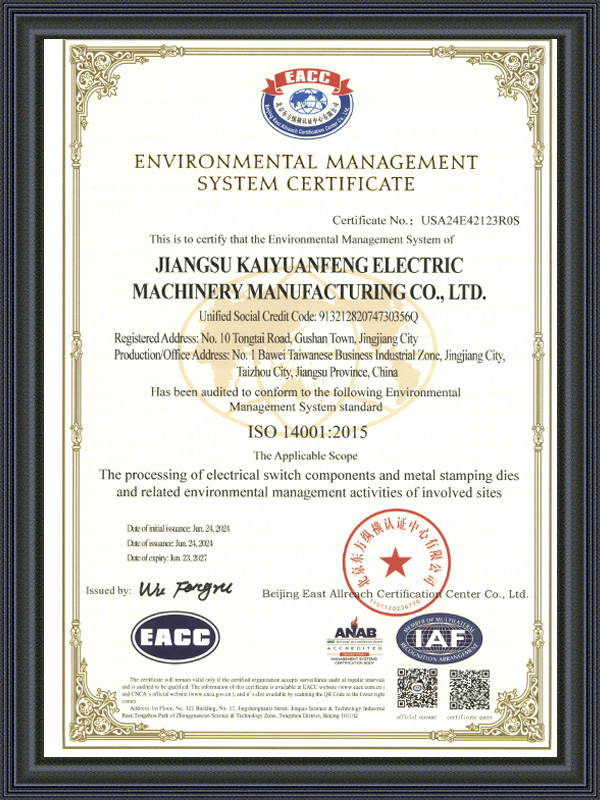
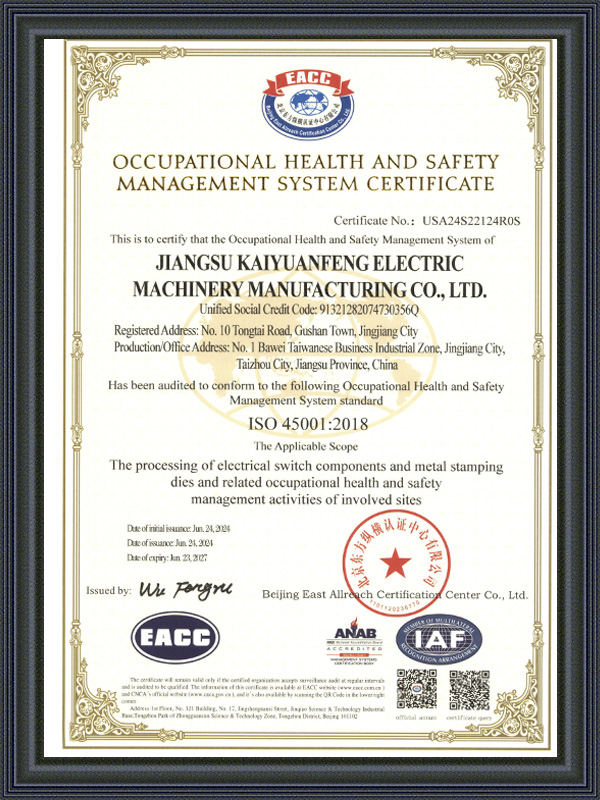
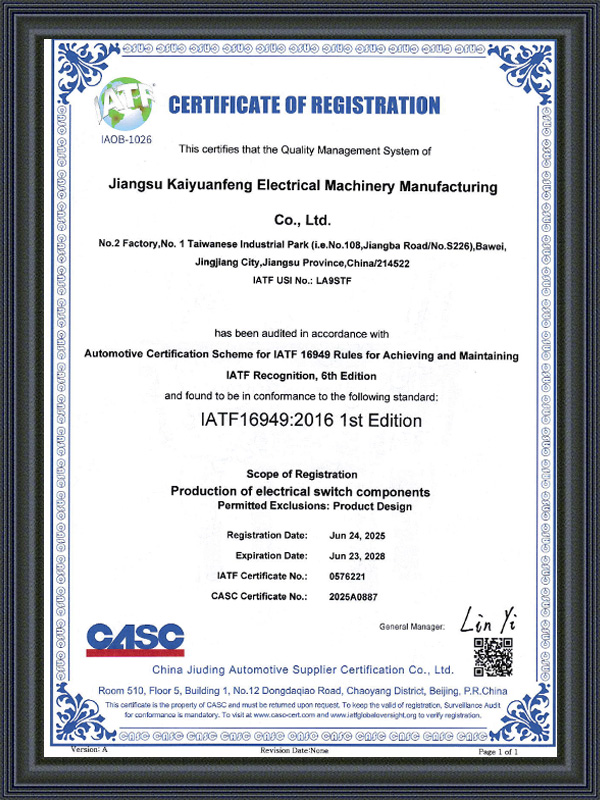
Jiangsu Kaiyuanfeng's innovation capabilities are supported by 28 related patents addressing key industry challenges. The company has also obtained ISO certification and operates a management system aligned with international standards to support operational efficiency and quality assurance.
With more than a decade of industry experience, the company maintains a customer-focused approach for customers seeking dependable circuit breaker components. OEM and wholesale buyers can provide product drawings, samples, specifications, or application requirements for customized MCCB contact support components. The company aims to become a core supplier of key circuit breaker components while supporting long-term partnerships and electrical system safety.
8. MCCB Contact Support Components for OEM and Wholesale Applications
MCCB contact support components are commonly relevant to circuit breaker manufacturers, electrical distributors, switchgear manufacturers, panel builders, industrial equipment companies, and OEM/ODM buyers. Different customer groups may prioritize different characteristics, from replacement compatibility to large-volume production consistency.
Typical B2B purchasing requirements for MCCB contact support components.
| Buyer |
Main Requirement |
Supplier Support |
| MCCB Manufacturer |
Stable dimensional and material quality |
OEM production and process control |
| Electrical Distributor |
Reliable wholesale supply |
Consistent batch production |
| Panel Builder |
Compatible support and replacement parts |
Drawing and sample-based customization |
| OEM/ODM Buyer |
New product development |
Engineering support from prototype to mass production |
9. Frequently Asked Questions About MCCB Contact Support Components
Q1. What are MCCB contact support components used for?
MCCB contact support components are used to position, secure, separate, and mechanically support contact-system components inside molded case circuit breakers. Depending on the design, they may support moving contacts, stationary contacts, bridge contacts, springs, or related conductive and insulating components. Their purpose is to maintain correct mechanical geometry and electrical clearances throughout normal operation and fault conditions.
Q2. What materials are used for MCCB contact supports?
The material depends on the function of the component. Insulating supports may use engineering plastics or other insulating materials with suitable electrical, thermal, mechanical, and flame-performance characteristics. Conductive components may use copper or copper alloys, while structural brackets can use suitable steel or other metals. Material selection should always follow the MCCB manufacturer's engineering specification and certification requirements.
Q3. Why is dimensional accuracy important for MCCB contact support components?
Dimensional accuracy determines how correctly the contact system aligns with the operating mechanism and other internal parts. A small deviation in a mounting hole, thickness, bending angle, or contact position can alter contact pressure or travel. In a multi-pole breaker, inconsistent dimensions may also cause uneven mechanical or electrical behavior between poles. Therefore, critical dimensions should be controlled according to the approved engineering drawing.
Q4. Can MCCB contact support components be customized?
Yes. OEM manufacturers can develop customized contact support components based on drawings, samples, or detailed specifications. Customization can involve material, thickness, dimensions, mounting holes, insulation structure, surface treatment, forming geometry, and assembly configuration. For a new project, providing the MCCB frame size, pole configuration, rated current, operating mechanism information, and application environment can help a supplier evaluate the design more accurately.
Q5. How do I choose a reliable MCCB contact support components manufacturer?
Look for a manufacturer with circuit breaker component experience, documented quality-management procedures, engineering capabilities, stable production processes, and the ability to manufacture according to drawings or samples. Buyers should also assess raw-material control, dimensional inspection, process traceability, sample approval procedures, production capacity, and after-sales technical support. For long-term OEM purchasing, consistent quality across multiple batches is particularly important.
Q6. What standards apply to MCCB contact support components?
The applicable requirements depend on the final MCCB and target market. IEC 60947-2:2024 is the current IEC standard for low-voltage circuit breakers within its scope, covering rated voltages up to 1,000 V AC or 1,500 V DC under defined conditions. In the United States, UL Solutions identifies UL 489 for molded-case circuit breakers, molded-case switches, and circuit-breaker enclosures. Contact support components should be evaluated as part of the complete breaker design and applicable certification program rather than treated as independently certified products.
Q7. What information should I provide when ordering MCCB contact support components?
For an accurate quotation, provide the component drawing or sample, MCCB model or frame size, pole number, rated current, material specification, surface-treatment requirements, critical dimensions and tolerances, required quantity, packaging requirements, and target delivery schedule. For customized OEM components, annual demand forecasts are also useful because tooling, process selection, inspection methods, and production economics can vary significantly between prototype quantities and high-volume orders.
Q8. What quality checks should be performed on MCCB contact support components?
Typical quality checks may include material verification, dimensional inspection, hole-position measurement, thickness measurement, forming-angle inspection, surface-quality inspection, insulation-related verification where applicable, and assembly-fit checks. The exact inspection plan should be based on the component drawing and complete MCCB requirements. For high-volume production, statistical process control and batch traceability can help identify dimensional drift before it affects large quantities of finished breakers.
Q9. Why should MCCB manufacturers source contact support components directly from a factory?
Direct factory sourcing can provide closer communication between engineering and production teams, better control over customized specifications, and a clearer quality-assurance process. For recurring orders, direct cooperation can also simplify sample approval, tooling modifications, production scheduling, and quality feedback. For OEM projects, the ability to communicate directly with the manufacturer is particularly valuable when tolerances or assembly requirements need to be adjusted during product development.
Q10. Can MCCB contact support components be supplied for OEM and wholesale orders?
Yes. MCCB contact support components can be developed and supplied for OEM, ODM, replacement-part, and wholesale applications, subject to the manufacturer's capabilities and the component specification. For B2B projects, customers should provide drawings or samples and clarify target quantities, quality requirements, and delivery expectations. This enables the supplier to develop an appropriate production and inspection plan for stable long-term supply.

 English
  中文简体
中文简体  русский
  عربى
عربى