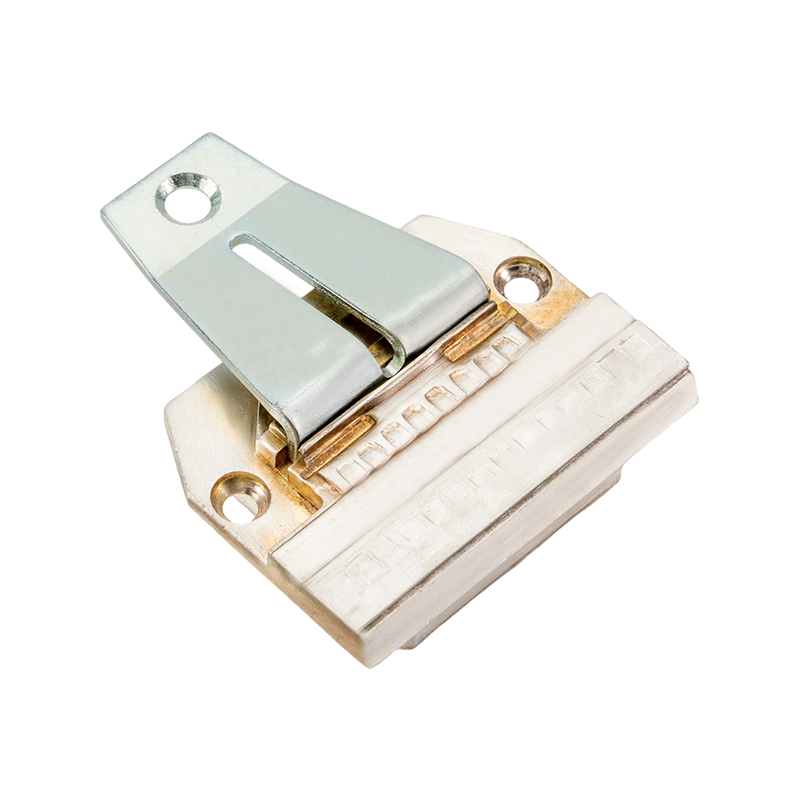
An MCCB Frame Stationary Contact Assembly is a critical current-carrying component installed in the fixed portion of a molded case circuit breaker. It provides the stationary electrical contact interface for the MCCB's moving contact and helps establish a stable current path when the circuit breaker is in the closed position.
For MCCB manufacturers, OEMs, electrical equipment integrators, and wholesale buyers, the stationary contact assembly is more than a simple copper component. Its contact geometry, conductivity, welding quality, surface condition, dimensional accuracy, and mechanical strength can directly affect contact resistance, temperature rise, switching performance, and long-term reliability.
The latest IEC 60947-2 edition, IEC 60947-2:2024, covers circuit breakers for low-voltage applications, including relevant requirements for equipment operating up to 1,000 V AC or 1,500 V DC. Actual component requirements must always be evaluated as part of the complete MCCB design and applicable certification tests.
2. How Does an MCCB Frame Stationary Contact Work?
(1)Creating a Stable Current Path
When the MCCB is switched on, the moving contact engages with the stationary contact. The stationary contact assembly provides a conductive interface that transfers current through the circuit breaker. Its geometry must ensure consistent contact engagement while minimizing unnecessary resistance and localized heating.
(2)Supporting Reliable Switching
During normal switching, the stationary contact must withstand repeated mechanical and electrical stresses. During interruption of a fault current, the contact system is also exposed to intense thermal, electromagnetic, and arcing conditions. Therefore, contact design and material selection must be matched to the complete MCCB's rated and tested performance.
(3)Working With the Arc-Control System
When contacts separate under load, an electrical arc can form. The stationary contact geometry, moving contact, arc runner, and arc chute work together as part of the interruption system. For this reason, the contact position and geometry must be manufactured consistently to maintain the intended arc path.
3. What Are the Key Requirements for an MCCB Stationary Contact?
A high-quality frame stationary contact assembly should satisfy several electrical, mechanical, and manufacturing requirements. For B2B buyers, these requirements should be defined before prototype approval and mass production.
Key performance considerations for MCCB frame stationary contact assemblies.
| Requirement |
Importance |
Typical Quality Focus |
| Electrical conductivity |
Reduces electrical losses |
Material grade and contact resistance |
| Contact geometry |
Ensures correct engagement |
Dimensional accuracy and tolerances |
| Weld strength |
Prevents component separation |
Welding consistency and inspection |
| Thermal performance |
Controls temperature rise |
Low resistance and proper current path |
| Mechanical strength |
Supports switching and fault conditions |
Material properties and assembly quality |
4. Why Is Low Contact Resistance Important?
Low and stable contact resistance is essential for high-current MCCB applications because resistive power loss increases according to the I²R relationship. Even a small resistance can create significant heat as current increases.
For example, if a hypothetical contact path has a resistance of 100 μΩ and carries 400 A, its theoretical resistive loss is approximately 16 W. At 800 A, the same resistance would produce approximately 64 W. This demonstrates why contact resistance and thermal performance become increasingly important as MCCB current ratings increase.
These figures are an engineering example rather than a universal specification. The actual acceptable resistance must be established through the MCCB manufacturer's design calculations, temperature-rise evaluation, and applicable type tests.
5. Which Materials Are Used for MCCB Frame Stationary Contacts?
Copper and copper alloys are widely considered for current-carrying components because they combine good electrical conductivity with mechanical strength and manufacturing flexibility. The specific material should be selected according to the required current capacity, temperature-rise target, contact pressure, mechanical stress, and manufacturing process.
Depending on the MCCB design, contact surfaces may use suitable contact materials or surface treatments to improve electrical stability, wear resistance, and resistance to oxidation. B2B buyers should request material specifications and surface-treatment details when sourcing components for OEM production.
- Copper or copper alloys for the primary current path.
- Suitable contact materials for switching interfaces.
- Surface treatments selected according to electrical and environmental requirements.
- High-strength materials or structures where mechanical reinforcement is required.
6. What Is the Importance of Spot Welding Quality?
Many MCCB contact assemblies incorporate welded connections between conductive parts. Spot welding can provide a repeatable connection when the welding parameters, electrode condition, material thickness, and component positioning are properly controlled.
For high-volume B2B production, weld consistency is as important as nominal weld strength. Variations in welding current, welding time, electrode pressure, or component alignment can affect nugget formation and connection quality.
A suitable quality-control program can include weld parameter monitoring, dimensional inspection, visual inspection, destructive sampling, pull or tensile testing where appropriate, and batch traceability. The exact acceptance criteria should be established according to the manufacturer's engineering specifications.
7. What Should B2B Buyers Check Before Purchasing?
Purchasing an MCCB frame stationary contact assembly requires accurate matching with the circuit breaker frame and moving-contact system. A component that appears dimensionally similar may still fail to provide the required electrical or mechanical performance.
Recommended information for sourcing stationary contact assemblies from an OEM supplier.
| Buyer Information |
Purpose |
| MCCB model and frame size |
Confirms mechanical compatibility |
| Rated current and voltage |
Defines electrical and thermal requirements |
| Technical drawing or sample |
Controls dimensions and interface geometry |
| Material and plating specification |
Controls conductivity and durability |
| Annual quantity and MOQ |
Supports production planning and quotation |
| Required inspection documents |
Supports supplier quality management |
For OEM projects, buyers should also confirm prototype lead time, tooling ownership, production capacity, quality-control procedures, packaging, batch traceability, and technical support. Providing a physical sample or CAD drawing at the quotation stage can significantly reduce the risk of dimensional mismatch.
Because the stationary contact is part of a complete circuit breaker, its quality should be evaluated through both component-level inspection and complete MCCB testing. A supplier quality program may include the following inspections:
- Dimensional and tolerance inspection.
- Raw material and surface-treatment verification.
- Weld appearance and weld-strength inspection.
- Contact resistance measurement where specified.
- Contact alignment and engagement inspection.
- Temperature-rise and electrical performance testing at the complete MCCB level.
For mass production, statistical process control and traceability can help identify manufacturing drift before it causes a large batch of components to fall outside engineering specifications.
9. Jiangsu Kaiyuanfeng MCCB Frame Stationary Contact Assembly Manufacturer
Jiangsu Kaiyuanfeng Electrical Machinery Manufacturing Co., Ltd. is a MCCB Frame Stationary Contact Assembly Manufacturer and Wholesale MCCB Frame Stationary Contact Assembly supplier. Established in Taizhou in August 2013 with an initial registered capital of RMB 5 million, the company specializes in key circuit breaker components and integrates R&D, design, production, sales, and service.
The company manufactures current-carrying components for frame circuit breakers, featuring high spot welding rates and reliable weld strength. Its production approach focuses on stable electrical performance, accurate assembly dimensions, and reliable mechanical connections for MCCB applications.
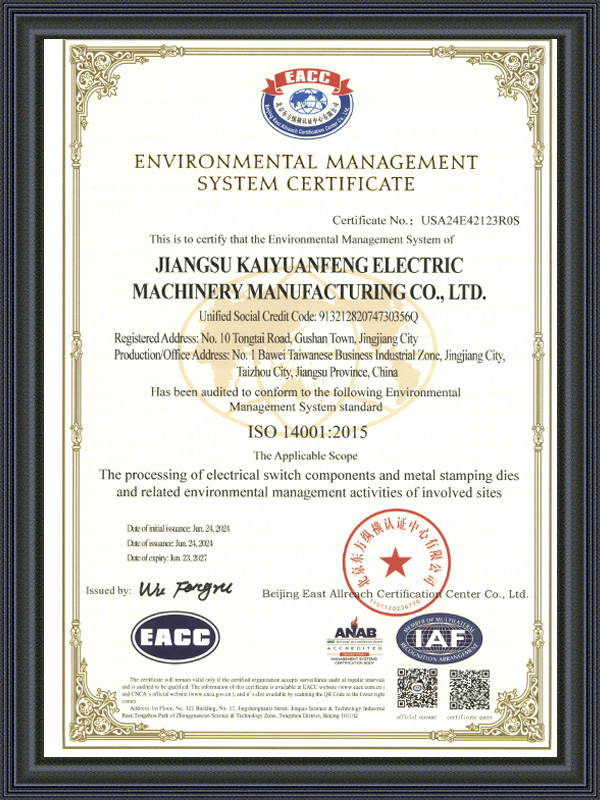
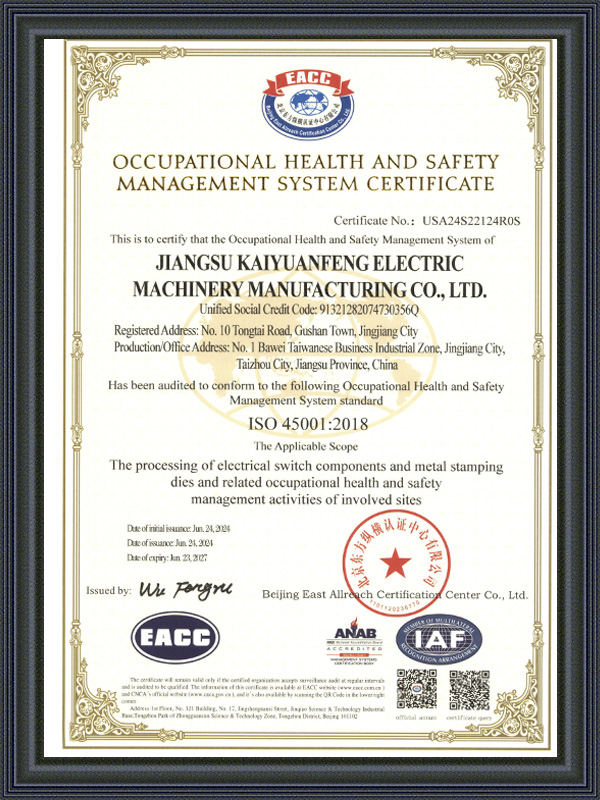
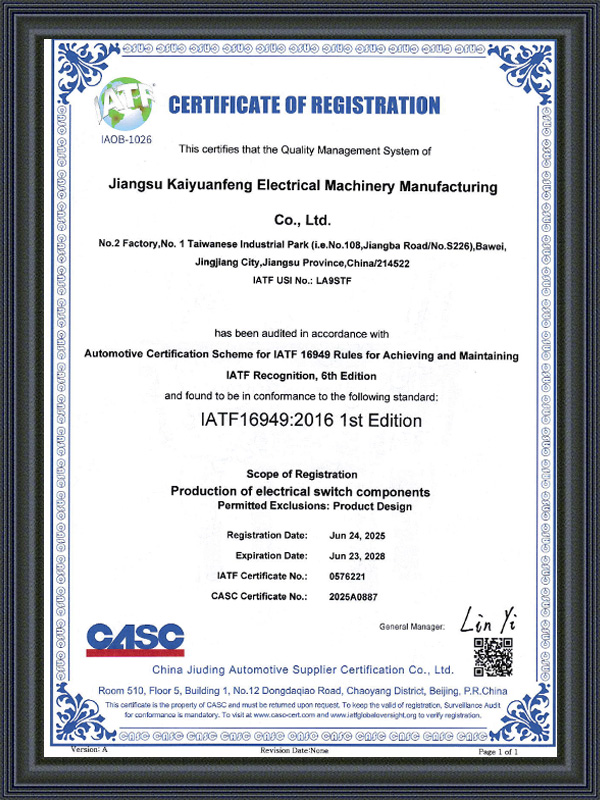
Jiangsu Kaiyuanfeng follows the principles of integrity, win-win collaboration, and continuous development. Customer requirements are incorporated into processes from product development through manufacturing. The company's innovation is supported by 28 related patents, while its ISO-certified management system supports standardized operations and quality assurance.
With over a decade of industry experience, Jiangsu Kaiyuanfeng serves B2B customers seeking reliable circuit breaker components and attentive technical service. Its long-term goal is to become a core supplier of key circuit breaker components and contribute to safer electrical systems.
10. How Can OEM Customers Customize MCCB Stationary Contacts?
OEM customers may require customized stationary contacts for different MCCB frame sizes, current ratings, contact configurations, and proprietary breaker structures. Customization can cover dimensions, copper or alloy selection, material thickness, contact geometry, surface treatment, welding structure, and mounting features.
- Provide the MCCB model, frame size, and rated current.
- Send a technical drawing, CAD file, or physical sample.
- Define material grade, thickness, plating, and surface requirements.
- Specify critical dimensions and allowable tolerances.
- Confirm welding requirements and quality standards.
- Complete prototype verification before mass production.
- Confirm MOQ, annual demand, packaging, inspection documents, and delivery schedule.
For customized projects, prototype approval should cover both dimensional compatibility and electrical performance. A technically correct drawing, representative sample, and clearly defined inspection standard can help reduce development time and production risk.
11. Common Questions About MCCB Frame Stationary Contact Assemblies
Q1. What is an MCCB frame stationary contact assembly?
An MCCB frame stationary contact assembly is a fixed current-carrying component inside a molded case circuit breaker. It engages with the moving contact when the breaker is closed and forms part of the primary current path. Its electrical conductivity, geometry, mechanical strength, and connection quality can affect the overall performance of the MCCB.
Q2. What does a stationary contact do in an MCCB?
The stationary contact provides the fixed electrical interface for the moving contact. When the breaker closes, the two contacts establish the current path. When the breaker opens, they separate to interrupt current, with the contact system working together with the arc-control components to manage the resulting electrical arc.
Q3. What material is commonly used for MCCB stationary contacts?
Copper and copper alloys are commonly considered for current-carrying components because they offer good electrical conductivity and mechanical properties. The final material depends on current rating, temperature-rise requirements, contact pressure, mechanical conditions, manufacturing method, and the requirements of the complete MCCB design.
Q4. Why is spot welding important for MCCB stationary contact assemblies?
Spot welding can provide a reliable connection between conductive parts when welding parameters and component positioning are properly controlled. Consistent welding helps maintain mechanical integrity and a stable electrical path. For B2B production, weld quality should be controlled through defined parameters, inspection methods, sampling plans, and traceability.
Q5. How does contact resistance affect MCCB performance?
Contact resistance creates heat according to I²R. For example, a hypothetical 100 μΩ resistance at 400 A produces approximately 16 W of resistive loss. At 800 A, it produces approximately 64 W. Therefore, stable contact resistance is an important factor in controlling temperature rise, particularly in higher-current MCCBs.
Q6. Can an MCCB stationary contact assembly be customized?
Yes. OEM customers can request customized dimensions, materials, thicknesses, contact geometries, surface treatments, mounting structures, and welding configurations. Customization should be based on technical drawings or samples and verified through prototype testing before full-scale production.
Q7. How do I choose the correct MCCB stationary contact assembly?
Start by confirming the MCCB frame size, model, rated current, rated voltage, contact geometry, mounting dimensions, material requirements, and connection structure. For OEM purchasing, providing a technical drawing or physical sample is strongly recommended to ensure accurate compatibility with the moving contact and complete breaker mechanism.
Q8. What should I ask an MCCB stationary contact manufacturer?
B2B buyers should ask about material specifications, manufacturing tolerances, spot-welding processes, weld-strength inspection, contact-resistance testing, quality-management systems, OEM customization capabilities, production capacity, MOQ, lead time, packaging, and traceability. Sample approval and technical documentation should be completed before mass production.
Q9. Where can I buy wholesale MCCB frame stationary contact assemblies?
Wholesale buyers can source MCCB frame stationary contact assemblies directly from specialized circuit breaker component manufacturers such as Jiangsu Kaiyuanfeng Electrical Machinery Manufacturing Co., Ltd.. For OEM and bulk purchasing, buyers should evaluate manufacturing experience, material control, welding quality, dimensional consistency, quality certification, customization capability, MOQ, and delivery capacity.
Q10. What information is needed for an MCCB stationary contact assembly quotation?
A complete RFQ should include the MCCB model, frame size, rated current, rated voltage, technical drawing or sample, material specification, thickness, surface treatment, critical dimensions, estimated order quantity, annual demand, packaging requirements, and destination market. These details allow the manufacturer to assess tooling, production requirements, inspection procedures, and pricing more accurately.

 English
  中文简体
中文简体  русский
  عربى
عربى