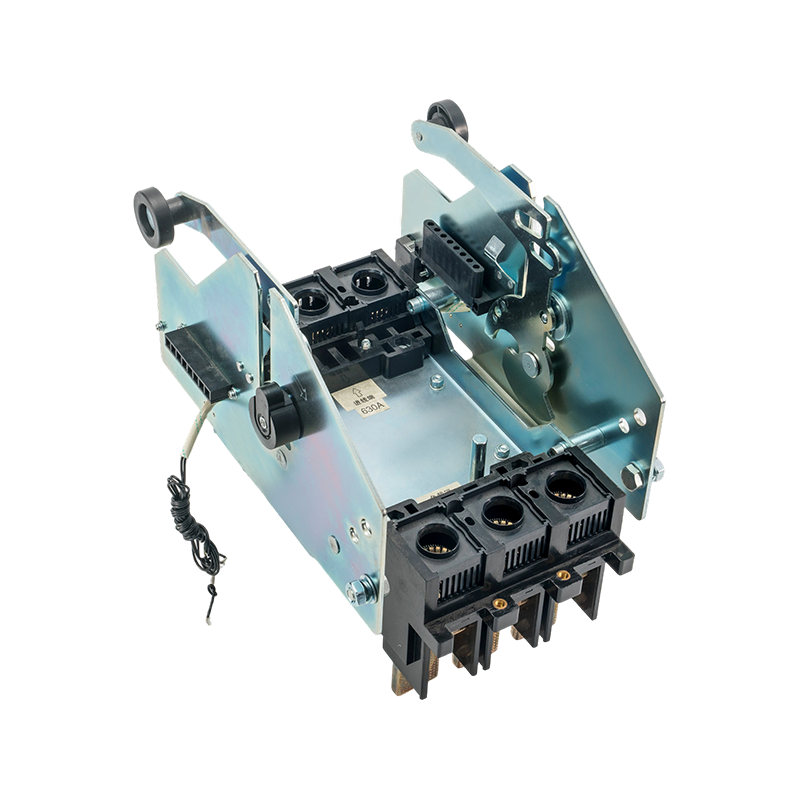
An MCCB Withdrawable Device is a mechanical and electrical accessory designed to allow a compatible molded case circuit breaker (MCCB) to be withdrawn, inserted, isolated, or reconnected within a dedicated mounting system. Compared with a conventional fixed-mounted breaker, a withdrawable configuration provides greater flexibility for equipment maintenance, inspection, replacement, and system configuration.
Withdrawable device features comprehensive functionality, simple installation, and can be used with circuit breakers to implement various interlocking functions. For B2B applications, this makes the product particularly valuable for industrial distribution panels, commercial electrical systems, manufacturing facilities, data centers, energy infrastructure, and other installations where maintenance time and operational safety are important.
The latest IEC 60947-2:2024 is the current IEC standard for low-voltage circuit breakers and applies to circuit breakers with rated voltages up to 1,000 V AC or 1,500 V DC. The standard was published on September 18, 2024, replacing the previous 2016 edition and its 2019 amendment. Therefore, B2B buyers should evaluate withdrawable MCCB systems according to the current applicable product and assembly requirements rather than relying solely on older specifications.
2. How Does an MCCB Withdrawable Device Work?
(1) Insertion and Withdrawal
A withdrawable MCCB is installed on a compatible device or base that provides the required mechanical positioning and electrical connection. The breaker can be moved between defined positions depending on the product design. These positions may include a connected position, test or isolated position, and withdrawn position.
(2) Mechanical Positioning
The withdrawable mechanism controls the movement of the MCCB and helps ensure that the breaker reaches the correct mechanical position before electrical connections are established. Accurate positioning is critical because even small dimensional errors can affect contact alignment, insertion force, and connection reliability.
(3) Interlocking Functions
A major advantage of withdrawable systems is the ability to integrate mechanical or electrical interlocking functions. For example, an interlock can prevent withdrawal while the breaker is in an inappropriate operating state, helping reduce the risk of incorrect operation during maintenance.
(1) Faster Maintenance and Replacement
A withdrawable structure can simplify the removal of a compatible breaker during inspection or replacement. In a large industrial panel containing 20 or more MCCBs, standardized withdrawable arrangements can help maintenance teams follow a more consistent replacement procedure and reduce the need for repeated cable disconnection.
(2) Reduced Wiring Work
Compared with a fixed breaker that requires direct conductor termination, a properly engineered withdrawable system can use dedicated contacts and mounting structures. This can simplify installation and replacement, particularly for OEM electrical cabinets and modular distribution equipment.
(3) Improved Operational Flexibility
Withdrawable MCCB solutions are suitable for electrical systems where breakers may need to be inspected, replaced, upgraded, or isolated during the equipment lifecycle. This flexibility is especially valuable for facilities with strict maintenance schedules or high downtime costs.
(4) Easier Interlocking Design
Withdrawable devices can be engineered with mechanical interlocks and compatible electrical accessories. These features can help coordinate breaker operation with the withdrawable position and other switching equipment, depending on the specific system design.
4. Key Specifications for B2B MCCB Withdrawable Devices
For OEMs, panel builders, distributors, and electrical contractors, selecting a withdrawable device requires more than checking the MCCB rated current. The mechanical interface, electrical connection, operating position, and interlocking requirements must all be compatible.
Important specifications to verify when purchasing an MCCB withdrawable device for OEM or wholesale applications.
| Specification |
What to Confirm |
B2B Importance |
| MCCB Compatibility |
Series, frame size, poles and model |
Ensures mechanical and electrical compatibility |
| Connection System |
Primary contacts and terminal arrangement |
Affects connection reliability and installation |
| Position Control |
Connected, isolated, test, or withdrawn positions |
Supports safer maintenance procedures |
| Interlocking |
Mechanical and electrical interlocks |
Helps prevent incorrect operation |
| Installation |
Panel dimensions and mounting structure |
Determines retrofit and OEM feasibility |
5. MCCB Withdrawable Device Applications
(1) Industrial Distribution Panels
Manufacturing plants often require flexible electrical distribution systems because production equipment may be upgraded or serviced over many years. Withdrawable MCCB systems can simplify breaker replacement and inspection without redesigning the complete panel.
(2) Commercial Buildings and Infrastructure
Commercial electrical distribution systems can benefit from modular breaker arrangements where maintenance access and operational continuity are important. Typical applications include large buildings, infrastructure facilities, transportation-related systems, and centralized distribution equipment.
(3) Data Centers and Critical Power Systems
Data centers place strong emphasis on maintainability and controlled electrical switching. A properly engineered withdrawable MCCB solution can help maintenance personnel isolate or replace compatible breakers while keeping the broader distribution architecture organized.
(4) Renewable Energy and Energy Storage
Solar power, energy storage, and microgrid installations increasingly use modular electrical distribution equipment. Withdrawable components can provide useful flexibility where breakers need to be inspected, replaced, or reconfigured as the system evolves.
6. How to Select the Right MCCB Withdrawable Device?
B2B purchasers should confirm the complete technical interface before placing an order. A withdrawable device that has the correct current rating but an incorrect mechanical interface cannot be treated as a suitable replacement.
- Identify the exact MCCB manufacturer, series, frame size, and model.
- Confirm the number of poles, rated voltage, rated current, and required electrical connection.
- Check the mounting dimensions, insertion direction, contact positions, and operating mechanism.
- Determine whether the project requires connected, test, isolated, or withdrawn positions.
- Confirm mechanical and electrical interlocking requirements.
- Request technical drawings, samples, inspection standards, and test documentation for OEM projects.
- Evaluate MOQ, production capacity, lead time, packaging, and customization support for wholesale purchasing.
For high-volume procurement, sample validation should be completed before mass production. A practical qualification process can include dimensional inspection, insertion and withdrawal testing, contact alignment verification, mechanical interlock testing, and electrical performance evaluation under the applicable product and assembly requirements.
7. MCCB Withdrawable Device Manufacturer for OEM and Wholesale Supply
Jiangsu Kaiyuanfeng Electrical Machinery Manufacturing Co., Ltd. is a MCCB Withdrawable Device Manufacturer and Wholesale MCCB Withdrawable Device supplier, established in Taizhou in August 2013 with an initial registered capital of 5 million yuan. The company specializes in key circuit breaker components and integrates R&D, design, production, sales, and service.
The company adheres to the core values of "building a solid foundation through steadiness, expanding horizons via perseverance, and forging integrity with responsibility" and follows the founding principle of integrity, win-win collaboration, and pioneering the future. Customer requirements are incorporated into processes from product development to manufacturing to support reliable component solutions.
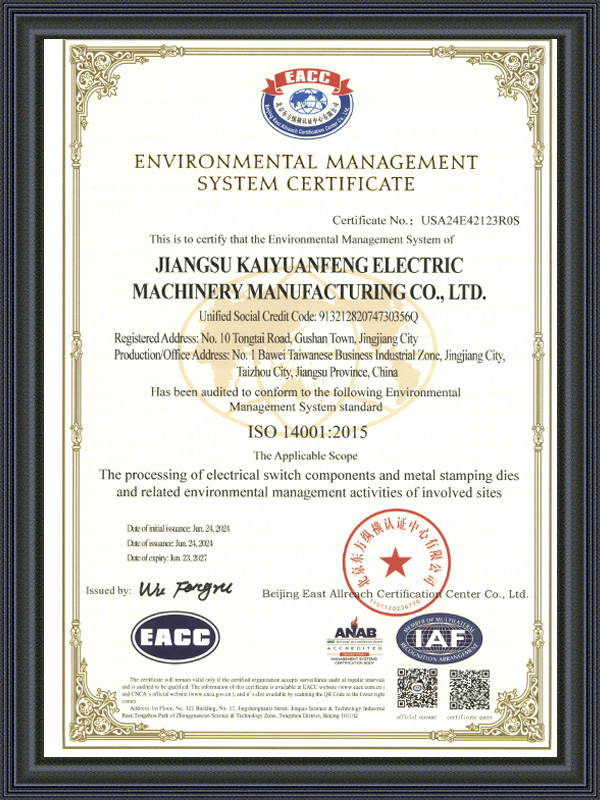
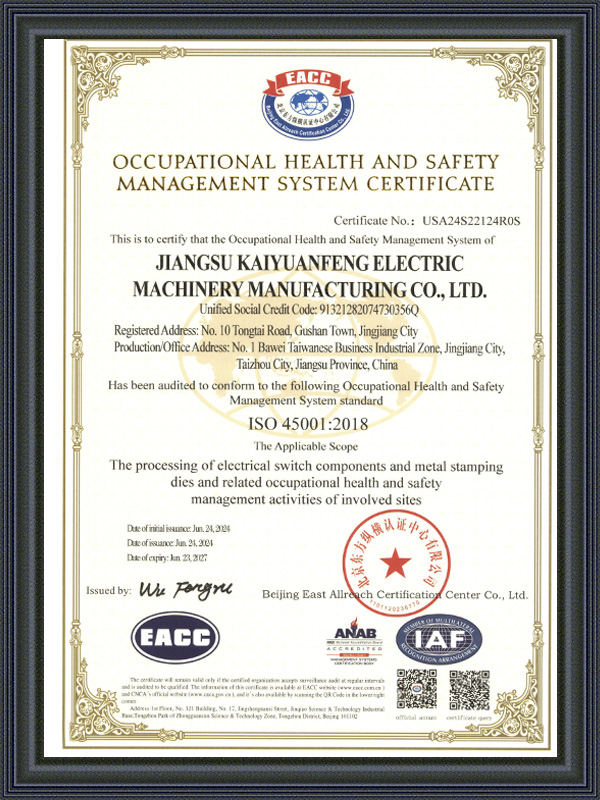
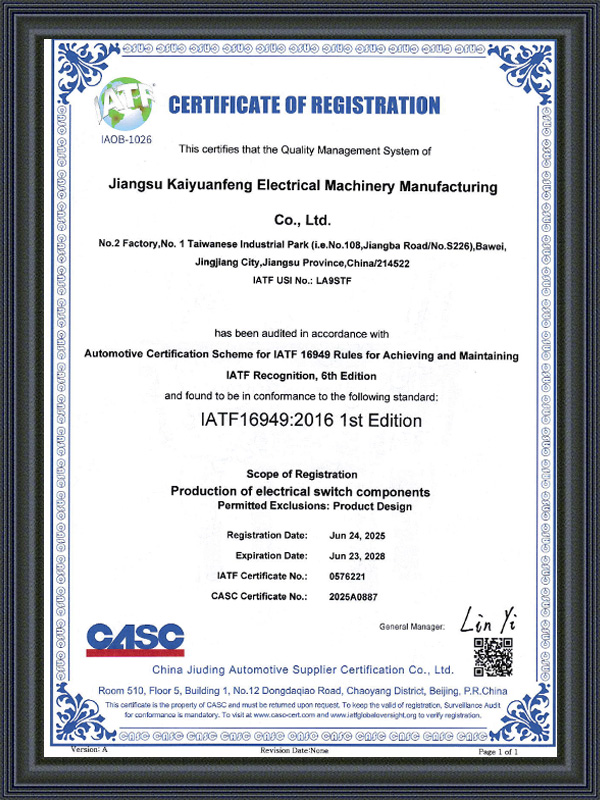
Jiangsu Kaiyuanfeng's technological innovation is supported by 28 related patents, addressing key challenges in circuit breaker component development. The company has obtained ISO certification and implements a management system aligned with international standards to support operational efficiency and quality assurance.
With over a decade of industry experience, Jiangsu Kaiyuanfeng focuses on reliable circuit breaker components and long-term B2B cooperation. Its MCCB withdrawable device solutions can support electrical equipment manufacturers, panel builders, distributors, and system integrators seeking stable component supply and customized product development.
8. Frequently Asked Questions About MCCB Withdrawable Devices
Q1. What is an MCCB withdrawable device?
An MCCB withdrawable device is an accessory or mounting assembly that allows a compatible molded case circuit breaker to be inserted, withdrawn, isolated, or reconnected within an electrical panel. It is designed to improve maintainability and provide controlled mechanical and electrical positioning.
Q2. What is the difference between an MCCB withdrawable device and a plug-in device?
Both systems can simplify breaker removal and installation, but a withdrawable system generally provides a more structured movement and positioning arrangement, potentially including connected, test, isolated, and withdrawn positions and dedicated interlocking functions. A plug-in device is typically focused on establishing a detachable electrical connection through a compatible base. The actual functions depend on the specific manufacturer and product design.
Q3. Are MCCB withdrawable devices universal?
No. Withdrawable devices are normally designed for specific MCCB series, frame sizes, dimensions, and mechanical interfaces. Even breakers with the same rated current can have different mounting structures and contact arrangements. Buyers should provide the exact breaker model and technical drawings to confirm compatibility.
Q4. What are the benefits of using a withdrawable MCCB?
The main benefits include easier breaker replacement, simplified maintenance, reduced wiring work, modular panel design, controlled positioning, and potential mechanical or electrical interlocking. These advantages can be particularly valuable in industrial facilities where maintenance efficiency and equipment availability have a direct effect on operating costs.
Q5. What are the different positions of a withdrawable MCCB?
Depending on the product design, withdrawable MCCB systems may provide connected, test, isolated, and withdrawn positions. The connected position establishes the required power connection, while isolated or withdrawn positions separate the breaker from the main circuit to facilitate maintenance. Buyers should confirm the exact position definitions and interlocking sequence in the manufacturer's technical documentation.
Q6. Can an MCCB withdrawable device provide interlocking?
Yes. Withdrawable devices can be designed to work with circuit breakers and related accessories to implement various mechanical or electrical interlocking functions. These functions can help prevent inappropriate insertion, withdrawal, or switching operations. The exact interlocking logic must be evaluated against the complete electrical system design.
Q7. What should I check before buying MCCB withdrawable devices in bulk?
Bulk buyers should verify the MCCB model, frame size, pole configuration, rated electrical parameters, mounting dimensions, contact structure, insertion and withdrawal mechanism, interlocking requirements, material specifications, quality-control procedures, certifications, MOQ, lead time, packaging, and OEM customization capabilities. Sample approval is recommended before a large production order.
Q8. Which standard applies to MCCB withdrawable applications?
For the MCCB itself, IEC 60947-2:2024 is the current IEC standard for low-voltage circuit breakers within its stated scope. Where the MCCB is installed as part of a low-voltage switchgear and controlgear assembly, the applicable assembly standard and project-specific requirements must also be considered. The correct compliance route depends on the complete equipment configuration, market, and application.

 English
  中文简体
中文简体  русский
  عربى
عربى