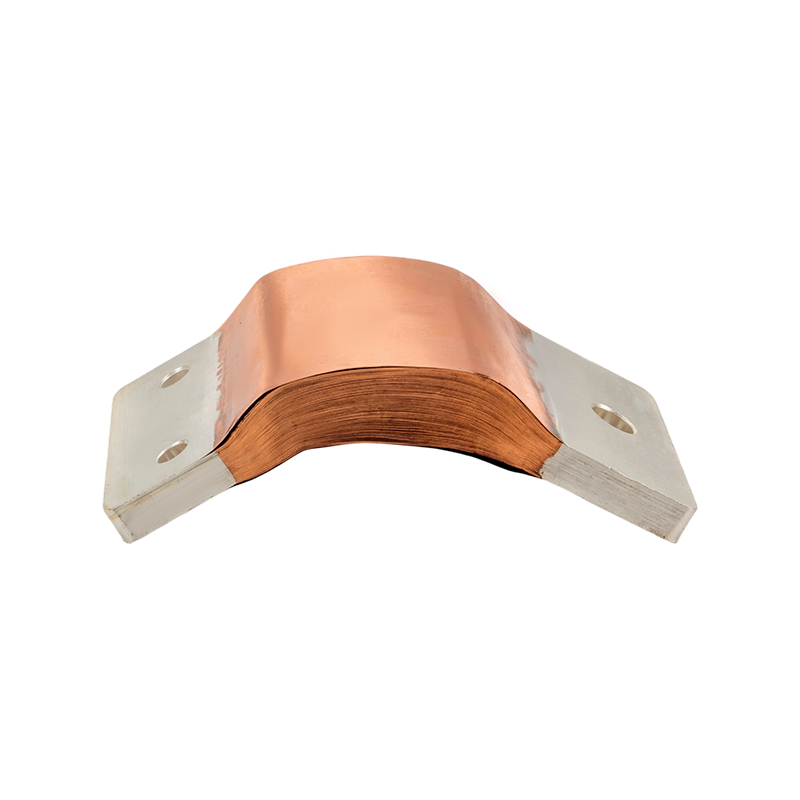
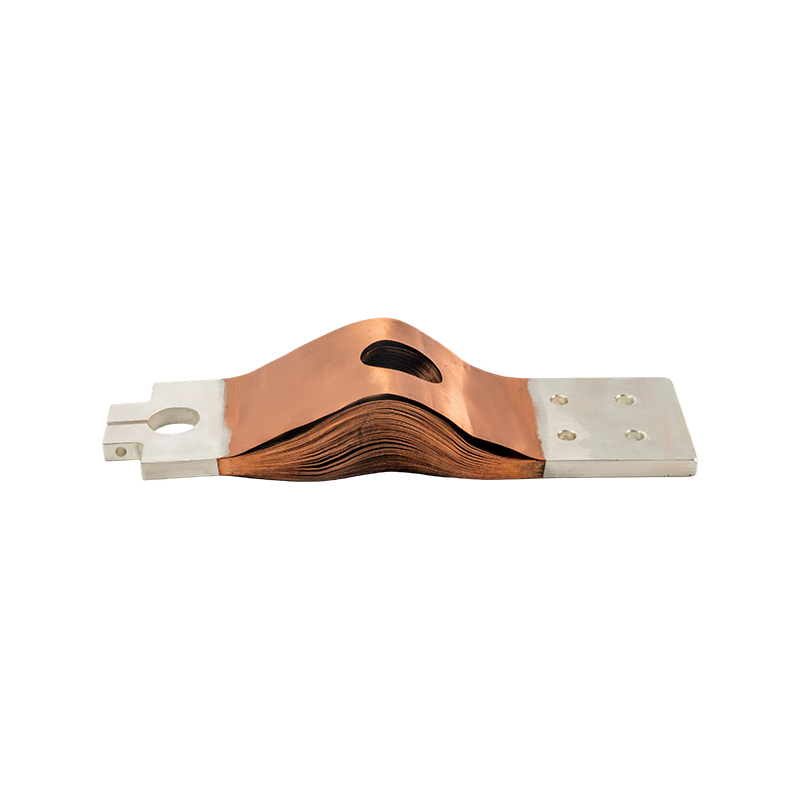
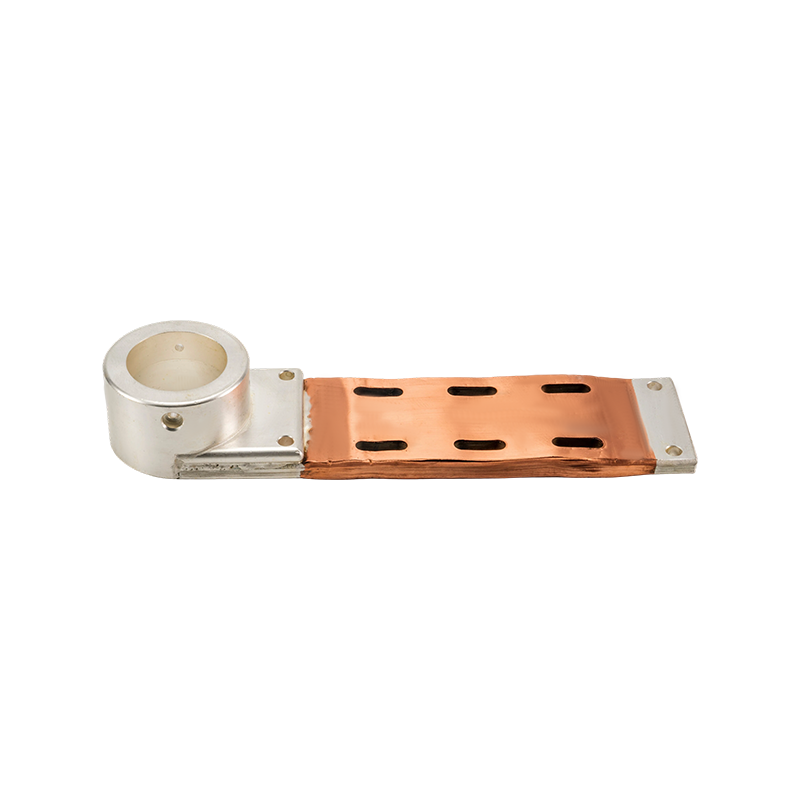
Flexible Copper Connectors are high-current electrical connection components designed to provide a reliable conductive path while accommodating vibration, movement, thermal expansion, and installation-angle variation. Unlike rigid copper busbars, flexible copper connectors can absorb mechanical displacement and reduce stress transferred to terminals, switchgear, battery packs, and electrical equipment.
They are widely used in new energy vehicles, battery energy storage systems, power distribution equipment, switchgear, transformers, industrial machinery, and high-current electrical assemblies. Depending on the application, flexible connectors can be manufactured as laminated copper shunts, braided copper connectors, copper foil connectors, or customized flexible copper busbars.
For B2B buyers, the main selection factors are not simply copper thickness or product price. Current rating, resistance, temperature rise, flexibility, connection method, insulation requirements, environmental conditions, and expected service life should all be considered when specifying a flexible copper connector.
2. How Do Flexible Copper Connectors Work?
(1) Conducting High Current
Copper has excellent electrical conductivity, making it suitable for high-current applications. The connector creates a low-resistance path between two conductive components while maintaining mechanical flexibility. The actual current capacity depends on conductor cross-section, copper grade, connector geometry, ambient conditions, installation method, and allowable temperature rise.
(2) Absorbing Vibration and Movement
Rigid connections can experience mechanical stress when connected components move relative to each other. A flexible copper connector provides compliance and can reduce stress caused by vibration, thermal expansion, equipment movement, or installation tolerances. This is particularly important in EV battery packs and industrial electrical equipment.
(3) Managing Thermal Expansion
Electrical components heat up during operation and expand as temperature changes. A flexible copper connector can accommodate dimensional movement between connection points. This reduces mechanical loading on terminals and helps maintain stable connections over repeated thermal cycles.
3. Why Are Flexible Copper Connectors Important for High-Current Applications?
Electrical losses are closely related to resistance and current. The basic relationship is P = I²R. For example, if a connection has a resistance of 50 micro-ohms and carries 500 A, the theoretical resistive loss is approximately 12.5 W. This heat must be managed through conductor design, connection quality, thermal dissipation, and the surrounding equipment.
For this reason, a high-quality flexible copper connector should provide both electrical and mechanical performance. A connector with inadequate cross-section or poor termination may create localized heating, while an excessively rigid design may transfer vibration and expansion forces to sensitive electrical terminals.
- Low electrical resistance: Helps reduce I²R losses.
- High flexibility: Accommodates vibration and movement.
- Stable terminals: Supports consistent electrical contact.
- Thermal capability: Supports continuous high-current operation.
- Custom geometry: Enables installation in compact electrical systems.
4. Types of Flexible Copper Connectors for Industrial Applications
Comparison of common flexible copper connector structures and their B2B applications.
| Connector Type |
Main Characteristics |
Typical Applications |
| Copper Foil Connector |
Multiple copper foils, highly flexible |
Battery packs, busbars, switchgear |
| Laminated Copper Connector |
Layered copper construction with compact geometry |
Power electronics, energy storage |
| Braided Copper Connector |
Flexible woven copper structure |
Vibration environments, grounding, switchgear |
| Custom Flexible Busbar |
Application-specific shape and termination |
OEM electrical equipment |
The correct construction depends on the required flexibility, current, available installation space, connection method, and environmental conditions. For OEM projects, customized laminated or foil-based connectors can provide a more compact solution than conventional rigid busbars.
One of the important applications for flexible copper connectors is the connection of battery packs in new energy vehicles. Battery systems contain multiple cells or modules that can experience vibration, thermal cycling, dimensional changes, and installation tolerances. A flexible connector can accommodate these movements while maintaining a high-current electrical path.
For EV and battery manufacturers, connector design may involve copper foil thickness, number of layers, connection length, terminal dimensions, welding or riveting methods, insulation, and allowable temperature rise. The final design should be evaluated according to the battery architecture and electrical load profile rather than using a generic current rating.
Flexible copper connectors are also suitable for energy storage battery systems, charging equipment, power conversion systems, and other high-current applications where electrical conductivity must be combined with mechanical flexibility.
6. How to Choose the Right Flexible Copper Connector?
B2B buyers should specify a flexible copper connector according to the complete electrical and mechanical environment. The following factors are particularly important:
- Rated current: Determine continuous and peak current requirements.
- Voltage: Consider the operating voltage and insulation requirements.
- Flexibility: Define the required bending radius and movement range.
- Dimensions: Specify length, width, thickness, terminal position, and mounting holes.
- Material: Select suitable copper grade and surface treatment.
- Temperature rise: Define the maximum acceptable temperature under specified operating conditions.
- Environment: Consider vibration, humidity, corrosion, temperature cycling, and installation conditions.
For example, a connector used in a stationary distribution cabinet may require different flexibility characteristics from one installed inside an EV battery pack. A reliable supplier should therefore evaluate both the electrical load and mechanical movement before confirming the final design.
7. Jiangsu Kaiyuanfeng – Flexible Copper Connectors Manufacturer
Jiangsu Kaiyuanfeng Electrical Machinery Manufacturing Co., Ltd. is a Flexible Copper Connectors Manufacturer and wholesale supplier, established in Taizhou in August 2013 with an initial registered capital of 5 million yuan. The company specializes in key circuit breaker components and integrates R&D, design, production, sales, and service.
The company's flexible copper connectors are primarily used for connecting battery packs in new energy vehicles and are also compatible with high-current equipment, conductive connection applications in vibration environments, and electrical equipment requiring flexible installation-angle adaptation.
Jiangsu Kaiyuanfeng adheres to the core values of building a solid foundation through steadiness, expanding horizons through perseverance, and forging integrity with responsibility. The company follows the founding principles of integrity, win-win collaboration, and pioneering the future, incorporating customer requirements into processes from R&D to manufacturing.
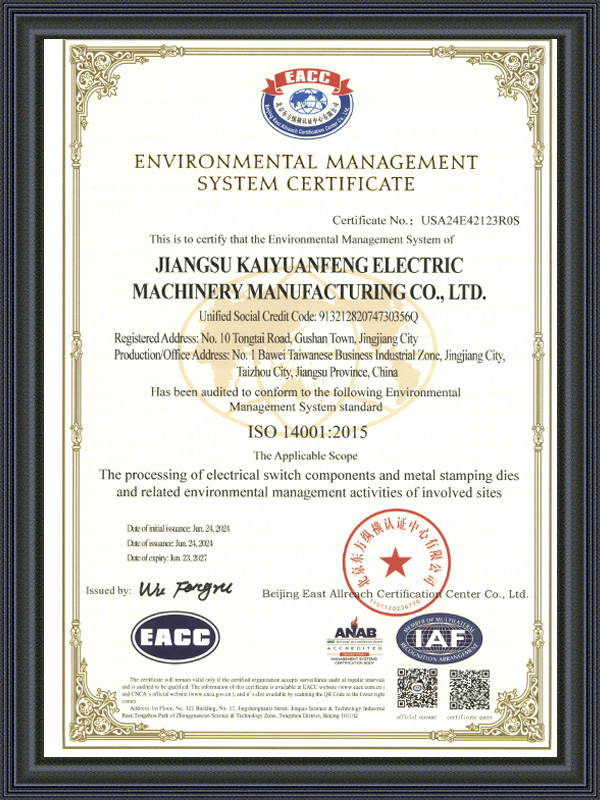
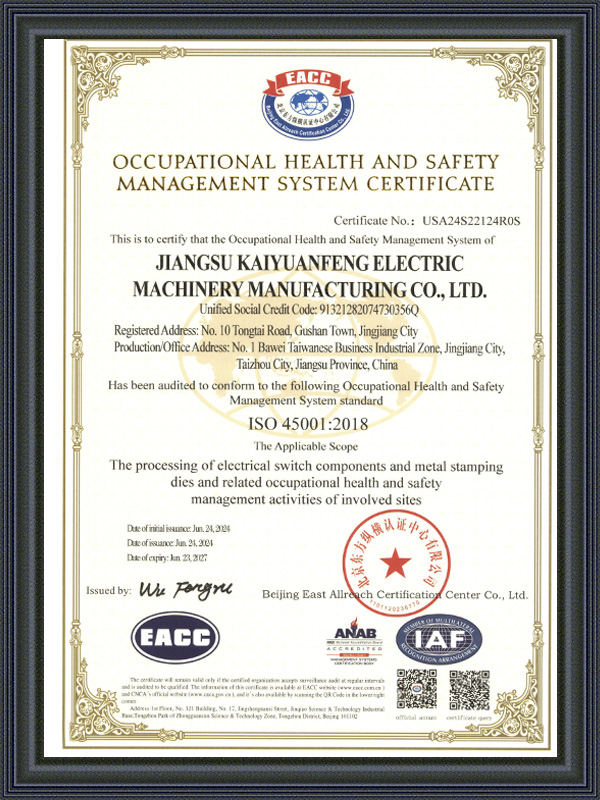
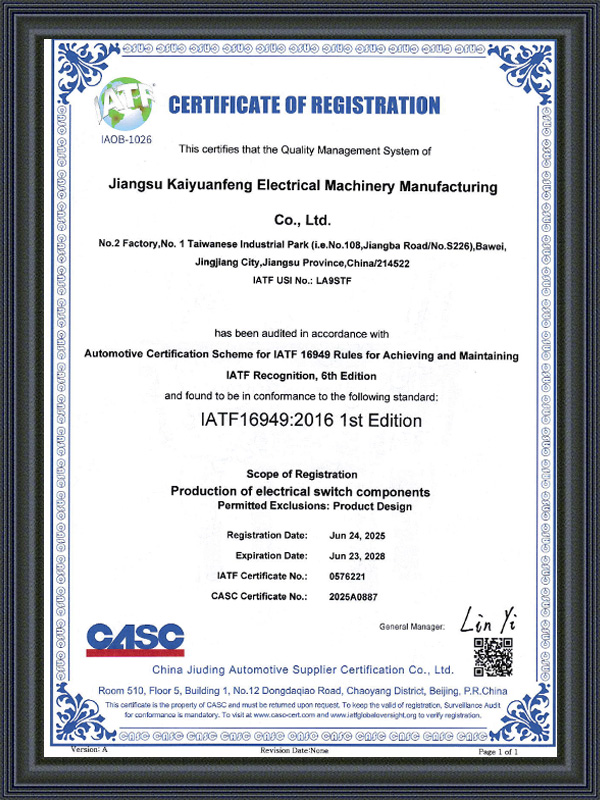
Its technological innovation is supported by 28 related patents addressing key industry challenges. The company has obtained ISO certification and implements a management system aligned with international standards to support operational efficiency and quality assurance.
With more than a decade of industry experience, Jiangsu Kaiyuanfeng maintains a customer-centered approach and focuses on reliable electrical components and responsive service. OEM and wholesale customers can provide drawings, samples, current requirements, dimensions, and application conditions for customized flexible copper connector development and production.
8. B2B Applications and Procurement of Flexible Copper Connectors
Flexible copper connectors are used across multiple industrial sectors where high-current conduction and mechanical flexibility are required. Common applications include EV battery packs, battery energy storage systems, switchgear, distribution equipment, transformers, industrial automation, power electronics, charging equipment, and vibration-prone electrical installations.
Typical B2B applications and purchasing priorities for flexible copper connectors.
| Industry |
Application |
Key Requirement |
| New Energy Vehicles |
Battery pack connections |
High current, vibration resistance, compact design |
| Energy Storage |
Battery and busbar connections |
Thermal performance and long service life |
| Switchgear |
Flexible electrical connections |
Low resistance and mechanical flexibility |
| Industrial Equipment |
High-current equipment |
Vibration tolerance and customized geometry |
For wholesale and OEM procurement, buyers should consider not only the initial unit price but also material consistency, dimensional accuracy, connection quality, production capacity, packaging, delivery stability, and the supplier's ability to maintain consistent performance across repeated batches.
9. Frequently Asked Questions About Flexible Copper Connectors
Q1. What are flexible copper connectors used for?
Flexible copper connectors are used to establish high-current electrical connections while accommodating vibration, movement, thermal expansion, and installation-angle changes. Common applications include EV battery packs, battery energy storage systems, switchgear, power distribution equipment, transformers, industrial machinery, and power electronics.
Q2. Why use a flexible copper connector instead of a rigid copper busbar?
A rigid busbar provides excellent structural support but may transfer vibration and thermal expansion forces directly to terminals. A flexible copper connector can absorb mechanical movement and accommodate installation tolerances while maintaining electrical continuity. This makes flexible connectors especially valuable in EV battery packs and equipment exposed to vibration or repeated thermal cycling.
Q3. How much current can a flexible copper connector carry?
There is no single universal current rating for flexible copper connectors. Current capacity depends on copper cross-section, conductor construction, length, connection method, ambient temperature, installation conditions, cooling, and allowable temperature rise. For example, two connectors with the same width may have substantially different permissible currents if their thickness, foil count, ventilation, or termination structures differ. The final rating should therefore be determined through engineering calculations and applicable testing.
Q4. Are flexible copper connectors suitable for EV battery packs?
Yes. Flexible copper connectors are well suited to EV battery applications because they can combine high electrical conductivity with mechanical compliance. They can accommodate vibration, thermal expansion, and movement between battery modules while maintaining a reliable current path. For EV applications, connector design should also consider insulation, joining technology, temperature cycling, vibration, available space, and the complete battery system's electrical requirements.
Q5. What is the difference between copper foil and braided copper flexible connectors?
Copper foil connectors are generally constructed from multiple thin copper layers and can provide a compact, highly flexible current path. Braided copper connectors use woven copper strands and are particularly useful where repeated movement, vibration absorption, or grounding flexibility is important. The better choice depends on current requirements, installation space, movement range, connection method, and the required mechanical and electrical performance.
Q6. How do I select the correct flexible copper connector size?
Start by specifying continuous and peak current, operating voltage, connector length, available installation space, bending requirements, ambient temperature, and allowable temperature rise. Then determine the appropriate copper cross-section and construction. The connector's terminal dimensions and mounting geometry must also match the mating components. For OEM projects, providing a technical drawing or sample is the most reliable way to establish the correct dimensions.
Q7. Does copper plating improve flexible connector performance?
A suitable surface treatment can improve corrosion resistance and help maintain stable electrical contact at connection interfaces. However, the appropriate plating or treatment depends on the application, mating material, environment, joining method, and required service life. Surface treatment should therefore be selected as part of the complete connector design rather than solely for appearance.
Q8. Can flexible copper connectors be customized for OEM applications?
Yes. OEM flexible copper connectors can be customized in length, width, thickness, copper layer quantity, terminal geometry, hole position, surface treatment, insulation, and overall shape. Customized designs are especially useful when the available installation space is limited or when the connector must match a specific battery pack, switchgear, or electrical assembly.
Q9. What should I provide when requesting a flexible copper connector quotation?
For an accurate quotation, provide rated current, voltage, dimensions, copper material, connector length, terminal configuration, mounting-hole details, surface treatment, insulation requirements, operating environment, annual quantity, packaging requirements, and delivery expectations. A CAD drawing, technical drawing, or physical sample can significantly improve quotation accuracy and shorten the OEM development process.
Q10. Can Jiangsu Kaiyuanfeng supply wholesale flexible copper connectors?
Yes. Jiangsu Kaiyuanfeng Electrical Machinery Manufacturing Co., Ltd. supplies flexible copper connectors for OEM, ODM, wholesale, and industrial electrical applications. The company has more than a decade of industry experience, 28 related patents, and an ISO-certified management system. Customers can provide drawings, samples, current requirements, and application details for customized product development and mass production.

 English
  中文简体
中文简体  русский
  عربى
عربى