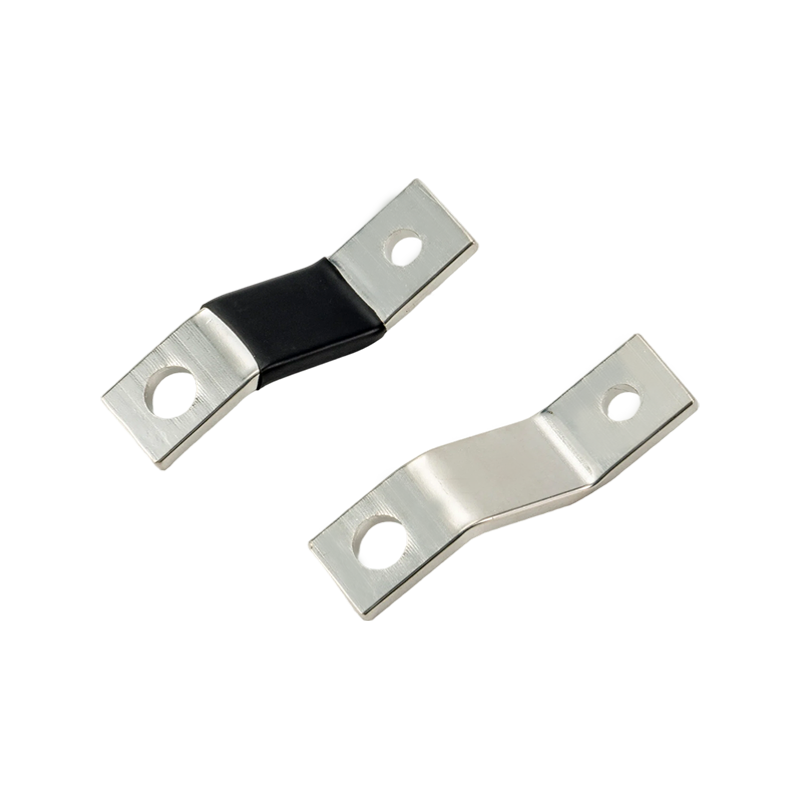
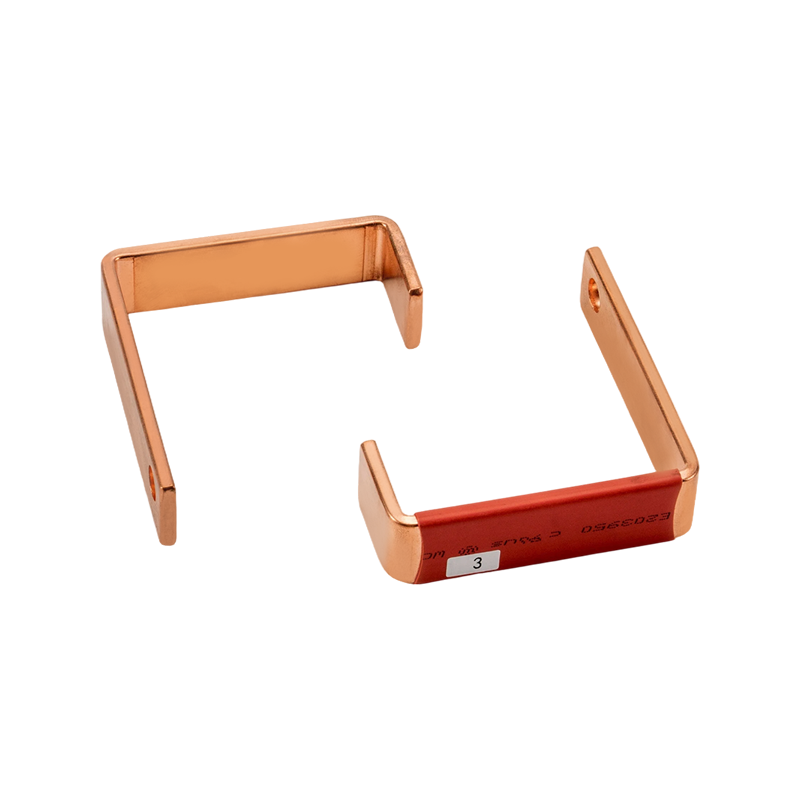
Copper Busbar Bushings are insulating and supporting components used with copper busbars to provide electrical insulation, mechanical positioning, and controlled clearance between conductive parts and surrounding structures. They are commonly used in low-voltage distribution equipment, switchgear, MCCBs, control cabinets, power distribution systems, and industrial electrical assemblies.
A busbar bushing is not simply a spacer. In a properly engineered electrical assembly, it helps maintain the designed insulation distance, supports the copper conductor, reduces the possibility of accidental contact with grounded structures, and contributes to stable installation. For B2B buyers, the most important specifications normally include material, insulation performance, dimensions, temperature resistance, mechanical strength, creepage distance, and compatibility with the copper busbar.
Depending on the application, bushings can be produced in different shapes and materials, including molded insulating polymers and customized structures designed around specific copper busbar geometries.
2. Why Are Bushings Important for Copper Busbars?
(1) Electrical Insulation
Copper is an excellent electrical conductor, but this also means that exposed copper requires appropriate insulation and clearance. A properly selected bushing helps isolate the busbar from metal frames, mounting structures, adjacent conductive components, and other potentially hazardous surfaces.
(2) Controlled Electrical Clearance
Electrical equipment design must consider clearance and creepage requirements. The actual required distance depends on rated voltage, pollution degree, insulation system, material characteristics, altitude, and the applicable standard. Therefore, a bushing should be selected according to the complete electrical design rather than by outside dimensions alone.
(3) Mechanical Support
Copper busbars can be relatively heavy, particularly in high-current applications where larger cross-sectional areas are required. Bushings and supports help keep the conductor in its designed position and can reduce unwanted movement caused by vibration, installation forces, or electromagnetic forces during fault conditions.
(4) Long-Term Reliability
A suitable insulating component should maintain its electrical and mechanical properties over the expected operating temperature and service life. Material selection is therefore particularly important for industrial equipment that may operate continuously for thousands of hours per year.
3. What Materials Are Used for Copper Busbar Bushings?
Typical material considerations for copper busbar bushing applications.
| Material Category |
Key Characteristics |
Typical Application Consideration |
| Engineering Thermoplastics |
Lightweight, moldable, electrically insulating |
Compact electrical assemblies and customized supports |
| Thermosetting Insulating Materials |
Good dimensional and thermal stability |
Industrial switchgear and demanding electrical environments |
| Customized Insulation Compounds |
Properties can be tailored to design requirements |
OEM applications requiring specific temperature or insulation performance |
The material should be selected according to operating temperature, voltage, mechanical load, environmental conditions, flame behavior, dimensional stability, and the relevant electrical safety requirements. For example, a bushing installed inside a compact MCCB may face different thermal and mechanical conditions from a large power distribution cabinet.
4. How Are Copper Busbar Bushings Manufactured?
- Design confirmation: The supplier reviews the busbar dimensions, mounting structure, insulation requirements, and available installation space.
- Material selection: An insulating material is selected based on electrical, mechanical, thermal, and environmental requirements.
- Tooling development: For molded bushings, dedicated molds can be developed to reproduce complex geometries accurately.
- Molding and forming: The insulating component is produced according to the approved design and process parameters.
- Dimensional inspection: Critical dimensions, mounting holes, wall thickness, and interface geometry are checked against drawings.
- Electrical and quality verification: Depending on the application, insulation, dielectric, flame, temperature, and mechanical requirements can be evaluated according to the applicable product specification or standard.
For high-volume OEM production, stable tooling and controlled molding processes are essential. A dimensional deviation of only a few millimeters may affect busbar alignment or the intended electrical spacing in a compact assembly, so critical dimensions should be clearly defined in the engineering drawing.
5. Applications of Copper Busbar Bushings in Electrical Equipment
Copper busbar bushings are used across a wide range of industrial and commercial electrical equipment. Common B2B applications include:
- Molded case circuit breakers and MCCB accessories
- Low-voltage switchgear and power distribution cabinets
- Industrial control panels
- Busbar trunking and distribution systems
- Battery energy storage and new energy equipment
- Industrial automation and motor-control equipment
In compact switchgear, the bushing must often perform several functions simultaneously: holding the busbar securely, maintaining insulation, controlling spacing, and fitting within limited installation space. This makes customized busbar bushings especially valuable for OEM circuit breaker manufacturers.
6. Customized Copper Busbar Bushings for B2B Applications
Our copper busbar range supports various materials, with consistent conductivity and stable mechanical strength. They are available in stamped, vulcanized, and sleeved structures, suitable for high/low voltage power distribution, new energy systems, and industrial control equipment.
Made from pure copper, copper alloys, or custom-specified materials, these busbars feature precise manufacturing and reliable performance.
- Designed to adapt to diverse working conditions, balancing conductivity and mechanical strength for long-term stability and corrosion resistance.
- Tight dimensional tolerances ensure consistent hole positions, bends, and flatness, supporting reliable on-site assembly.
- Stamping, vulcanization, and sleeved processes enable flexible structural forms to meet varied design requirements.
This series supports diverse materials and manufacturing processes, with reliable performance and flexible customization options for power distribution, new energy, and industrial applications.
Jiangsu Kaiyuanfeng Electrical Machinery Manufacturing Co., Ltd. is a Copper Busbar Bushings Manufacturer and Wholesale Copper Busbar Bushings supplier, established in Taizhou in August 2013 with an initial registered capital of 5 million yuan. It is a manufacturer of key circuit breaker components, integrating R&D, design, production, sales, and service.
The company adheres to the core values of "building a solid foundation through steadiness, expanding horizons via perseverance, and forging integrity with responsibility", and upholds the founding principle of "integrity, win-win collaboration, and pioneering the future". Guided by the philosophy that "technological innovation drives progress and quality service supports development", customer needs are incorporated into processes from R&D to manufacturing.
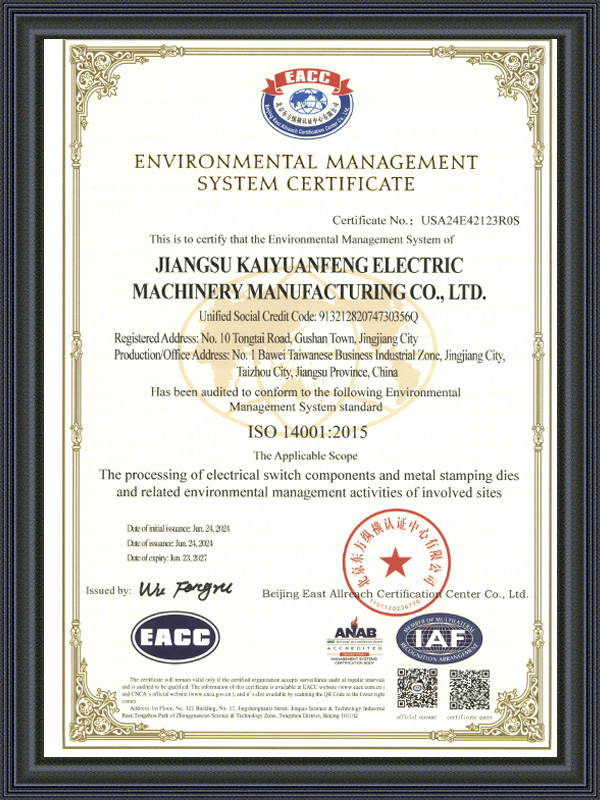
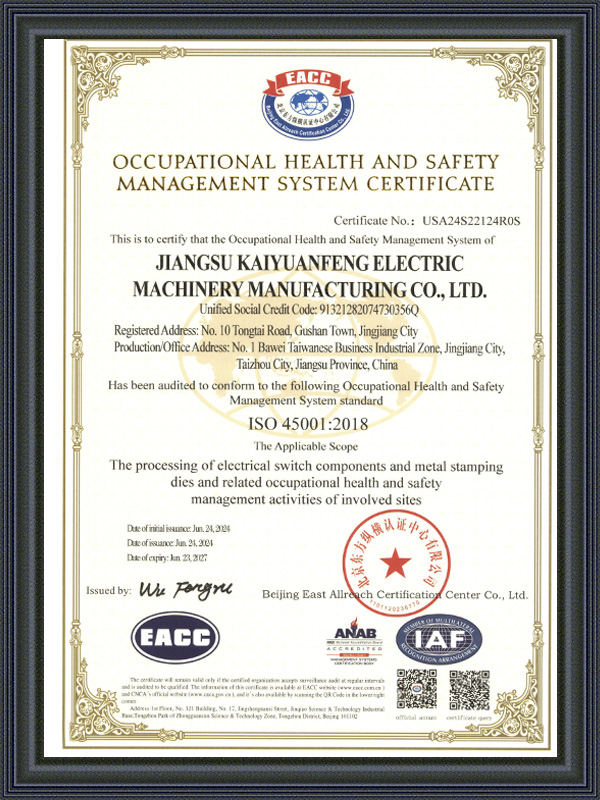
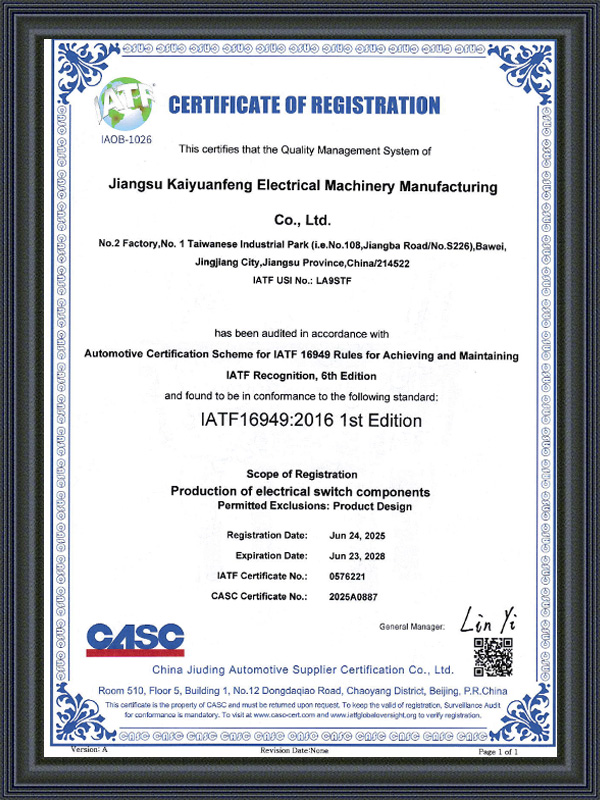
The company's innovation is supported by 28 related patents, addressing key industry challenges. It has obtained ISO certification and implements a management system aligned with international standards to support operational efficiency and quality assurance.
With over a decade of industry experience, the company maintains a customer-centric approach, focusing on reliable products and attentive service to build long-term partnerships. For OEMs, MCCB manufacturers, electrical wholesalers, switchgear producers, and system integrators, customized busbar bushings can be developed according to technical drawings, samples, material requirements, and application specifications.
8. Common Questions About Copper Busbar Bushings
Q1. What is a copper busbar bushing used for?
A copper busbar bushing is primarily used to electrically insulate, support, position, and protect a copper busbar inside electrical equipment. It can help maintain the required clearance and creepage distances between conductive components and surrounding structures. In MCCBs and switchgear, it can also help stabilize the busbar during assembly and operation.
Q2. What material is best for copper busbar bushings?
There is no single material that is best for every application. The correct insulating material depends on rated voltage, temperature, mechanical loading, flame behavior, environmental exposure, required insulation performance, and applicable standards. Engineering plastics and thermosetting insulating materials are commonly considered for electrical support components. OEM buyers should specify the required electrical and thermal performance rather than selecting a material based only on appearance or price.
Q3. How do I choose the correct busbar bushing size?
The bushing should match the busbar thickness, width, hole arrangement, mounting structure, insulation spacing, and surrounding enclosure. Buyers should also consider the required creepage and clearance distances for the actual voltage and pollution conditions. Providing a 2D drawing, 3D model, or physical sample is the most reliable way to ensure correct dimensional matching for customized OEM production.
Q4. Can copper busbar bushings be customized?
Yes. Customized bushings can be developed according to busbar dimensions, mounting holes, wall thickness, overall shape, insulation requirements, temperature range, and installation limitations. Customization is particularly useful for MCCB and switchgear manufacturers because internal busbar structures frequently differ between product frames and current ratings. A custom molded component can also reduce unnecessary assembly parts and improve production consistency.
Q5. Are copper busbar bushings suitable for high-voltage applications?
Busbar bushings can be used in electrical systems across different voltage levels, but suitability must be verified against the actual electrical design and applicable standards. Higher voltage applications require careful evaluation of clearance, creepage, dielectric strength, insulation material, partial-discharge behavior where applicable, environmental conditions, and mechanical design. A bushing should never be selected solely based on its physical dimensions.
Q6. What is the difference between a busbar bushing and a busbar support?
The terms can overlap depending on the equipment design. A busbar support primarily holds the conductor mechanically, while a bushing generally emphasizes electrical insulation and separation, especially where a conductor passes through or is positioned relative to another structure. In some electrical assemblies, one molded component can provide both mechanical support and insulation functions.
Q7. How are copper busbar bushings manufactured for OEM orders?
OEM busbar bushings are commonly developed from engineering drawings or samples. The manufacturing process may include mold design, material preparation, molding, trimming, dimensional inspection, and electrical or mechanical verification according to the customer's requirements. For repeat orders, controlled tooling and inspection procedures help maintain consistent dimensions from batch to batch.
Q8. What information should I provide when buying copper busbar bushings wholesale?
B2B buyers should provide the busbar dimensions, bushing drawings or samples, mounting method, rated voltage, operating temperature, required insulation performance, installation environment, annual quantity, packaging requirements, and applicable standards. If the bushing is used in an MCCB or switchgear assembly, providing the breaker model or internal assembly drawing can further improve quotation and engineering accuracy.
Q9. Why should I buy customized copper busbar bushings from an experienced manufacturer?
An experienced electrical component manufacturer can evaluate the relationship between the copper busbar, insulation component, mounting structure, and complete circuit breaker assembly. This is important because a bushing that looks dimensionally correct may still create problems with insulation spacing, mechanical fit, temperature resistance, or assembly efficiency. For OEM applications, engineering support, repeatable production, quality control, and customization capability are often more important than the lowest unit price.

 English
  中文简体
中文简体  русский
  عربى
عربى