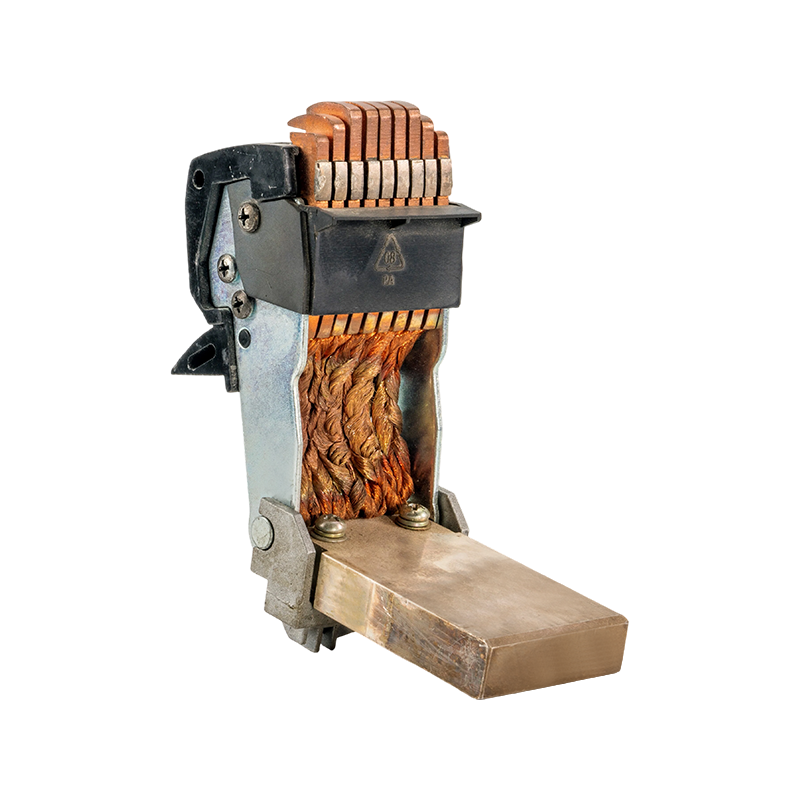
An MCCB Frame Moving Contact Assembly is a critical current-carrying and switching component inside a molded case circuit breaker. It is mechanically linked to the operating mechanism and moves toward or away from the stationary contact to establish or interrupt the electrical circuit. For MCCB manufacturers, OEMs, electrical distributors, and industrial equipment integrators, the quality of the moving contact assembly directly influences contact stability, switching reliability, temperature rise, and interruption performance.
Unlike a simple copper contact, a complete moving contact assembly can include conductive contact components, contact tips, support structures, connecting parts, and other precision-fabricated elements. The exact configuration depends on the MCCB frame size, rated current, voltage, breaking capacity, and mechanical architecture.
For current low-voltage circuit breaker projects, component design should be evaluated against the requirements of the complete breaker and applicable standards. IEC 60947-2:2024 is the current IEC standard for circuit breakers within its scope, covering low-voltage circuit breakers up to 1,000 V AC or 1,500 V DC.
2. How Does an MCCB Frame Moving Contact Work?
(1)Closing the Circuit
When the MCCB operating mechanism moves to the ON position, the moving contact travels toward the stationary contact. Proper contact alignment and contact pressure allow the two conductive surfaces to establish a stable current path. The moving contact must reach the designed position consistently across repeated operating cycles.
(2)Carrying Load Current
After contact closure, the moving contact becomes part of the main current path. Its electrical resistance, material properties, connection quality, and contact interface all contribute to the overall thermal behavior of the breaker.
(3)Opening During Fault Interruption
When the MCCB trips, the moving contact rapidly separates from the stationary contact. An electrical arc can form during separation, so the moving contact must operate together with the arc runner and arc chute system. Its movement, geometry, and material selection therefore need to be matched to the complete interruption design.
3. What Are the Key Requirements for an MCCB Frame Moving Contact?
For B2B buyers, a reliable MCCB frame moving contact assembly should satisfy electrical, mechanical, dimensional, and manufacturing requirements. The component should not be evaluated only by appearance or material cost.
Important quality factors when sourcing MCCB frame moving contact assemblies.
| Requirement |
Why It Matters |
Typical Inspection Focus |
| Electrical conductivity |
Supports efficient current transfer |
Material and electrical resistance |
| Contact geometry |
Ensures correct contact engagement |
Dimensions and tolerances |
| Mechanical strength |
Withstands repeated switching |
Material and assembly integrity |
| Contact pressure |
Helps maintain stable conduction |
Assembly and spring characteristics |
| Arc resistance |
Supports interruption performance |
Complete breaker testing |
4. Why Is Contact Resistance Important in MCCB Moving Contacts?
Contact resistance is an important consideration because electrical power loss increases according to the I²R relationship. As current increases, even a small resistance can result in considerable heat generation.
For example, consider a hypothetical moving-contact path with 100 μΩ resistance. At 400 A, the theoretical resistive loss is approximately 16 W. At 800 A, the same resistance would produce approximately 64 W. This simple calculation illustrates why resistance control becomes increasingly important for high-current MCCB frames.
These values are engineering examples rather than universal MCCB specifications. Actual resistance limits must be determined by the breaker manufacturer's design, temperature-rise requirements, material selection, contact pressure, and applicable type-test results.
5. Which Materials Are Used for MCCB Frame Moving Contact Assemblies?
Copper and copper alloys are widely used or considered for current-carrying components because of their combination of electrical conductivity, thermal performance, mechanical properties, and manufacturing flexibility. The optimal material depends on the current rating and overall breaker architecture.
Contact interfaces may also incorporate suitable contact materials or surface treatments to improve switching stability, wear resistance, and resistance to environmental effects. For OEM projects, material selection should be based on electrical performance and complete MCCB testing rather than material price alone.
- Copper or copper alloys for current-carrying sections.
- Suitable contact materials for the switching interface.
- Surface treatments selected according to electrical and environmental requirements.
- Reinforced structures where higher mechanical strength is required.
6. How Does the Moving Contact Affect MCCB Switching Performance?
The moving contact must follow a controlled travel path during both closing and opening. Excessive dimensional variation can affect contact overlap, pressure, contact bounce, mechanical timing, and arc behavior. These issues can become more significant when the MCCB is designed for high current or high short-circuit performance.
A properly designed moving contact assembly works with the operating mechanism, stationary contact, arc runner, and arc chute. For this reason, changing the contact geometry without verifying the complete breaker may alter the original switching and interruption characteristics.
Dimensional consistency is especially important in mass production. A difference of only a fraction of a millimeter at a critical interface can affect assembly fit or contact engagement, depending on the tolerance stack-up of the complete MCCB.
7. What Should B2B Buyers Check Before Purchasing?
When purchasing MCCB frame moving contact assemblies in bulk, procurement teams should evaluate technical compatibility, manufacturing capability, inspection standards, and supply stability. A low-cost component that requires repeated rework can create higher total costs than a qualified supplier with consistent production.
Recommended RFQ information for MCCB frame moving contact assembly projects.
| Information |
Purpose |
| MCCB model and frame size |
Confirms mechanical compatibility |
| Rated current and voltage |
Defines electrical requirements |
| Technical drawing or sample |
Controls critical dimensions |
| Material and surface requirements |
Ensures required conductivity and durability |
| Annual quantity and MOQ |
Supports capacity and quotation planning |
| Inspection requirements |
Defines acceptance criteria |
Buyers should also ask about prototype lead time, tooling, production capacity, quality control, batch traceability, packaging, delivery schedules, and technical support. For customized parts, supplying a CAD drawing or original component sample can significantly reduce the risk of dimensional mismatch.
(1)Material Preparation
The manufacturing process begins with qualified conductive materials selected according to the approved drawing and material specification. Incoming inspection helps verify dimensions, material identification, and surface condition.
(2)Precision Forming and Processing
Depending on the design, processes can include stamping, bending, machining, forming, drilling, or other precision metalworking operations. Critical dimensions should be controlled throughout production to maintain assembly consistency.
(3)Contact and Component Assembly
Contact tips, conductive parts, supports, and other components may be assembled using welding or mechanical joining processes. Welding parameters and component positioning should be controlled to achieve consistent connections.
(4)Inspection and Final Verification
Final inspection may include dimensional checks, appearance inspection, weld evaluation, resistance measurement where specified, and sample-based mechanical testing. Complete MCCB testing is then required to verify the component's performance within the final breaker design.
9. Jiangsu Kaiyuanfeng MCCB Frame Moving Contact Assembly Manufacturer
Jiangsu Kaiyuanfeng Electrical Machinery Manufacturing Co., Ltd. is a MCCB Frame Moving Contact Assembly Manufacturer and Wholesale MCCB Frame Moving Contact Assembly supplier. Established in Taizhou in August 2013 with an initial registered capital of RMB 5 million, the company specializes in key circuit breaker components and integrates R&D, design, production, sales, and service.
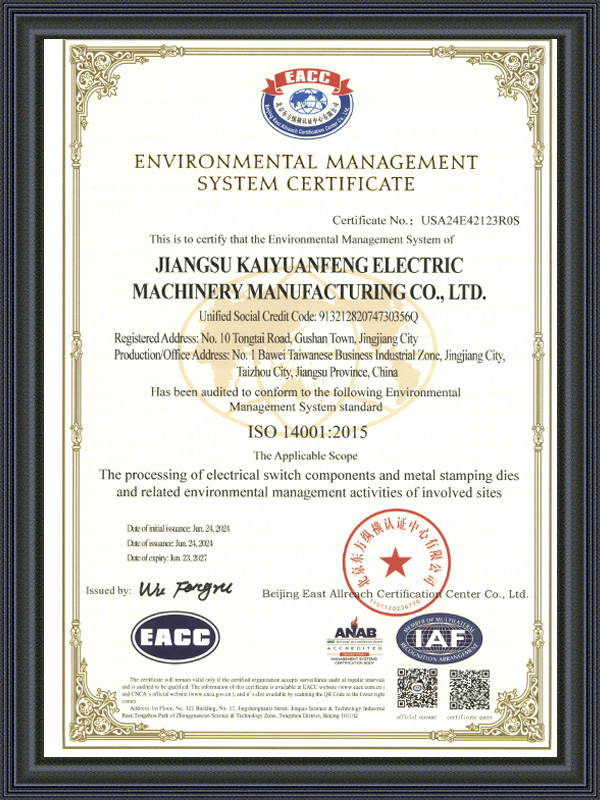
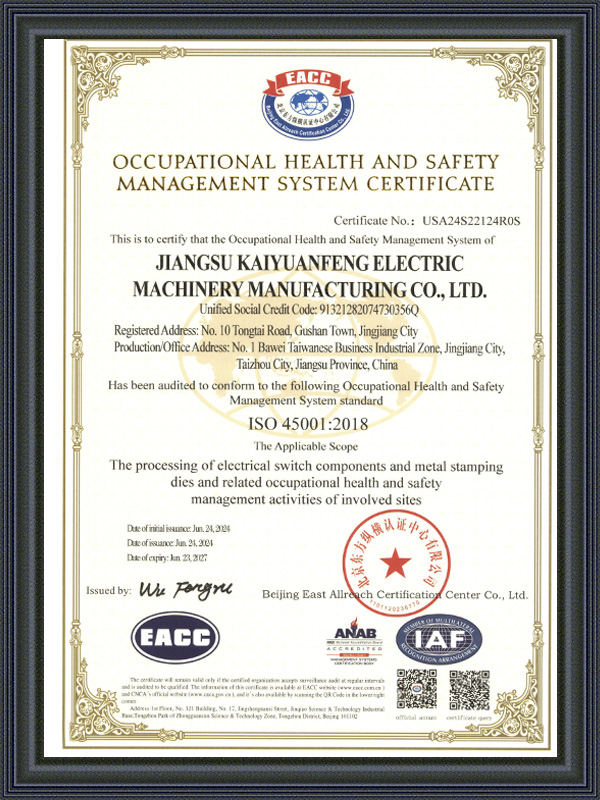
The company focuses on supplying circuit breaker components for B2B customers and incorporates customer requirements into product development and manufacturing processes. Its innovation capability is supported by 28 related patents, while its ISO-certified management system supports standardized production management and quality assurance.
With over a decade of industry experience, Jiangsu Kaiyuanfeng serves customers seeking reliable MCCB components, OEM customization, stable production, and responsive technical service. Its product-development philosophy emphasizes technological innovation, quality service, and long-term cooperation.
For OEM and wholesale projects, the company can work with customer drawings, samples, and technical requirements to develop moving contact assemblies suited to specific MCCB frame structures. The objective is to provide reliable components that support the safety and performance requirements of complete low-voltage circuit breakers.
10. How Can OEM Customers Customize MCCB Frame Moving Contacts?
OEM customers may need customized moving contact assemblies for proprietary MCCB designs, replacement programs, or new circuit breaker development. Customization can cover dimensions, contact geometry, material, thickness, surface treatment, mounting structure, and joining method.
- Provide the MCCB model, frame size, and rated current.
- Provide a technical drawing, CAD file, or physical sample.
- Specify material, thickness, surface treatment, and contact requirements.
- Identify critical dimensions and acceptable tolerances.
- Define welding or joining requirements.
- Complete prototype assembly and functional verification.
- Confirm MOQ, annual demand, packaging, inspection documentation, and delivery schedule.
For new MCCB projects, prototype approval should include dimensional compatibility and complete breaker performance verification. This approach helps ensure that the moving contact assembly works correctly with the stationary contact, operating mechanism, arc chute, and other related components.
11. Common Questions About MCCB Frame Moving Contact Assemblies
Q1. What is an MCCB frame moving contact assembly?
An MCCB frame moving contact assembly is the movable current-carrying contact structure inside a molded case circuit breaker. It operates with the breaker mechanism and moves toward the stationary contact during closing and away from it during opening. It is an important part of the electrical current path and switching system.
Q2. What does a moving contact do in an MCCB?
The moving contact establishes the electrical connection with the stationary contact when the MCCB is closed. When the breaker trips or is switched off, it separates from the stationary contact to interrupt current. During interruption, it works together with the arc runner and arc chute to manage the electrical arc.
Q3. What material is commonly used for MCCB moving contacts?
Copper and copper alloys are commonly considered for current-carrying sections because they provide good electrical conductivity and useful mechanical properties. Contact materials or surface treatments may be selected according to the switching requirements. The correct material should be determined from the complete MCCB design rather than by conductivity alone.
Q4. Why is contact resistance important for an MCCB moving contact?
Contact resistance produces heat according to I²R. For example, a hypothetical resistance of 100 μΩ creates approximately 16 W of resistive loss at 400 A and 64 W at 800 A. Therefore, stable and appropriately low resistance is particularly important for higher-current MCCB applications.
Q5. How do I choose the correct MCCB frame moving contact assembly?
Confirm the MCCB model, frame size, rated current, rated voltage, moving-contact geometry, mounting dimensions, material requirements, and connection structure. For OEM purchasing, providing an engineering drawing or original sample is recommended because visually similar contacts may have different critical dimensions or mechanical characteristics.
Q6. Can MCCB moving contact assemblies be customized?
Yes. OEM manufacturers can customize dimensions, material, thickness, contact geometry, surface treatment, mounting structures, and welding configurations. Custom parts should be developed from approved drawings or samples and validated through prototype assembly and complete MCCB performance testing before mass production.
Q7. What should I ask an MCCB moving contact manufacturer?
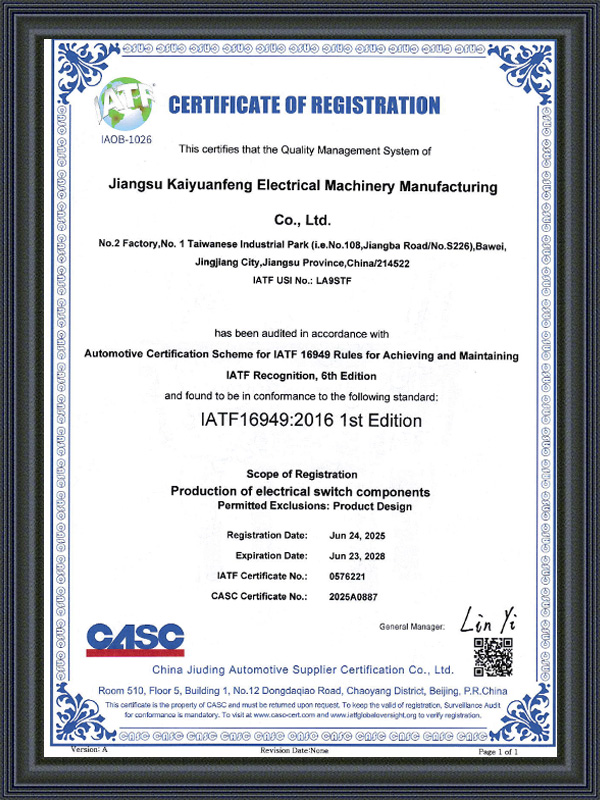
B2B buyers should ask about raw material control, dimensional tolerances, manufacturing processes, welding quality, contact resistance inspection, quality-management certification, OEM customization capability, production capacity, MOQ, lead time, traceability, packaging, and technical support. These factors help evaluate the supplier's ability to provide stable products over long-term orders.
Q8. How is an MCCB moving contact assembly tested?
Component-level inspection can include dimensional measurement, material verification, appearance inspection, weld evaluation, and electrical resistance measurement where specified. The complete MCCB must then undergo applicable mechanical, temperature-rise, dielectric, and short-circuit or interruption tests according to its design and applicable standards.
Q9. Where can I buy wholesale MCCB frame moving contact assemblies?
Wholesale buyers can source MCCB frame moving contact assemblies from specialized circuit breaker component manufacturers such as Jiangsu Kaiyuanfeng Electrical Machinery Manufacturing Co., Ltd.. Before placing a bulk order, buyers should compare technical compatibility, manufacturing capability, quality control, customization support, MOQ, lead time, and long-term supply stability.
Q10. What information should be included in an MCCB moving contact RFQ?
A professional RFQ should include the MCCB model, frame size, rated current, rated voltage, drawing or sample, material specification, component thickness, surface treatment, critical dimensions, estimated order quantity, annual demand, packaging requirements, inspection requirements, and destination market. Providing complete information allows the manufacturer to evaluate tooling, production processes, quality requirements, and pricing more accurately.

 English
  中文简体
中文简体  русский
  عربى
عربى