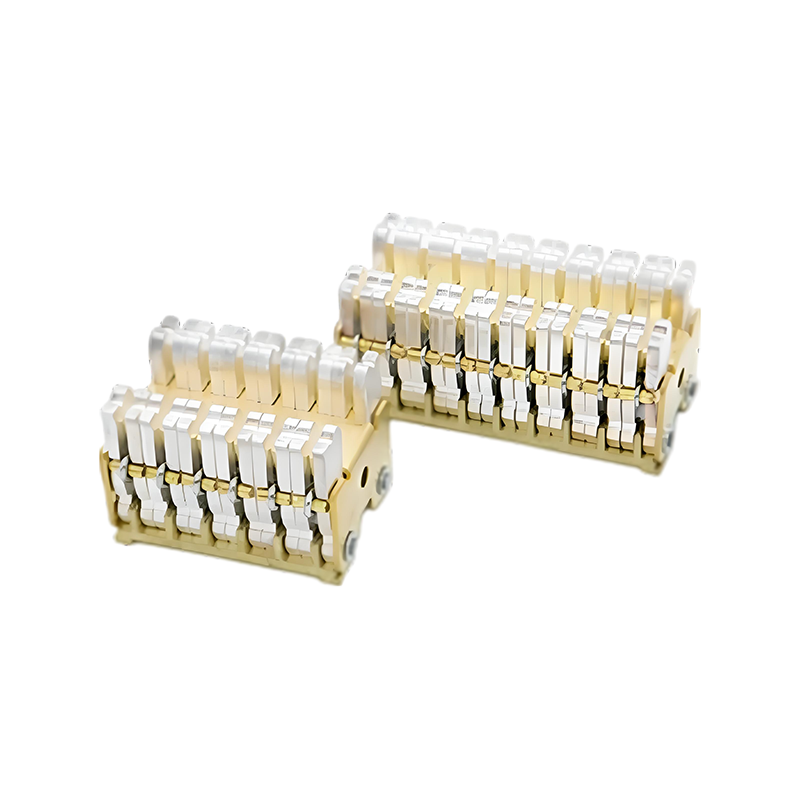
ACB Plug-in Contact Assemblies are conductive connection components used in withdrawable or plug-in air circuit breaker systems. They provide the electrical interface between the circuit breaker and the fixed switchgear connection when the ACB is inserted into its connected position. A typical assembly may include copper contacts, contact fingers, springs, supports, mounting hardware, and related conductive components.
For switchgear manufacturers, panel builders, electrical equipment distributors, OEMs, and maintenance suppliers, the quality of these components directly affects contact resistance, temperature rise, mechanical insertion performance, electrical continuity, and long-term reliability. The current IEC product standard for low-voltage circuit-breakers is IEC 60947-2:2024, which applies to circuit-breakers with rated voltages up to 1,000 V AC or 1,500 V DC within its scope. The 2024 edition is the sixth edition and replaced the 2016 edition with Amendment 1:2019. :contentReference[oaicite:0]{index=0}
2. Why Are ACB Plug-in Contact Assemblies Important?
(1) They Maintain a Low-Resistance Electrical Path
When an ACB is connected to a switchboard, the plug-in contacts must transfer current efficiently between the breaker and the fixed busbar system. Contact resistance should remain controlled across the operating range because resistive heating follows P = I²R. For example, at 2,000 A, a theoretical 20 μΩ connection produces approximately 80 W of resistive loss, while 10 μΩ produces approximately 40 W. Actual performance depends on the complete assembly, but the example demonstrates why contact resistance becomes increasingly important at high current.
(2) They Support Reliable Withdrawable ACB Operation
Withdrawable ACBs are repeatedly moved between disconnected, test, and connected positions. The plug-in contact assembly therefore needs sufficient contact force, controlled friction, appropriate spring characteristics, and accurate alignment. Poor geometry can increase insertion force, accelerate contact wear, or create inconsistent electrical contact.
(3) They Influence Thermal Performance
High-current ACB applications are particularly sensitive to connection quality. A contact assembly with inconsistent contact pressure or poor surface condition can create localized heating. For OEM manufacturers, contact geometry, conductor cross-section, plating, spring force, and connection structure should therefore be evaluated together rather than selecting components according to dimensions alone.
3. Key Specifications for ACB Plug-in Contacts
Important technical parameters B2B buyers should confirm before sourcing ACB plug-in contact assemblies.
| Parameter |
What to Confirm |
B2B Significance |
| Rated Current |
Breaker current rating and required continuous current |
Affects thermal and conductive requirements |
| Contact Material |
Copper grade, alloy, plating and surface finish |
Influences conductivity, wear and corrosion resistance |
| Contact Force |
Spring characteristics and required contact pressure |
Affects electrical stability and insertion force |
| Dimensions |
Length, width, thickness, hole positions and tolerances |
Determines compatibility with the ACB and switchgear |
| Operating Environment |
Temperature, humidity, pollution and installation conditions |
Helps determine material and surface-treatment requirements |
(1) Precision Copper Processing
Depending on the design, manufacturers may use copper cutting, stamping, punching, CNC machining, bending, forming, drilling, deburring, and assembly processes. Accurate dimensions are particularly important around contact interfaces, mounting holes, bends, and mating areas.
(2) Plating and Surface Treatment
Contact surfaces may require silver plating or other specified treatments depending on the ACB design. Surface treatment can help control oxidation and maintain stable contact characteristics. B2B buyers should specify the substrate material, plating type, coverage, thickness, and inspection requirements when these parameters are critical to the application.
(3) Assembly and Quality Inspection
- Dimensional and tolerance inspection
- Copper material and surface-treatment verification
- Contact alignment and mating inspection
- Spring force and mechanical movement checks where required
- Contact resistance or electrical performance testing according to customer specifications
- Final assembly, traceability, and packaging inspection
5. How to Choose the Right ACB Plug-in Contact Supplier?
For OEM and wholesale procurement, selecting an ACB plug-in contact supplier should involve more than comparing unit prices. A suitable manufacturer should understand electrical contact design, dimensional tolerances, material selection, surface treatment, assembly requirements, and production consistency.
- Provide the ACB brand, model, frame size, rated current and rated voltage.
- Provide detailed drawings showing contact dimensions, hole locations, assembly structure and tolerances.
- Confirm copper grade, contact material, plating, spring material and surface finish.
- Request samples for dimensional, mechanical and assembly verification before bulk production.
- Confirm MOQ, production capacity, inspection standards, packaging, lead time and export requirements.
For example, if a switchgear manufacturer purchases 2,000 plug-in contact assemblies per month, a 1% dimensional rejection rate would mean approximately 20 assemblies requiring rework, replacement, or additional inspection. Stable process control can therefore have a meaningful impact on total procurement cost even when the unit price difference between suppliers is relatively small.
6. Jiangsu Kaiyuanfeng Electrical Machinery Manufacturing Co., Ltd. for ACB Plug-in Contact Assemblies
Jiangsu Kaiyuanfeng Electrical Machinery Manufacturing Co., Ltd. is an ACB Plug-in Contact Assemblies Manufacturer and Wholesale ACB Plug-in Contact Assemblies supplier, established in Taizhou in August 2013 with an initial registered capital of 5 million yuan. The company specializes in key circuit breaker components and integrates R&D, design, production, sales, and service.
The company adheres to the core values of “building a solid foundation through steadiness, expanding horizons via perseverance, and forging integrity with responsibility” and the founding principle of “integrity, win-win collaboration, and pioneering the future.” Customer needs are incorporated into processes from R&D to manufacturing, with technological innovation supported by 28 related patents addressing key industry challenges.
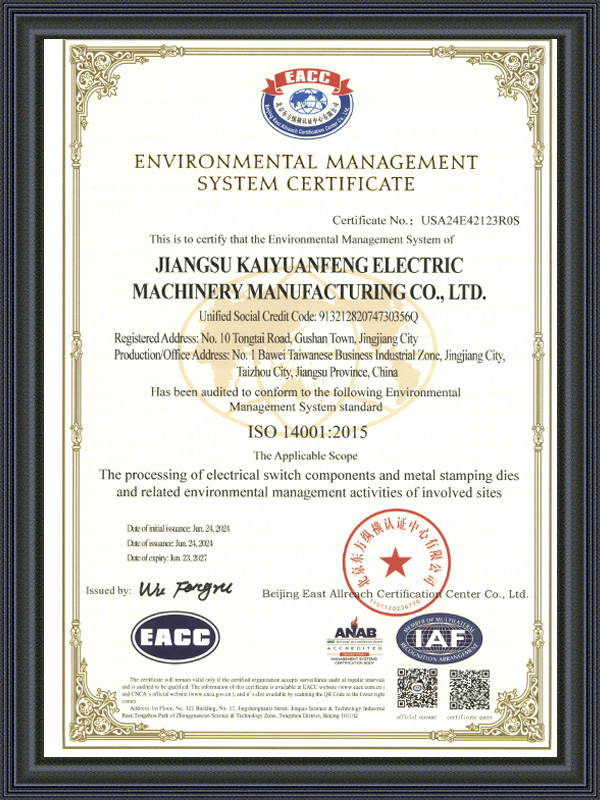
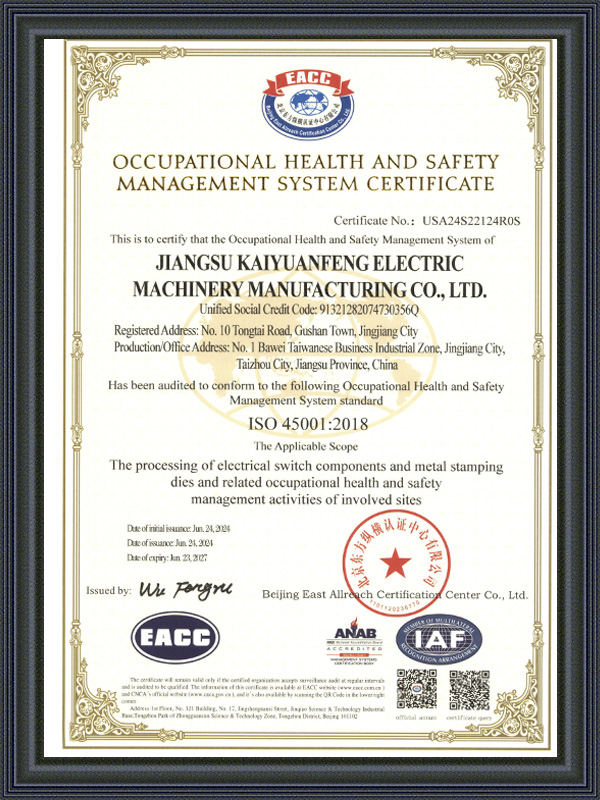
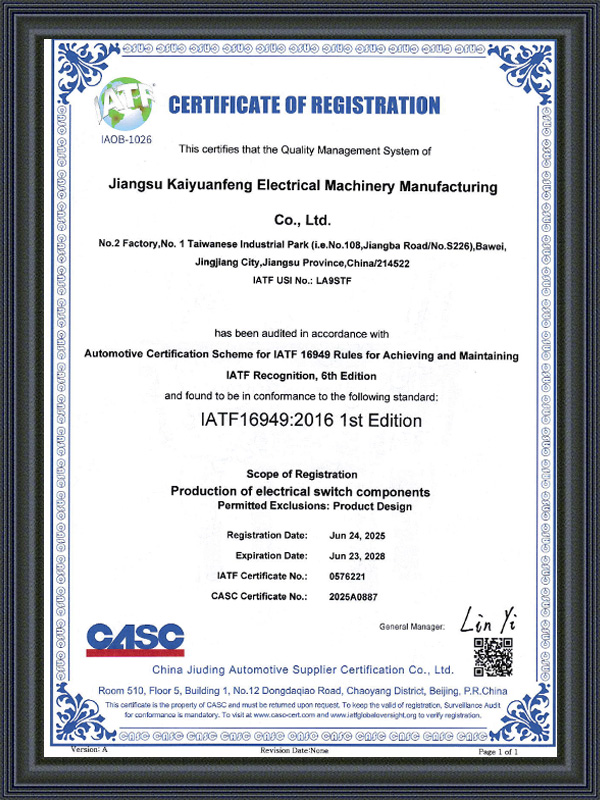
Jiangsu Kaiyuanfeng has obtained ISO certification and implements a management system aligned with international standards to support operational efficiency and quality assurance. With more than a decade of industry experience, the company focuses on reliable circuit breaker components, customized manufacturing, attentive service, and long-term partnerships with global customers.
7. Common Questions About ACB Plug-in Contact Assemblies
Q1. What is an ACB plug-in contact assembly?
An ACB plug-in contact assembly is a conductive interface used in withdrawable or plug-in air circuit breaker systems. It connects the circuit breaker to the fixed switchgear circuit when the breaker is moved into the connected position. Depending on the design, the assembly can include copper contacts, contact fingers, springs, supports, and mounting components.
Q2. What material is commonly used for ACB plug-in contacts?
Copper and copper alloys are commonly used because they provide a favorable combination of electrical conductivity, mechanical properties, and manufacturability. Contact surfaces may use silver plating or another specified treatment. The correct material depends on rated current, contact force, operating environment, mechanical endurance, and the complete ACB design.
Q3. How do I choose the correct ACB plug-in contact assembly?
Start by identifying the ACB manufacturer, model, frame size, rated current, rated voltage, and withdrawable chassis configuration. Then confirm contact dimensions, mounting holes, contact geometry, spring characteristics, material, plating, and busbar connection structure. For OEM replacement projects, a technical drawing or physical sample is strongly recommended to verify compatibility before mass production.
Q4. Can ACB plug-in contacts be customized for OEM production?
Yes. OEM manufacturers can customize plug-in contact assemblies according to drawings, samples, or engineering specifications. Typical customization includes contact length, width, thickness, bending angle, hole positions, contact-finger configuration, copper grade, surface treatment, spring characteristics, and assembly structure. Before production, buyers should confirm approved drawings and inspection tolerances.
Q5. Why does ACB plug-in contact resistance matter?
Contact resistance determines part of the heat generated at the electrical interface. Since resistive loss increases with the square of current, high-current ACBs are particularly sensitive to contact quality. For example, at 2,000 A, reducing a theoretical connection resistance from 20 μΩ to 10 μΩ reduces the calculated resistive loss from approximately 80 W to 40 W at that connection. Actual values must be established through appropriate product testing.
Q6. What IEC standard applies to ACB plug-in contact systems?
The complete low-voltage circuit breaker is primarily covered by IEC 60947-2:2024, the current sixth edition for circuit-breakers within its stated scope. The standard covers circuit-breakers with rated voltage not exceeding 1,000 V AC or 1,500 V DC and includes requirements and tests related to circuit-breaker performance. The plug-in contact assembly itself should be evaluated as part of the complete ACB and switchgear system rather than treated as an independently certified product. :contentReference[oaicite:1]{index=1}
Q7. What information should I provide when requesting a quotation for ACB plug-in contacts?
For an accurate B2B quotation, provide the ACB model, rated current and voltage, drawings, contact dimensions, copper or alloy requirements, plating specification, spring requirements, monthly or annual quantity, packaging requirements, destination market, and target delivery date. If a drawing is unavailable, a physical sample combined with detailed measurements can help the manufacturer evaluate the design.
Q8. What should I check when buying ACB plug-in contact assemblies wholesale?
Wholesale buyers should evaluate material consistency, dimensional tolerances, contact pressure, surface treatment, mechanical fit, electrical performance, batch traceability, inspection procedures, MOQ, production capacity, lead time, and packaging. For recurring orders, an approved technical drawing and documented inspection standard can help maintain consistency between batches and reduce assembly problems.
Q9. How can manufacturers reduce ACB plug-in contact failure risks?
Manufacturers can reduce risk by selecting a supplier with precision processing capabilities, controlled surface treatment, documented inspection procedures, stable raw-material sourcing, and OEM engineering support. Prototype validation should include dimensional fit, insertion and withdrawal behavior, contact alignment, and electrical performance according to the complete equipment's technical requirements. For high-volume purchasing, incoming inspection and batch traceability are also important for maintaining consistent production quality.

 English
  中文简体
中文简体  русский
  عربى
عربى