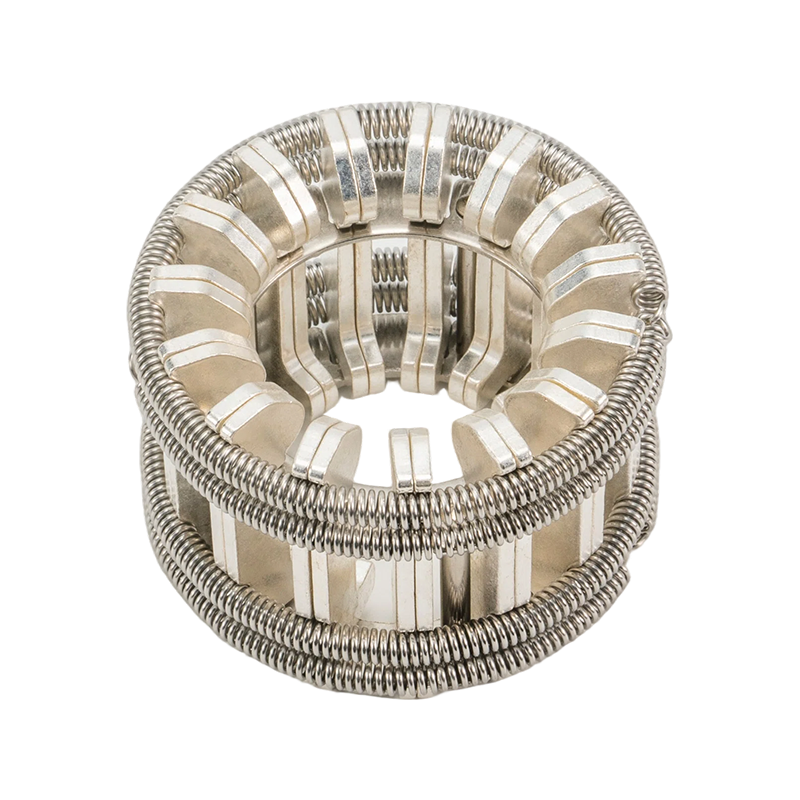
Medium Voltage Moving & Stationary Contacts are precision conductive components used in medium-voltage circuit breakers, vacuum circuit breakers (VCBs), load switches, disconnectors, and other switchgear. The moving contact travels during switching, while the stationary contact provides the fixed electrical interface. Together, they establish a reliable current path during the closed state and separate safely during interruption.
For switchgear OEMs, electrical equipment manufacturers, utility contractors, distributors, and maintenance suppliers, contact quality directly influences electrical conductivity, contact resistance, temperature rise, mechanical endurance, and switching reliability. Current IEC requirements for medium-voltage switchgear are primarily addressed through IEC 62271 series standards, with IEC 62271-100:2021 covering AC circuit-breakers and IEC 62271-200:2021 with Amendment 1:2024 covering AC metal-enclosed switchgear and controlgear for rated voltages above 1 kV and up to and including 52 kV.
2. Why Are Moving and Stationary Contacts Critical?
(1) They Provide a Stable Current Path
When a medium-voltage circuit breaker is closed, moving and stationary contacts must maintain a stable conductive interface. Copper and copper alloys are widely used for conductive parts because of their favorable electrical conductivity and mechanical properties. Contact resistance should be controlled because resistive heat follows P = I²R.
For example, at 1,250 A, a theoretical 20 μΩ contact resistance results in approximately 31.25 W of resistive loss, while 10 μΩ results in approximately 15.6 W. Actual switchgear performance depends on contact geometry, heat dissipation, surface treatment, current distribution, and the complete assembly, but the example shows why low and consistent resistance is important.
(2) They Support Reliable Switching
Moving contacts must travel accurately and repeatedly between the open and closed positions. Contact stroke, insertion depth, alignment, spring force, contact pressure, and mechanical tolerances all influence operation. If contact pressure is insufficient, resistance and localized heating can increase; if excessive, mechanical wear and operating force may rise.
(3) They Affect Fault Interruption Performance
Medium-voltage circuit breakers can be exposed to significant electrical and mechanical stresses during fault interruption. Contact materials, contact geometry, arc-control structures, and the operating mechanism must therefore be engineered as an integrated system. Buyers should evaluate the complete circuit breaker's rated short-circuit breaking current, making capacity, short-time withstand current, operating sequence, and applicable test requirements rather than selecting contacts based only on physical dimensions.
3. Key Specifications for Medium Voltage Contacts
Key specifications B2B buyers should confirm when sourcing medium-voltage moving and stationary contacts.
| Parameter |
What to Confirm |
B2B Importance |
| Rated Voltage |
System voltage and insulation requirements |
Determines suitability for the complete switchgear |
| Rated Current |
Continuous current rating and thermal requirements |
Influences conductor size and temperature rise |
| Contact Material |
Copper, copper alloy, contact material and plating |
Affects conductivity, wear and switching performance |
| Dimensions |
Diameter, length, thickness, holes and tolerances |
Ensures accurate mechanical installation |
| Contact Force |
Spring force, contact pressure and travel |
Controls electrical stability and mechanical wear |
4. Manufacturing Process for Medium Voltage Moving & Stationary Contacts
(1) Precision Machining and Forming
Depending on the contact design, manufacturers may use copper cutting, CNC machining, turning, milling, stamping, punching, forming, drilling, bending, and precision grinding. For medium-voltage applications, dimensional consistency is important because contact geometry determines mating position, pressure distribution, and electrical interface quality.
(2) Contact Surface Treatment
Contact areas can require silver plating, nickel plating, or other specified treatments depending on the application. Surface treatment can help control oxidation, wear, and contact degradation. Buyers should confirm the substrate, plating type, plating thickness, surface coverage, and inspection requirements before production.
(3) Quality Inspection and Assembly Verification
- Dimensional and tolerance inspection
- Copper and contact-material verification
- Surface treatment and plating inspection
- Contact alignment and mating inspection
- Contact pressure and mechanical travel checks where required
- Electrical resistance and temperature-rise-related testing according to applicable specifications
For OEMs and wholesale buyers, supplier selection should focus on technical capability, production consistency, quality control, customization capacity, and total procurement cost. A reliable supplier should be able to interpret technical drawings, manufacture repeatable contact geometries, control material and plating specifications, and support prototype-to-mass-production transitions.
- Provide the circuit breaker or switchgear model, voltage level, rated current, and application.
- Provide detailed drawings covering contact dimensions, tolerances, holes, threads, mating areas, and assembly interfaces.
- Specify copper or alloy grade, contact material, plating, surface treatment, and environmental requirements.
- Request prototypes or samples for dimensional and assembly validation before bulk production.
- Confirm MOQ, annual capacity, inspection procedures, traceability, packaging, delivery time, and export documentation.
For example, if a medium-voltage switchgear manufacturer orders 1,500 contact assemblies per month and experiences a 2% dimensional rejection rate, approximately 30 units may require rework or replacement each month. Stable manufacturing processes can therefore reduce hidden costs associated with sorting, assembly delays, and production downtime.
6. Jiangsu Kaiyuanfeng Electrical Machinery Manufacturing Co., Ltd. for Medium Voltage Contacts
Jiangsu Kaiyuanfeng Electrical Machinery Manufacturing Co., Ltd. is a Medium Voltage Moving & Stationary Contacts Manufacturer and Wholesale Medium Voltage Moving & Stationary Contacts supplier, established in Taizhou in August 2013 with an initial registered capital of 5 million yuan. The company manufactures key circuit breaker components and integrates R&D, design, production, sales, and service.
The company adheres to the core values of “building a solid foundation through steadiness, expanding horizons via perseverance, and forging integrity with responsibility” and the founding principle of “integrity, win-win collaboration, and pioneering the future.” Customer needs are incorporated into processes from R&D through manufacturing, while innovation is supported by 28 related patents addressing key industry challenges.
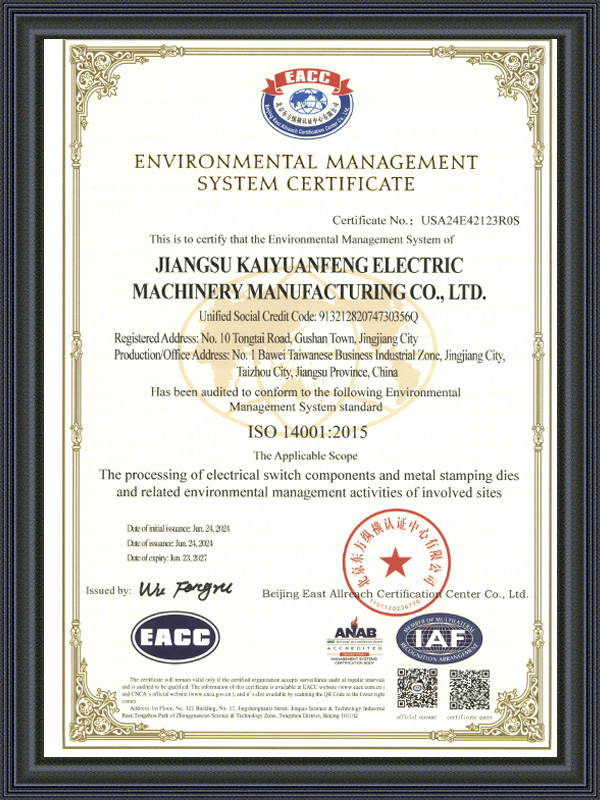
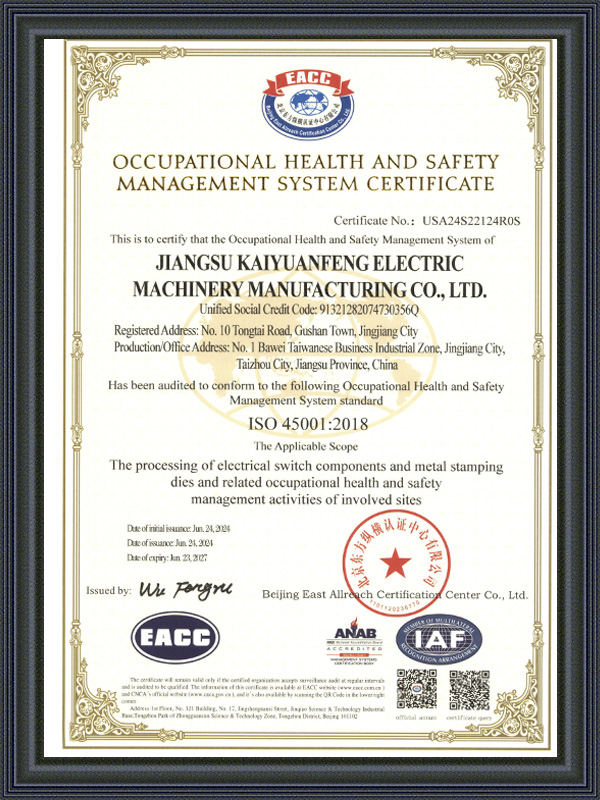
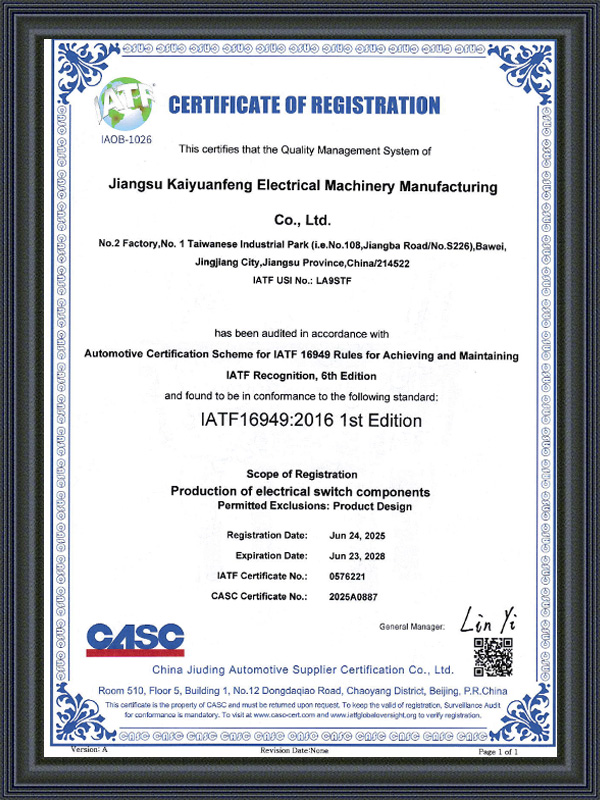
Jiangsu Kaiyuanfeng has obtained ISO certification and implements a management system aligned with international standards to support operational efficiency and quality assurance. With more than a decade of industry experience, the company maintains a customer-centric approach and focuses on reliable products, attentive service, customized requirements, and long-term B2B partnerships.
7. Common Questions About Medium Voltage Moving & Stationary Contacts
Q1. What are medium voltage moving and stationary contacts?
Medium voltage moving and stationary contacts are conductive switching components used in medium-voltage circuit breakers and switchgear. The moving contact travels through the switching mechanism, while the stationary contact provides the fixed mating interface. When closed, the two contacts form the primary current path; when opened, they separate to allow the circuit breaker to interrupt the electrical circuit.
Q2. What materials are commonly used for medium voltage contacts?
Copper and copper alloys are commonly selected for conductive structures because they offer good electrical conductivity and mechanical performance. Depending on the switching technology and application, specialized contact materials and surface treatments may be used. The correct material depends on rated current, interruption requirements, contact pressure, wear, thermal performance, and the manufacturer's design.
Q3. How do I choose the correct medium voltage moving contact?
Identify the circuit breaker or switchgear manufacturer, model, rated voltage, rated current, contact structure, mechanical travel, contact dimensions, and connection configuration. For replacement or OEM applications, provide a detailed drawing or physical sample. This helps the manufacturer verify critical parameters such as contact diameter, length, mounting interface, insertion depth, mating position, and tolerances.
Q4. Can medium voltage moving and stationary contacts be customized?
Yes. OEM manufacturers can customize contact assemblies according to engineering drawings, samples, or application specifications. Common requirements include contact dimensions, mounting geometry, copper grade, alloy composition, surface treatment, plating, contact profile, spring interface, and assembly configuration. Before mass production, an approved sample and technical drawing should be used to establish the production reference.
Q5. Why is contact resistance important in medium voltage switchgear?
Contact resistance determines the amount of heat generated when current flows through the contact interface. Because resistive loss follows P = I²R, resistance becomes increasingly important at higher current. For example, at 1,250 A, a theoretical resistance of 20 μΩ generates approximately 31.25 W, while 10 μΩ generates approximately 15.6 W. Actual values must be established through the appropriate test method and complete equipment configuration.
Q6. What IEC standards apply to medium voltage circuit breaker contacts?
The applicable standard depends on the complete equipment and its function. IEC 62271-100:2021 applies to AC circuit-breakers designed for indoor or outdoor installation and systems above 1,000 V. IEC 62271-200:2021 with Amendment 1:2024 covers AC metal-enclosed switchgear and controlgear for rated voltages above 1 kV and up to and including 52 kV. The contacts should be evaluated as part of the complete switchgear and circuit-breaker design and its applicable testing requirements.
Q7. What information should I provide when ordering medium voltage contacts?
Provide the circuit breaker model, rated voltage, rated current, contact drawings, dimensions, tolerances, material requirements, plating or surface treatment, contact configuration, required quantity, packaging requirements, destination country, and delivery schedule. If technical drawings are unavailable, photographs, measurements, and a physical sample can help the manufacturer develop or verify the required component.
Q8. What should buyers check when purchasing medium voltage contacts wholesale?
Wholesale buyers should assess material consistency, dimensional tolerances, contact pressure, surface treatment, mechanical fit, electrical performance, inspection procedures, batch traceability, MOQ, production capacity, lead time, and packaging. For recurring orders, an approved technical drawing and documented quality standard can reduce batch-to-batch variation and simplify incoming inspection.
Q9. How can manufacturers improve the service life of medium voltage contacts?
Service life depends on the complete switching system, but manufacturers can improve reliability through appropriate contact materials, controlled contact pressure, accurate alignment, suitable surface treatment, precision machining, and proper operating-mechanism adjustment. Preventive maintenance should also monitor contact wear, connection condition, operating cycles, and electrical performance according to the equipment manufacturer's maintenance requirements.

 English
  中文简体
中文简体  русский
  عربى
عربى