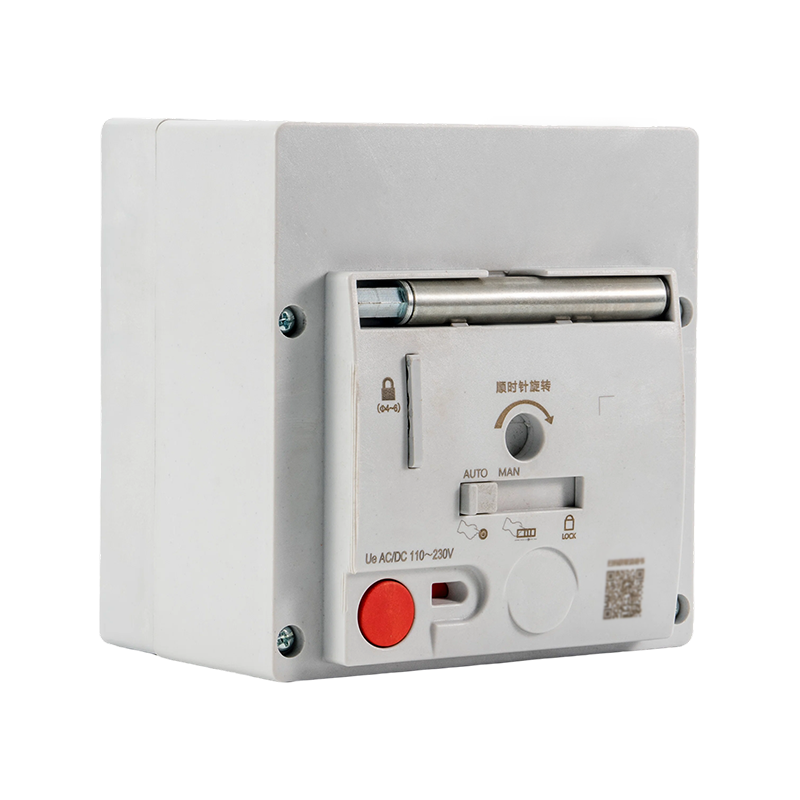
An MCCB motor operator, also known as a motorized operating mechanism or motor operator mechanism, is an electrical accessory that enables remote and automatic operation of a molded case circuit breaker. Instead of requiring an operator to manually move the breaker handle, the motor operator uses an electric motor and mechanical transmission system to control the breaker according to an external command.
A motorized operating mechanism can enable remote closing, opening, and re-tripping of a circuit breaker, making it particularly useful for industrial distribution panels, automatic transfer systems, generator control, energy management systems, data centers, building automation, and other applications where local manual operation is inconvenient or insufficient.
For B2B buyers, an MCCB motor operator should be selected as a complete electromechanical system rather than simply as a motor. The breaker frame, rated current, operating mechanism, control voltage, installation dimensions, electrical interlocks, and communication or automation requirements all affect compatibility.
2. How Does an MCCB Motor Operator Work?
(1) Receiving a Control Signal
The motor operator receives an electrical command from a control circuit, PLC, automatic transfer switch, remote-control system, or other automation equipment. Depending on the product design, separate commands can be provided for closing and opening the MCCB.
(2) Motorized Mechanical Movement
The internal motor converts electrical energy into mechanical movement through a transmission mechanism. This movement operates the MCCB handle or internal mechanism until the breaker reaches the required position.
(3) Breaker Position Feedback
Many motor operators incorporate auxiliary contacts or position feedback to indicate whether the circuit breaker is open, closed, or tripped. This feedback can be connected to a PLC, control panel, building management system, or power monitoring platform.
(4) Manual Operation and Interlocking
Depending on the product architecture, the operator can provide provisions for manual operation and mechanical interlocking. These features are important during maintenance, commissioning, or loss of control power.
B2B purchasers should evaluate both electrical and mechanical specifications before ordering an MCCB motor operator. A motor operator designed for one MCCB series may not fit another breaker even if the two breakers have the same rated current.
Key specifications to verify when sourcing an MCCB motor operator for industrial applications.
| Parameter |
Typical Consideration |
Why It Matters |
| Control voltage |
24V, 48V, 110/120V, 220/240V AC/DC depending on design |
Must match the control system |
| MCCB frame |
Frame-specific configuration |
Determines mechanical compatibility |
| Operating function |
Remote open, close, or re-trip |
Defines control architecture |
| Position feedback |
Auxiliary contacts or electronic feedback |
Confirms breaker status remotely |
| Mounting |
Breaker-specific mounting arrangement |
Ensures reliable installation |
4. What Are the Main Applications of MCCB Motor Operators?
(1) Automatic Transfer Systems
Motor operators are widely used where power sources must be switched automatically. In a generator or automatic transfer application, motorized MCCBs can receive commands from an ATS controller to change the status of designated circuits.
(2) Industrial Automation
Factories can integrate motorized MCCBs into PLC-based control systems. For example, an automation system can send an opening command when a production line is shut down, while breaker position feedback can confirm that the electrical circuit has actually been disconnected.
(3) Data Centers and Critical Facilities
In data centers, telecommunications facilities, and other critical infrastructure, remote breaker operation can reduce the need for personnel to approach electrical distribution equipment during normal switching operations. Motorized breakers can also be integrated into centralized power management systems.
(4) Commercial Building Power Management
Commercial buildings can use motor operators to remotely control selected electrical circuits as part of energy management, scheduled switching, emergency control, or centralized facility management.
- Industrial control panels and switchboards
- Generator and automatic transfer systems
- Data centers and telecommunications infrastructure
- Building automation and energy management
- Remote power distribution and maintenance systems
5. Why Choose a Motorized MCCB Instead of Manual Operation?
Manual MCCB operation is practical for local switching, but it becomes less efficient when the breaker is installed inside a large electrical room, switchboard, generator system, or automated facility. A motor operator adds an electrical control interface that enables remote operation.
Comparison of manual MCCB operation and motorized MCCB operation for B2B applications.
| Feature |
Manual MCCB |
MCCB With Motor Operator |
| Local operation |
Yes |
Yes, depending on design |
| Remote operation |
No |
Yes |
| PLC integration |
Limited |
Yes |
| Automatic switching |
Not directly |
Suitable with appropriate control system |
For example, if an industrial facility has 20 motorized MCCBs distributed across several electrical rooms, a centralized control system can monitor and operate those breakers without requiring an operator to manually visit each panel. The exact time and labor savings depend on the facility layout and control strategy, but the operational advantage becomes increasingly significant as the number of controlled breakers increases.
6. How to Select the Right MCCB Motor Operator?
(1) Match the MCCB Series and Frame
The first step is to identify the exact MCCB manufacturer, series, frame size, rated current, number of poles, and breaker configuration. A motor operator must mechanically interface with the specific breaker mechanism.
(2) Confirm the Control Voltage
Control voltage is commonly available in industrial values such as 24V, 48V, 110/120V, or 220/240V AC/DC depending on the motor operator design. Never assume that a motor operator with the same physical dimensions has the same electrical rating.
(3) Define the Required Functions
Determine whether the project requires remote closing, remote opening, automatic re-tripping, local/manual control, position indication, or electrical interlocking. These requirements affect the internal mechanism and terminal configuration.
(4) Check Operating Time and Duty Cycle
For automatic transfer or high-frequency switching applications, buyers should check the manufacturer's specified operating time, electrical endurance, mechanical endurance, and allowable operating frequency. For example, if an application requires 10 switching operations per day, the expected annual operation count would be approximately 3,650 operations, making mechanical durability an important procurement consideration.
(5) Request Samples Before Bulk Production
OEM customers should request a sample or engineering prototype before ordering large quantities. Testing the operator on the actual MCCB can confirm mounting dimensions, operating direction, electrical connections, breaker status feedback, and control logic.
7. MCCB Motor Operator Manufacturer and Wholesale Supplier
Motorized Operating Mechanism (Customized) is a key actuator that enables remote closing, opening, and re-tripping of a circuit breaker. It provides an important electromechanical interface between an MCCB and an automated control system, making it suitable for OEM circuit breaker assemblies, industrial switchgear, distribution panels, and remote power management applications.
Jiangsu Kaiyuanfeng Electrical Machinery Manufacturing Co., Ltd. is a MCCB Motor Operator Manufacturer and Wholesale MCCB Motor Operator, established in Taizhou in August 2013 with an initial registered capital of 5 million yuan. The company specializes in key circuit breaker components and integrates R&D, design, production, sales, and service.
The company adheres to the core values of “building a solid foundation through steadiness, expanding horizons via perseverance, and forging integrity with responsibility,” and follows the founding principles of integrity, win-win collaboration, and pioneering the future. Customer requirements are incorporated into product development and manufacturing processes to support practical application needs.
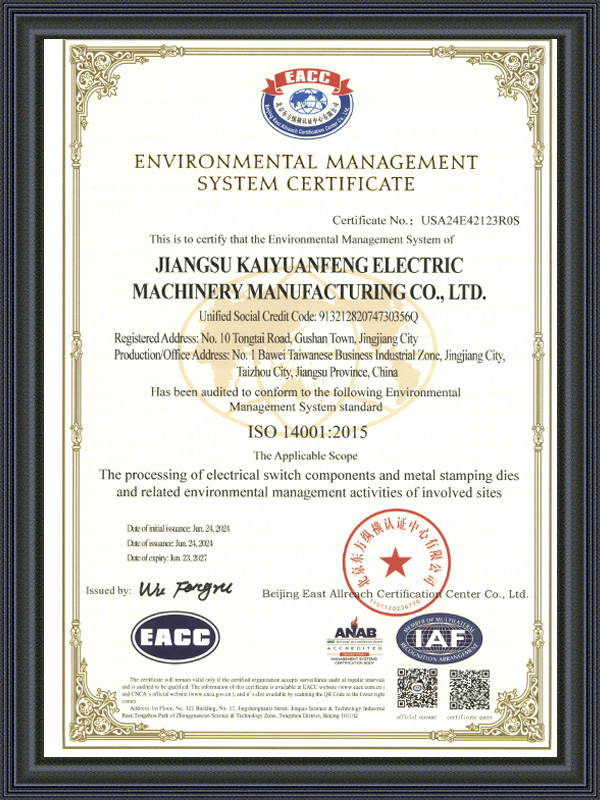
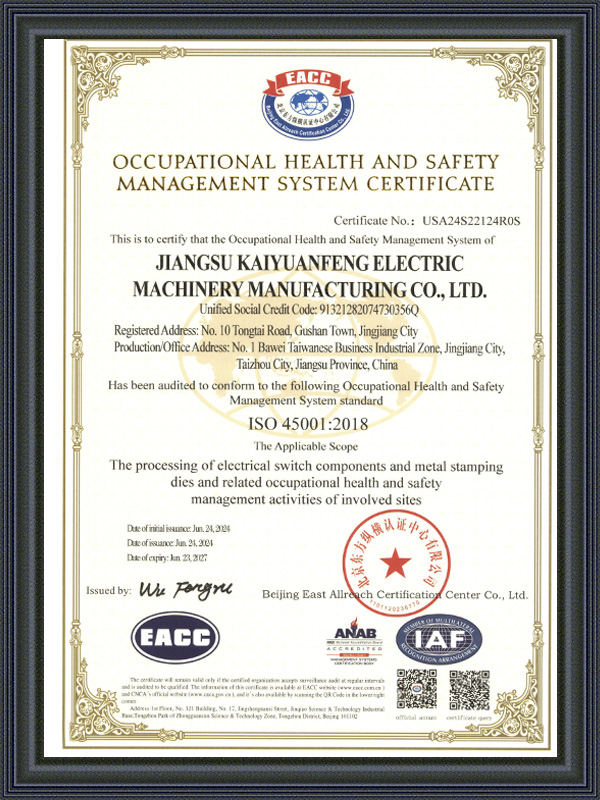
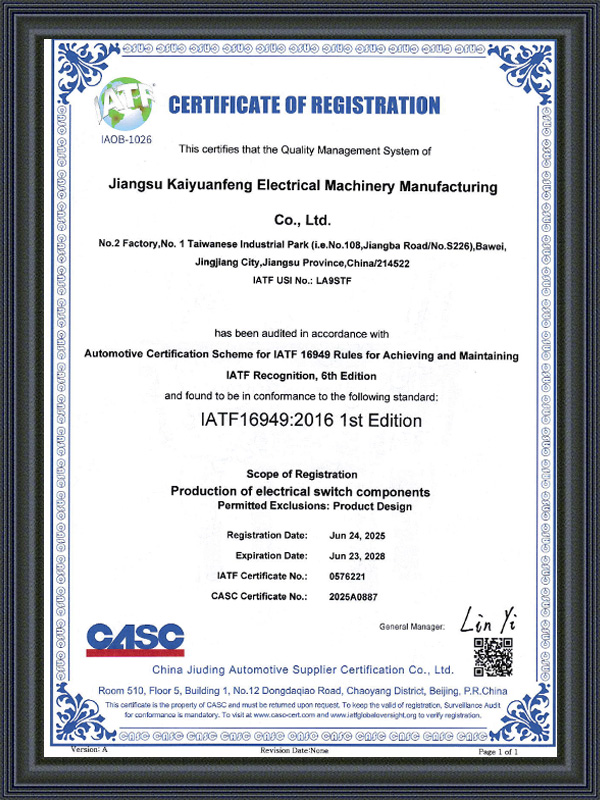
Its technological innovation is supported by 28 related patents addressing key industry challenges. The company has obtained ISO certification and implements a management system aligned with international standards to support operational efficiency and quality assurance.
With over a decade of industry experience, Jiangsu Kaiyuanfeng Electrical Machinery Manufacturing Co., Ltd. maintains a customer-focused approach and provides reliable circuit breaker components for long-term B2B cooperation. The company aims to become a core supplier of key circuit breaker components and contribute to safer, more efficient electrical systems.
8. Common Questions About MCCB Motor Operators
Q1. What is an MCCB motor operator used for?
An MCCB motor operator is used to electrically control a molded case circuit breaker instead of relying solely on manual operation. It can enable remote closing, opening, and re-tripping depending on the design. Typical applications include automatic transfer systems, generator panels, industrial automation, data centers, commercial buildings, and remote power distribution systems.
Q2. How does an MCCB motorized operating mechanism work?
When a control signal is received, the internal motor drives a mechanical transmission mechanism connected to the MCCB operating mechanism. The motor operator moves the breaker to the commanded position. Depending on the design, auxiliary contacts can provide feedback confirming whether the MCCB is open, closed, or tripped.
Q3. What voltage does an MCCB motor operator use?
There is no single universal motor operator voltage. Common industrial control supplies include 24V, 48V, 110/120V, and 220/240V AC or DC, depending on the specific product. The correct voltage must be selected according to the motor operator's nameplate and the MCCB manufacturer's technical documentation.
Q4. Can an MCCB motor operator be customized?
Yes. OEM motor operators can be customized according to the MCCB frame, mounting dimensions, operating mechanism, control voltage, connector arrangement, terminal configuration, feedback requirements, and other application-specific parameters. For a customized project, buyers should provide the original breaker model, technical drawing, sample, or detailed dimensions to allow engineering verification before mass production.
Q5. Can an MCCB motor operator open and close the breaker remotely?
Yes, a properly configured motorized operating mechanism can enable remote opening and closing. Some designs also support re-tripping after a trip event. The actual functions depend on the motor operator architecture and MCCB model. Additional auxiliary contacts may be used to communicate breaker position to the remote control system.
Q6. Can I add a motor operator to an existing MCCB?
Some MCCBs are designed to accept field-installed motor operators, while others require factory-installed accessories. Compatibility depends on the breaker series, frame size, handle design, internal mechanism, mounting space, and accessory interface. Before retrofitting, verify the exact MCCB model and use a motor operator specifically designed for that breaker family.
Q7. What is the difference between an MCCB motor operator and a shunt trip unit?
A motor operator is designed to provide motorized control of the breaker mechanism, typically supporting remote opening and closing. A shunt trip unit is primarily a trip accessory that opens the MCCB when its coil receives the specified electrical signal. A motor operator therefore provides broader operating functionality, while a shunt trip is mainly intended for remote tripping.
Q8. Why is my MCCB motor operator not working?
Common causes include incorrect control voltage, loose wiring, an unsuitable motor operator, mechanical obstruction, incorrect installation, insufficient control power, an active electrical interlock, or a breaker mechanism that is not in the required operating condition. Troubleshooting should begin by checking the control voltage at the terminals and then verifying wiring, mechanical alignment, interlocks, and breaker status according to the manufacturer's documentation.
Q9. How do I choose a wholesale MCCB motor operator manufacturer?
B2B buyers should evaluate the manufacturer's engineering capability, MCCB compatibility range, customization capability, production capacity, quality control system, sample testing, certification documentation, delivery reliability, and after-sales technical support. For OEM projects, it is particularly important to confirm the motor operator's mounting dimensions and operating characteristics through sample approval before mass production. Jiangsu Kaiyuanfeng Electrical Machinery Manufacturing Co., Ltd. provides customized motorized operating mechanisms and supports wholesale and OEM cooperation for customers seeking reliable MCCB component solutions.

 English
  中文简体
中文简体  русский
  عربى
عربى