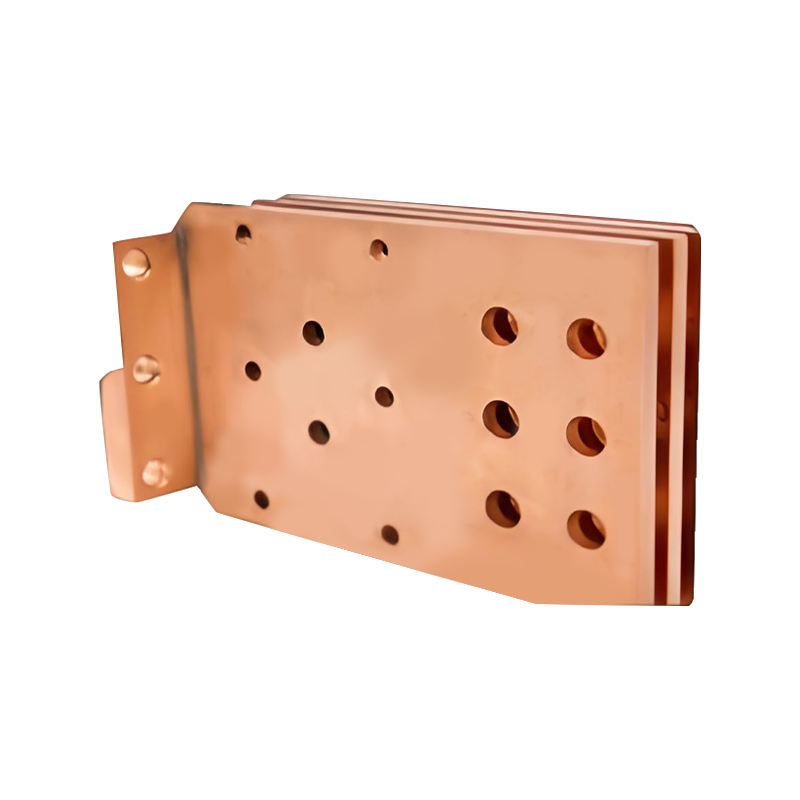
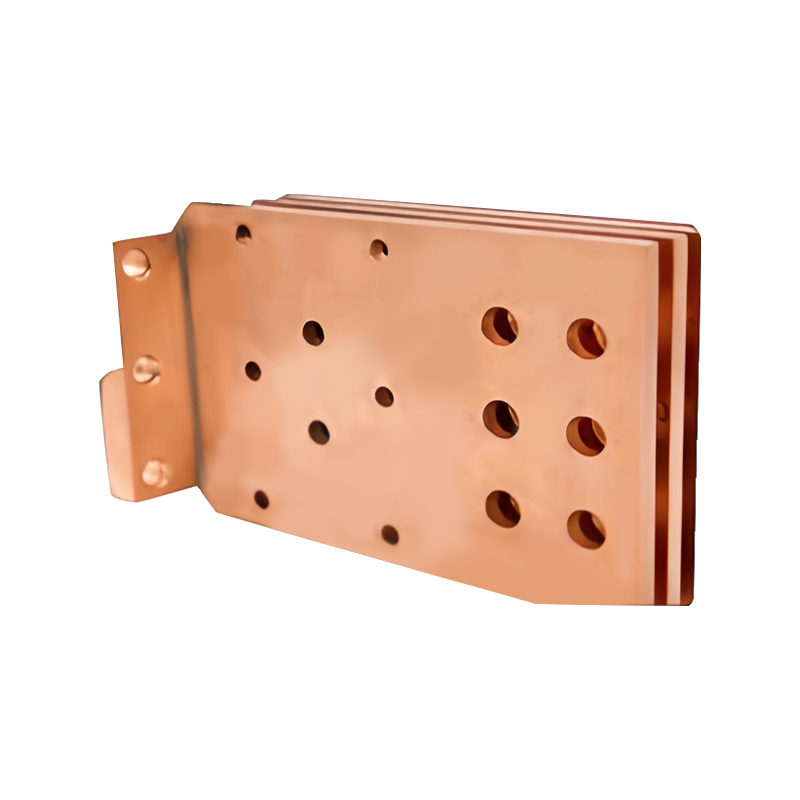
Copper Irregular Profiles are customized copper conductive components manufactured with non-standard cross-sectional geometries to meet specific electrical, mechanical, and installation requirements. Unlike conventional copper bars with simple rectangular or round sections, irregular profiles may include steps, grooves, bends, slots, mounting sections, contact surfaces, or other application-specific structures.
These copper profiles are widely used in high and low voltage switchgear, ring main units (RMUs), ACB drawer units, medium voltage electrical equipment, circuit breakers, busbar systems, and industrial power distribution equipment. Their primary functions include contact support, circuit switching, current conduction, electrical connection, and mechanical positioning.
For B2B buyers, irregular copper profiles are particularly valuable when standard copper bars cannot satisfy space limitations, current requirements, contact geometry, or assembly tolerances. A customized profile can combine conductive and mechanical functions into one component, potentially reducing the number of separate parts in an electrical assembly.
2. Why Are Copper Irregular Profiles Important for Electrical Equipment?
(1) High Electrical Conductivity
Copper is widely selected for electrical components because of its high electrical conductivity and good thermal conductivity. In a switchgear assembly, the profile geometry directly affects the available conductive cross-section, current distribution, heat dissipation, and connection performance.
(2) Space-Saving Structural Design
Irregular profiles can be designed around existing components, insulation barriers, terminals, and mechanisms. For example, a stepped copper profile can provide an offset connection while maintaining the required conductive path, helping OEMs optimize limited space inside compact switchgear.
(3) Integrated Mechanical and Electrical Functions
A customized copper profile can simultaneously provide electrical conduction, contact support, mounting, positioning, and mechanical reinforcement. This is especially useful for circuit breaker and ACB components where electrical contact geometry must match the operating mechanism precisely.
3. How Are Copper Irregular Profiles Manufactured?
The appropriate manufacturing process depends on profile complexity, copper material, dimensional requirements, annual volume, and application. Common processes include extrusion, stamping, forging, CNC machining, bending, cutting, drilling, and secondary surface treatment.
- Material selection: Select an appropriate copper grade based on conductivity, mechanical strength, forming requirements, and application environment.
- Profile forming: Produce the basic irregular cross-section through extrusion, stamping, forging, or another suitable process.
- Precision machining: Add holes, slots, steps, threads, contact surfaces, and other detailed features when required.
- Surface treatment: Apply tin plating, silver plating, nickel plating, or other treatments when required by electrical or environmental conditions.
- Inspection: Verify dimensions, surface quality, conductivity-related requirements, plating thickness, and other customer specifications.
For high-volume OEM production, optimizing the forming process can significantly reduce machining operations. For example, a near-net-shape profile may reduce material waste and secondary machining compared with manufacturing the same component entirely from a standard copper bar.
4. Common Types of Copper Irregular Profiles
Common copper irregular profile structures and their typical industrial applications.
| Profile Type |
Main Feature |
Typical Application |
| Stepped Copper Profile |
Different levels or offsets |
Switchgear and circuit breakers |
| Grooved Copper Profile |
Machined grooves or channels |
Contact support and conductive assemblies |
| L-Shaped / Offset Profile |
Multi-directional connection |
Busbar and terminal connections |
| Contact Copper Profile |
Precision contact geometry |
ACB, MCCB and MV equipment |
The exact profile can be customized according to drawings, samples, 3D models, or equipment specifications. This makes irregular copper profiles particularly suitable for OEM and ODM electrical component programs.
5. Copper Irregular Profiles for Switchgear and Circuit Breakers
Switchgear manufacturers require conductive components that provide stable electrical performance while fitting accurately inside compact assemblies. Copper irregular profiles can be used as contact supports, conductive links, terminal components, busbar connections, and other internal electrical structures.
In low-voltage and medium-voltage equipment, the component's geometry influences current paths, contact pressure, creepage and clearance arrangements, mechanical positioning, and heat dissipation. Therefore, dimensional accuracy is not simply an appearance requirement; it can directly influence assembly consistency and equipment reliability.
For example, an irregular copper component used in an ACB drawer unit may need several precise mounting holes and offset surfaces. A dimensional deviation of even a few tenths of a millimeter can become important when multiple components must align during repeated assembly and operation.
When purchasing copper irregular profiles, electrical equipment manufacturers should define both material and geometry requirements. Important specifications include:
- Copper grade: Specify the required conductivity and mechanical characteristics.
- Cross-sectional dimensions: Width and thickness affect electrical and thermal performance.
- Profile geometry: Include steps, bends, grooves, slots, and contact surfaces.
- Tolerances: Define critical dimensional tolerances according to assembly requirements.
- Surface treatment: Specify plating type and required thickness where applicable.
- Current requirements: Provide continuous and, where relevant, short-time current conditions.
- Annual volume: Production quantity affects tooling and manufacturing-process selection.
7. Jiangsu Kaiyuanfeng Copper Irregular Profiles Manufacturer
Jiangsu Kaiyuanfeng Electrical Machinery Manufacturing Co., Ltd. is a Copper Irregular Profiles Manufacturer and wholesale supplier, established in Taizhou in August 2013 with an initial registered capital of 5 million yuan. The company specializes in key circuit breaker components and integrates R&D, design, production, sales, and service.
Its copper irregular profiles are widely used in high and low voltage switchgear, ring main units, ACB drawer units, medium voltage electrical equipment, and other electrical systems, where they perform important functions in contact support, circuit switching, and wiring conduction.
Jiangsu Kaiyuanfeng follows the core values of building a solid foundation through steadiness, expanding horizons through perseverance, and forging integrity with responsibility. Guided by technological innovation and quality service, the company incorporates customer requirements throughout the product development and manufacturing process.
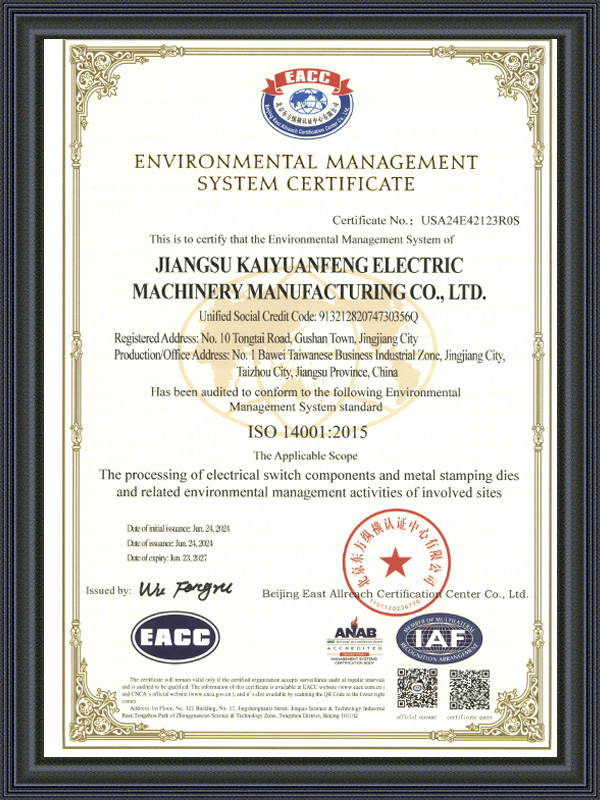
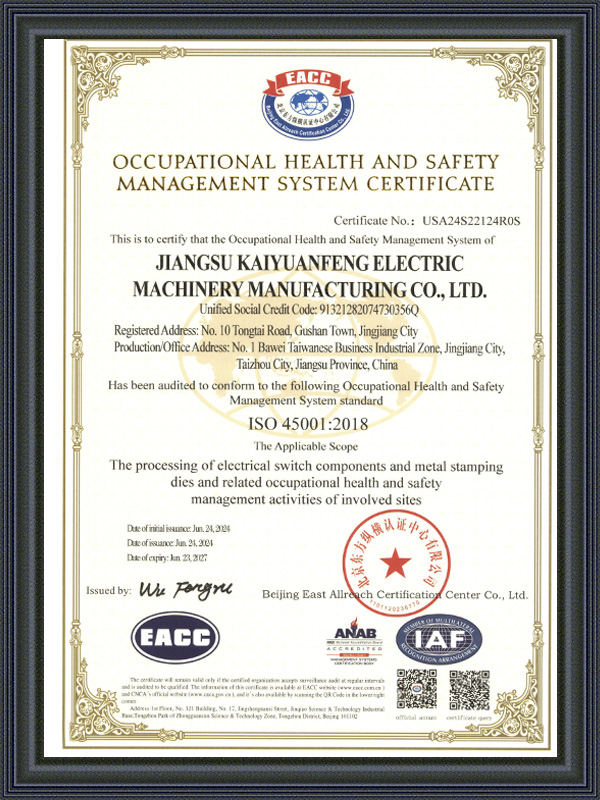
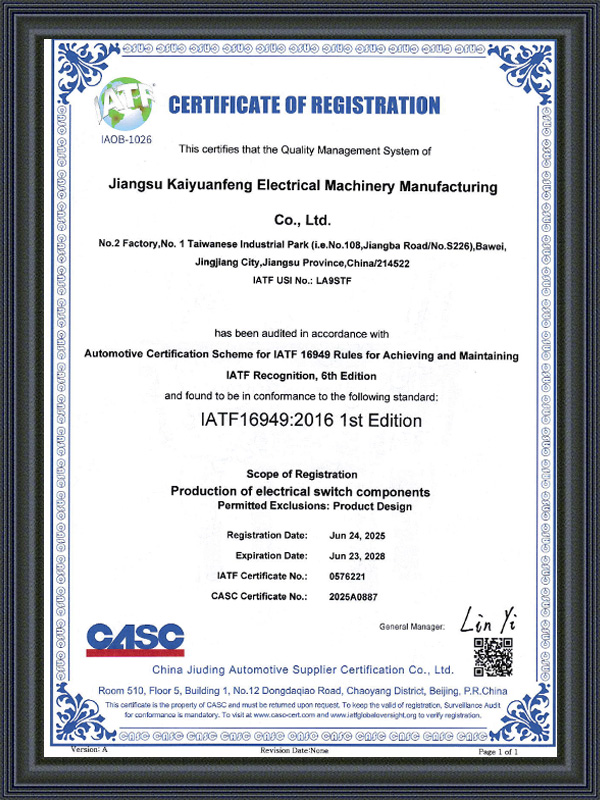
The company's innovation capabilities are supported by 28 related patents addressing key industry challenges. It has also obtained ISO certification and implements a management system aligned with international standards to support production efficiency, process control, and quality assurance.
With more than a decade of industry experience, Jiangsu Kaiyuanfeng focuses on reliable products and attentive service for long-term B2B partnerships. OEM customers can provide drawings, samples, technical specifications, or application requirements for customized copper irregular profile development and mass production.
8. Why Choose Customized Copper Irregular Profiles?
Standard copper bars are suitable for many electrical applications, but they may require additional cutting, bending, drilling, or machining before installation. A customized irregular profile can integrate multiple features into one component and improve assembly efficiency.
For OEM production, customization can also improve repeatability. Once the profile, tooling, process parameters, and inspection criteria are validated, the same geometry can be reproduced across production batches. This is especially valuable for circuit breaker and switchgear manufacturers that require consistent component dimensions across large production volumes.
The most cost-effective copper profile is not necessarily the profile with the lowest unit price. Material utilization, machining time, tooling costs, assembly labor, rejection rate, plating requirements, and long-term supply stability should all be included when evaluating the total procurement cost.
9. Frequently Asked Questions About Copper Irregular Profiles
Q1. What are copper irregular profiles used for?
Copper irregular profiles are used for conductive and mechanical functions in electrical equipment. Typical applications include high and low voltage switchgear, ring main units, ACB drawer units, circuit breakers, medium voltage equipment, busbar systems, contact supports, wiring connections, and customized power distribution assemblies.
Q2. What is the difference between copper irregular profiles and standard copper bars?
A standard copper bar normally has a simple rectangular or round cross-section, while an irregular profile is designed with a customized geometry such as steps, grooves, offsets, holes, or contact surfaces. Irregular profiles can reduce secondary processing and provide a better fit for complex electrical assemblies.
Q3. Which copper material is suitable for electrical irregular profiles?
The appropriate copper material depends on conductivity, mechanical strength, forming requirements, operating temperature, and application conditions. Common electrical copper materials include high-conductivity copper grades, while specific applications may require a balance between conductivity and mechanical performance. The final material should be selected according to the component's electrical and mechanical requirements.
Q4. Can copper irregular profiles be customized according to drawings?
Yes. Manufacturers can develop copper irregular profiles based on 2D drawings, CAD files, 3D models, physical samples, or detailed technical specifications. Customization can cover cross-section, length, holes, slots, bends, offsets, surface treatment, and other features. For OEM projects, drawings with clearly defined critical tolerances provide the most efficient starting point.
Q5. Can copper irregular profiles be used in medium voltage switchgear?
Yes. Copper irregular profiles can be used in medium voltage electrical equipment for conductive connections, contact support, switching assemblies, and other components. However, the complete electrical design must consider voltage level, insulation coordination, creepage and clearance distances, current, thermal performance, mechanical strength, and applicable equipment standards.
Q6. Why is copper plating used on irregular copper profiles?
Copper components may receive tin, silver, nickel, or other surface treatments depending on the application. Surface treatment can improve contact stability, corrosion resistance, solderability, or compatibility with mating components. The appropriate treatment should be selected based on electrical load, environmental conditions, contact material, and required service life.
Q7. How do I specify copper irregular profiles for an OEM project?
Provide the copper material or required conductivity, overall dimensions, cross-section, critical tolerances, hole and slot locations, surface treatment, current requirements, operating environment, application drawings, annual quantity, and packaging requirements. A technical drawing or physical sample can help the manufacturer evaluate tooling, production processes, and quality-control requirements more accurately.
Q8. What should I consider when buying copper irregular profiles wholesale?
Wholesale buyers should evaluate more than unit price. Important factors include copper material consistency, dimensional accuracy, surface treatment quality, production capacity, tooling capability, inspection procedures, batch-to-batch consistency, lead time, packaging, and supplier experience with electrical components. For long-term OEM supply, stable quality and delivery are often more important than a small difference in initial purchase price.
Q9. Can a copper irregular profile combine conductive and mounting functions?
Yes. This is one of the major advantages of customized copper profiles. A single component can incorporate conductive surfaces, mounting holes, positioning features, offsets, and contact-support structures. Such integration can simplify assembly and reduce the number of separate components required in switchgear and circuit breaker systems.
Q10. Can Jiangsu Kaiyuanfeng supply customized copper irregular profiles in bulk?
Yes. Jiangsu Kaiyuanfeng Electrical Machinery Manufacturing Co., Ltd. provides customized and wholesale copper irregular profiles for electrical equipment manufacturers, switchgear companies, circuit breaker manufacturers, and other industrial customers. With more than a decade of industry experience, 28 related patents, and an ISO-certified management system, the company can support customers from product development and sample validation through production and long-term supply.

 English
  中文简体
中文简体  русский
  عربى
عربى