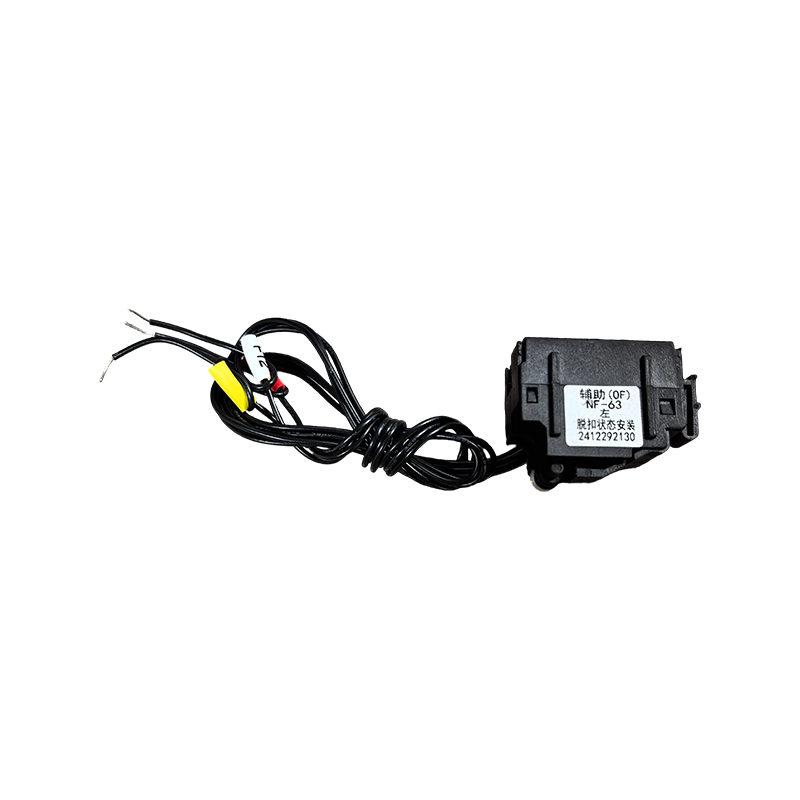
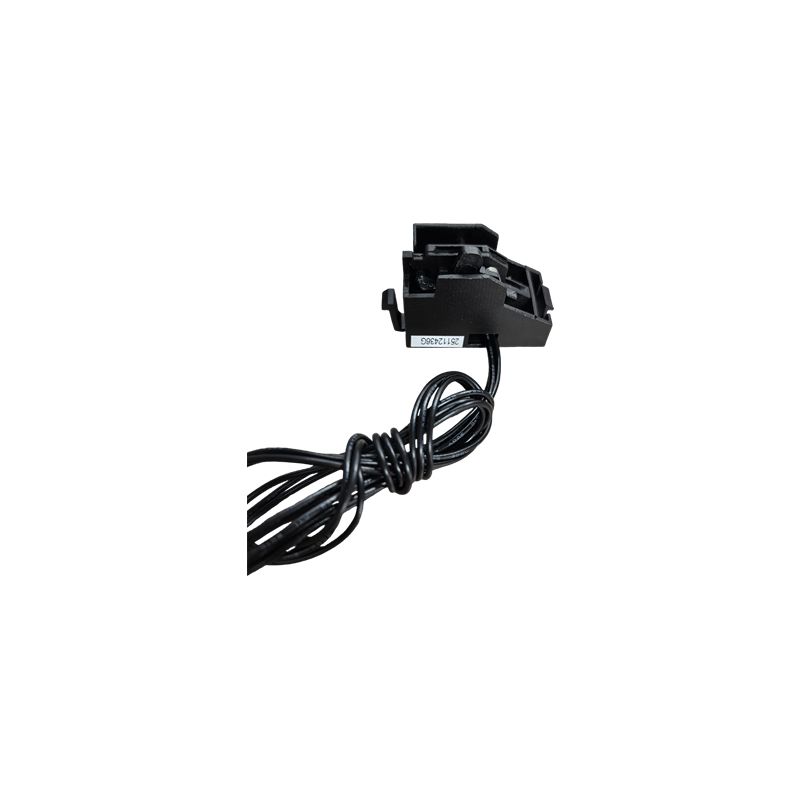
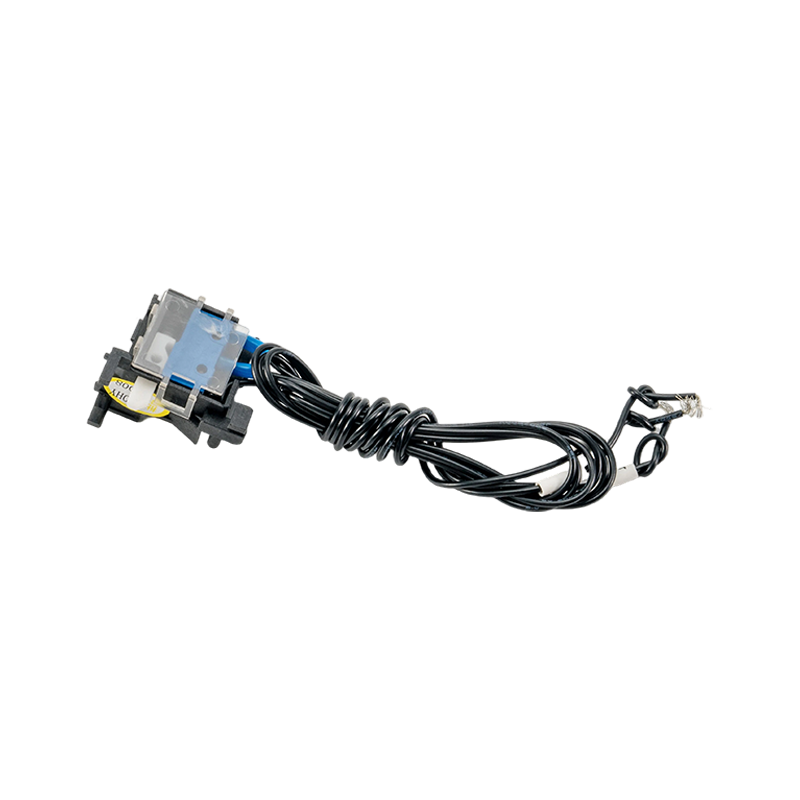
1. What Is an MCCB Auxiliary Contact?
An MCCB auxiliary contact is an electrical accessory installed on a molded case circuit breaker (MCCB) to provide remote information about the breaker’s operating condition. Unlike the main contacts that carry the power circuit, auxiliary contacts are used in low-power control, indication, monitoring, and automation circuits.
Auxiliary contacts indicate the circuit breaker's open and closed status and provide remote circuit breaker status information. This makes them particularly useful in industrial switchboards, motor control centers, power distribution panels, building automation systems, generator systems, and other applications where operators need to know the status of a breaker without opening the electrical cabinet.
For B2B buyers, panel builders, electrical wholesalers, and OEMs, selecting the correct MCCB auxiliary contact is not simply a matter of choosing a compatible accessory. The contact configuration, mounting position, electrical rating, operating mechanism, breaker series, and signaling function must all match the target MCCB.
(1) Open and Closed Status Monitoring
The most common function is to transmit the open or closed condition of the MCCB to an external control circuit. When the breaker changes position, the auxiliary contact changes its own contact state, allowing a PLC, indicator lamp, relay, building management system, or other monitoring equipment to receive the corresponding signal.
For example, ABB's current Tmax XT documentation identifies auxiliary contacts for signaling the open/closed status of circuit-breaker power contacts. Schneider Electric also distinguishes status indication contacts from fault-trip indication contacts in its circuit-breaker accessory systems. :contentReference[oaicite:0]{index=0}
(2) Auxiliary Contact vs. Alarm Contact
An important procurement distinction is between a standard auxiliary contact and a trip or alarm contact. An OF-type auxiliary contact generally indicates whether the breaker is open or closed, while an SD, SDE, bell alarm, or similar device can be designed to indicate that the breaker has opened because of a fault or trip condition, depending on the MCCB platform.
This distinction matters in industrial automation. A breaker that is manually switched off should not necessarily generate the same remote alarm as a breaker that has opened because of an overload or short circuit. Schneider Electric specifically describes OF contacts as status indication and SD contacts as fault-trip indication. :contentReference[oaicite:1]{index=1}
3. Key Specifications for Selecting an MCCB Auxiliary Contact
(1) Contact Configuration
Common configurations include normally open (NO), normally closed (NC), and changeover contacts. A changeover or Form C configuration can provide both NO and NC functionality, making it suitable for different control logic requirements.
(2) Electrical Rating
The auxiliary circuit must be selected according to the actual control voltage and current. Current manufacturer specifications demonstrate how widely ratings can vary. For example, Schneider Electric lists auxiliary products covering ranges such as 24–415 VAC and 24–130 VDC, while ABB documentation includes auxiliary-contact options for 24 VDC and higher-voltage AC/DC signaling applications. These figures are product-specific and should never be treated as universal ratings. :contentReference[oaicite:2]{index=2}
(3) MCCB Compatibility
Compatibility is one of the most important purchasing criteria. Buyers should confirm the MCCB manufacturer, frame size, series, accessory interface, installation position, terminal arrangement, and applicable voltage before placing a bulk order.
- Breaker series and frame size
- OF, SD, SDE, or other signaling function
- NO, NC, or changeover contact configuration
- AC/DC rated voltage and current
- Side, front, or internal mounting requirements
- Terminal and wiring requirements
For OEM and wholesale procurement, compatibility documentation should be confirmed before mass production. A technically similar auxiliary contact may still fail to fit or correctly actuate a particular MCCB.
4. MCCB Auxiliary Contact Selection Guide for B2B Buyers
For electrical distributors and switchgear manufacturers, procurement decisions normally involve several factors rather than price alone. The following bar-style list provides an illustrative project selection framework, not a market survey or universal industry ranking.
- MCCB Compatibility ██████████ 30%
- Electrical Rating ████████ 25%
- Contact Function ███████ 20%
- Reliability & Quality █████ 15%
- Cost & Lead Time ███ 10%
Key MCCB auxiliary contact parameters for industrial and OEM procurement
| Parameter |
Typical Requirement |
Why It Matters |
| Contact Type |
NO / NC / Changeover |
Determines control logic |
| Function |
Open/Closed or Trip |
Defines the remote signal |
| Control Voltage |
24 VDC, 110/120 VAC, 220/240 VAC, etc. |
Ensures electrical compatibility |
| Mounting |
Model-specific |
Ensures mechanical fit |
| Application |
Panel, MCC, automation, power distribution |
Determines required performance |
5. Why Choose a Professional MCCB Auxiliary Contact Manufacturer?
For B2B customers, the value of an auxiliary contact supplier extends beyond the component itself. Consistent dimensions, stable contact performance, reliable assembly, technical documentation, and batch-to-batch consistency are important when the product is integrated into MCCBs or electrical panels.
Jiangsu Kaiyuanfeng Electrical Machinery Manufacturing Co., Ltd. is a MCCB Auxiliary Contact Manufacturer and Wholesale MCCB Auxiliary Contact supplier, established in Taizhou in August 2013 with an initial registered capital of 5 million yuan. The company integrates R&D, design, production, sales, and service and focuses on key circuit breaker components.
Kaiyuanfeng incorporates customer requirements throughout the R&D and manufacturing process. Its innovation capabilities are supported by 28 related patents, while ISO certification supports a management system aligned with international standards for operational efficiency and quality assurance.
With more than a decade of industry experience, the company serves customers with a customer-centered approach and focuses on dependable products and responsive service. For electrical wholesalers, panel builders, MCCB manufacturers, and OEM buyers, this experience can support long-term component sourcing and customized project requirements.
The company's core values emphasize steady development, perseverance, responsibility, integrity, win-win cooperation, and technological innovation. Its long-term objective is to become a core supplier of key circuit breaker components and contribute to safer and more reliable electrical systems.
6. Frequently Asked Questions About MCCB Auxiliary Contacts
Q1. What does an MCCB auxiliary contact do?
An MCCB auxiliary contact provides an electrical signal representing the circuit breaker’s operating condition. It is commonly used to indicate whether the breaker is open or closed and can send this information to an indicator, relay, PLC, monitoring system, or building automation system. The exact function depends on whether the accessory is designed as a status contact, trip contact, or another signaling device.
Q2. What is the difference between an MCCB auxiliary contact and an alarm contact?
An auxiliary status contact generally reports the open or closed condition of the breaker. An alarm or trip contact is designed to identify a fault-related opening, depending on the MCCB design. For example, a breaker manually switched off may change an OF status contact but may not generate the same fault indication as an overload or short-circuit trip. Always verify the manufacturer's accessory definitions before wiring the control system.
Q3. Can an MCCB auxiliary contact be connected to a PLC?
Yes. Auxiliary contacts are frequently used to provide hardwired breaker status signals to PLC inputs or other industrial control systems. However, the auxiliary contact's rated voltage, current, contact configuration, insulation requirements, and the PLC input characteristics must be checked before connection. Some commercial auxiliary products are specifically offered for low-current signaling and PLC-related applications. :contentReference[oaicite:3]{index=3}
Q4. How do I choose the correct MCCB auxiliary contact?
Start with the MCCB manufacturer and exact series or frame size. Then confirm the required function, such as open/closed status or fault-trip indication, followed by contact configuration, control voltage, current rating, mounting position, terminal arrangement, and applicable standards. For OEM projects, sending the MCCB model, drawings, electrical requirements, annual quantity, and installation environment to the supplier is the most reliable approach.
Q5. What voltage can an MCCB auxiliary contact handle?
There is no single universal voltage rating for all MCCB auxiliary contacts. Current products on the market demonstrate different electrical ranges depending on the design. For example, Schneider Electric lists products with ranges including 24–415 VAC and 24–130 VDC, while other MCCB accessory families use dedicated 24 VDC signaling contacts. Buyers should always use the exact product datasheet rather than assuming that an auxiliary contact has the same rating as the MCCB main circuit. :contentReference[oaicite:4]{index=4}
Q6. Are MCCB auxiliary contacts interchangeable between different brands?
Not necessarily. Auxiliary contacts are often mechanically and electrically designed for a particular MCCB family. Differences may include mounting dimensions, actuator position, internal mechanism, terminal layout, contact rating, and signaling logic. Even if two accessories appear similar, they should not be treated as interchangeable without verified compatibility. For wholesale or OEM purchasing, suppliers should confirm the target breaker series and provide compatibility documentation before bulk production.
Q7. Why are MCCB auxiliary contacts important in industrial power distribution?
Auxiliary contacts allow operators and automation systems to obtain breaker status remotely. This is particularly valuable in large distribution panels, data centers, factories, commercial buildings, generator systems, and motor control applications where checking every MCCB locally can increase inspection time. By providing a discrete electrical signal, auxiliary contacts can support centralized monitoring and faster fault response.
Q8. What information should I provide when buying MCCB auxiliary contacts in bulk?
For a B2B quotation, provide the MCCB brand and model, frame size, auxiliary function, contact configuration, rated control voltage, current requirement, mounting location, terminal requirements, quantity, target market, and any required certifications or quality documentation. If the auxiliary contact is for OEM integration, a technical drawing or sample MCCB can significantly reduce compatibility risks and help the manufacturer confirm the correct design.

 English
  中文简体
中文简体  русский
  عربى
عربى