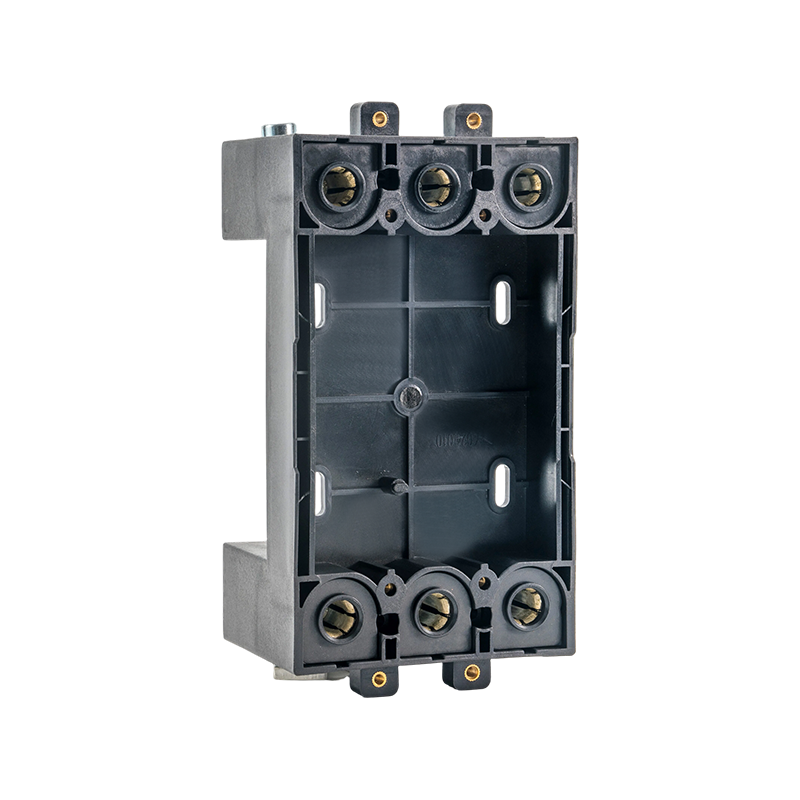
An MCCB Plug-In Device is a circuit breaker accessory designed to provide a plug-in connection between a molded case circuit breaker (MCCB) and a fixed electrical installation. Unlike a conventional fixed-mounted MCCB, a plug-in configuration allows the breaker to be connected to a dedicated base or mounting assembly, making installation, removal, inspection, and replacement more convenient for electrical distribution systems.
For B2B applications, MCCB plug-in devices are particularly useful in industrial control panels, commercial distribution boards, manufacturing facilities, power distribution equipment, and systems where maintenance efficiency is important. Instead of repeatedly disconnecting individual conductors during breaker replacement, a compatible plug-in arrangement can simplify the maintenance process.
The actual plug-in structure must be matched to the MCCB series, frame size, pole configuration, rated current, terminal arrangement, and applicable electrical standard. Buyers should therefore treat the plug-in device as a matched MCCB accessory rather than a universal connector.
2. What Are the Main Types of MCCB Plug-In Devices?
(1) Split Plug-In Device
Split plug-in devices feature a durable bakelite base with separate line and load terminals. This structure provides a clearly separated terminal arrangement and can be suitable for applications where mechanical strength, electrical isolation, and straightforward terminal access are important.
For panel manufacturers and electrical distributors, the separate line and load terminal structure can also make product configuration and maintenance easier. The exact terminal arrangement, dimensions, and electrical ratings should be verified against the intended MCCB model before bulk procurement.
(2) Integrated Plug-In Device
Integrated plug-in devices use a plastic base with an optimized internal contact structure to reduce material consumption, offering ease of use. The integrated design can help simplify the overall assembly and may provide a more compact solution for specific MCCB product families.
For OEM customers, integrated structures may also offer opportunities to optimize manufacturing costs and assembly efficiency. However, material selection, contact pressure, temperature-rise performance, mechanical strength, and long-term durability must be evaluated according to the intended operating conditions.
3. Split vs. Integrated MCCB Plug-In Devices: Which Is Better?
There is no single design that is best for every MCCB application. The appropriate choice depends on the breaker construction, installation environment, manufacturing target, maintenance requirements, and project budget.
Comparison of split and integrated MCCB plug-in device designs for B2B purchasing decisions.
| Feature |
Split Type |
Integrated Type |
| Base Material |
Bakelite |
Plastic |
| Terminal Design |
Separate line and load terminals |
Integrated contact structure |
| Main Advantage |
Durable and clearly separated construction |
Simplified structure and material optimization |
| Typical B2B Focus |
Heavy-duty and maintenance-oriented applications |
Compact and cost-conscious product designs |
4. What Are the Benefits of Using an MCCB Plug-In Device?
(1) Faster Breaker Replacement
A properly engineered plug-in arrangement can reduce the amount of wiring work required when replacing a compatible MCCB. This can be particularly valuable in industrial facilities where maintenance teams need to minimize equipment downtime.
(2) Simplified Panel Maintenance
Plug-in construction can make breaker removal and installation more convenient during inspection or replacement. For example, a panel containing dozens of MCCBs can benefit from standardized plug-in arrangements because maintenance procedures can become more consistent across compatible units.
(3) Improved Product Standardization
For electrical equipment manufacturers, standardized plug-in devices can help create repeatable panel configurations. This can be useful for OEM production, project-based electrical cabinets, and distribution equipment supplied to multiple markets.
(4) Better Suitability for Modular Distribution Systems
A plug-in MCCB architecture can support modular equipment designs where breakers may need to be removed, inspected, upgraded, or replaced during the service life of the electrical installation.
5. What Should B2B Buyers Check Before Ordering?
MCCB plug-in devices are precision electrical components. A buyer should confirm the complete technical specification rather than selecting a product only according to the breaker’s rated current.
- Confirm the MCCB manufacturer, series, frame size, and exact model.
- Check the number of poles and line/load terminal configuration.
- Verify the plug-in device dimensions and mounting structure.
- Confirm contact material, contact pressure, insulation material, and temperature-rise requirements.
- Request drawings, samples, inspection standards, and test reports for OEM projects.
- Confirm MOQ, production capacity, packaging, lead time, and customization capabilities for wholesale orders.
Compatibility is the most important purchasing factor. Even when two MCCBs have the same rated current, their mounting dimensions, contact positions, terminal spacing, and mechanical interfaces may be different.
6. MCCB Plug-In Device Manufacturer for OEM and Wholesale Supply
Jiangsu Kaiyuanfeng Electrical Machinery Manufacturing Co., Ltd. is a MCCB Plug-In Device Manufacturer and Wholesale MCCB Plug-In Device supplier, established in Taizhou in August 2013 with an initial registered capital of 5 million yuan. The company specializes in key circuit breaker components and integrates R&D, design, production, sales, and service.
Jiangsu Kaiyuanfeng follows the core values of "building a solid foundation through steadiness, expanding horizons via perseverance, and forging integrity with responsibility" and the founding principle of integrity, win-win collaboration, and pioneering the future. Customer requirements are incorporated into product development and manufacturing processes to support reliable component performance.
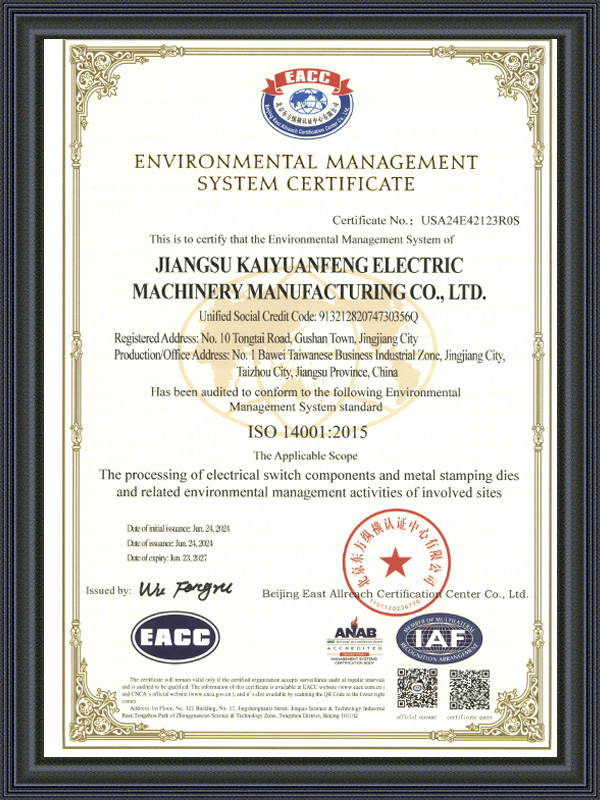
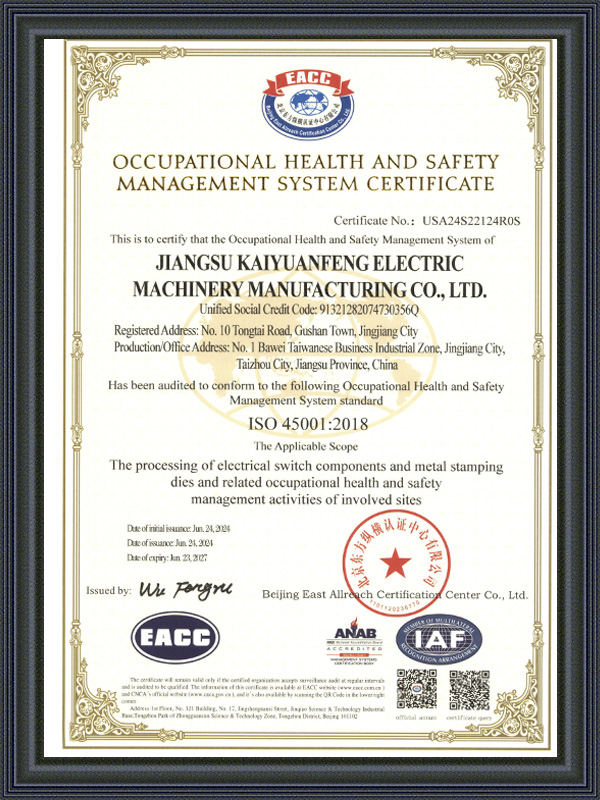
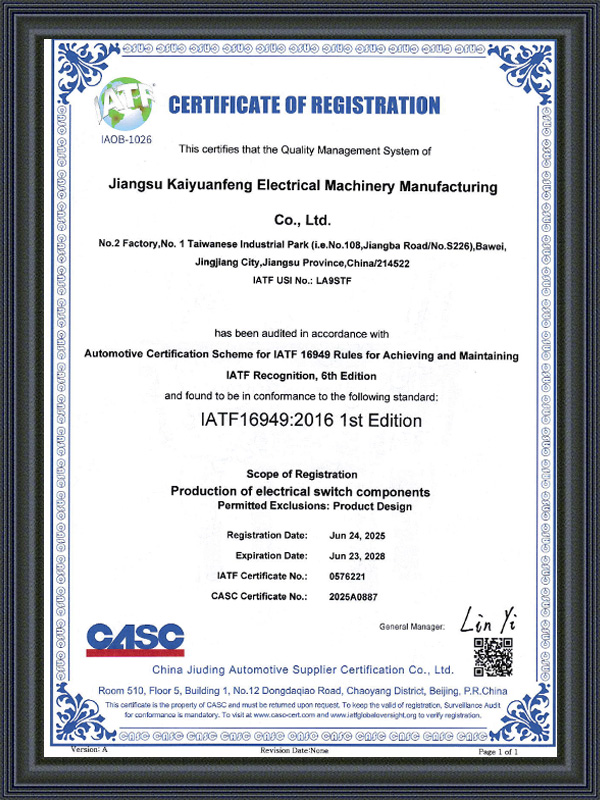
The company has 28 related patents supporting its technological innovation and has obtained ISO certification, with a management system aligned with international standards for operational efficiency and quality assurance. Its product development capabilities cover circuit breaker component structures such as split and integrated MCCB plug-in devices.
With more than a decade of industry experience, Jiangsu Kaiyuanfeng serves electrical equipment manufacturers, distributors, panel builders, and other B2B customers. For customers purchasing MCCB plug-in devices in volume, the company can support product development, specification confirmation, quality management, and long-term supply cooperation.
7. Frequently Asked Questions About MCCB Plug-In Devices
Q1. What is an MCCB plug-in device used for?
An MCCB plug-in device provides a dedicated connection between a compatible molded case circuit breaker and a fixed installation. Its main purpose is to simplify breaker installation, removal, replacement, and maintenance while maintaining the required electrical and mechanical connection.
Q2. What is the difference between a split and integrated MCCB plug-in device?
A split plug-in device uses a durable bakelite base with separate line and load terminals. An integrated plug-in device uses a plastic base with an optimized internal contact structure. The split design emphasizes a separated and durable terminal arrangement, while the integrated design focuses on simplified construction, material optimization, and ease of use.
Q3. Are MCCB plug-in devices universal?
No. MCCB plug-in devices are generally designed for specific breaker series, frame sizes, and mechanical interfaces. Buyers should provide the MCCB model, dimensions, rated current, pole configuration, and technical drawings to the manufacturer to confirm compatibility before ordering.
Q4. How do I choose the right MCCB plug-in device?
Start by identifying the exact MCCB model and frame size. Then verify the number of poles, line and load terminals, mounting dimensions, contact configuration, insulation material, electrical rating, and required standards. For OEM applications, sample testing should be completed before mass production to verify mechanical fit and electrical performance.
Q5. What materials are used for MCCB plug-in device bases?
The material depends on the product design. Split plug-in devices can use durable bakelite bases, while integrated designs can use engineered plastic bases with optimized internal contact structures. Material selection should consider insulation performance, mechanical strength, temperature resistance, dimensional stability, and the application environment.
Q6. Can MCCB plug-in devices be customized for OEM projects?
Yes. Depending on the manufacturer's capabilities, OEM customization may include dimensions, mounting interfaces, terminal arrangements, materials, contact structures, markings, and packaging. However, customization should be based on engineering drawings and electrical requirements rather than simply changing external dimensions.
Q7. What should wholesalers consider when buying MCCB plug-in devices?
Wholesale buyers should evaluate MCCB compatibility, material quality, contact reliability, dimensional consistency, quality-control procedures, certifications, MOQ, lead time, packaging, OEM capability, and after-sales support. For large-volume projects, it is recommended to validate samples and establish clear incoming inspection criteria before placing repeated production orders.
Q8. Why is contact design important in an MCCB plug-in device?
The contact structure directly affects electrical connection reliability, temperature rise, mechanical stability, and service performance. An improperly matched contact interface can increase contact resistance and localized heating. Therefore, contact pressure, material, surface treatment, alignment, and connection geometry should all be evaluated during product qualification.

 English
  中文简体
中文简体  русский
  عربى
عربى