 English
  中文简体
中文简体  русский
  عربى
عربى 

1.The circuit breaker provides safety protection, arc extinguishing, and interrupting functions, with defined electrical life and short-circuit withstand capability. 2.Multiple controller options are ...
See Details
What Are Circuit Breaker Contacts and How Do They Work?
Content
- 1 What Circuit Breaker Contacts Are: A Direct Answer
- 2 Main Parts of a Circuit Breaker: An Overview
- 3 Understanding Circuit Breaker Contacts and Their Function
- 4 Types of Circuit Breaker Contacts
- 5 Circuit Breaker Contact Structure at a Glance
- 6 Materials Used in Circuit Breaker Components
- 7 Why Copper Is Widely Used in Circuit Breaker Components
- 8 Copper vs Other Contact Materials: A Property Comparison
- 9 Typical Component Composition of a Circuit Breaker Assembly
- 10 Contact Wear and Performance Across Operating Cycles
- 11 Manufacturing Considerations for Copper Circuit Breaker Contacts
- 12 What to Look for When Sourcing Circuit Breaker Parts
- 13 About Jiangsu Kaiyuanfeng Electrical Machinery Manufacturing
- 14 Frequently Asked Questions About Circuit Breaker Contacts and Parts
- 14.1 Q1. What are the main parts of a circuit breaker?
- 14.2 Q2. What are the components of a circuit breaker?
- 14.3 Q3. What are circuit breaker contacts?
- 14.4 Q4. What is the function of contacts in a circuit breaker?
- 14.5 Q5. What is a circuit breaker contact made of?
- 14.6 Q6. What materials are used in circuit breaker components?
- 14.7 Q7. Why is copper used in circuit breakers?
- 14.8 Q8. Why are copper contacts used in electrical equipment?
What Circuit Breaker Contacts Are: A Direct Answer
Circuit breaker contacts are the metal components inside a breaker that physically touch and separate to make or break an electrical circuit. When the contacts are closed, current passes through the breaker without interruption. When a fault, overload, or manual trip event occurs, the operating mechanism forces the contacts apart, and the flow of current stops. Among all the Circuit Breaker Parts found inside a typical low voltage or medium voltage unit, the contacts are the components that experience the most direct electrical and thermal stress, which is why the material chosen for them matters so much.
Most contact assemblies and related Copper Circuit Breaker Components are produced from copper or copper based alloys. Copper is selected because it combines high electrical conductivity with dependable thermal behavior and a level of mechanical strength that holds up to thousands of switching operations. This article walks through the main parts of a circuit breaker, explains what contacts do, compares copper with other contact materials, and outlines what to look for when sourcing copper contact components from a parts manufacturer.
Main Parts of a Circuit Breaker: An Overview
A circuit breaker is built from several interacting parts that work together to carry current under normal conditions and interrupt it under fault conditions. Before looking closely at contacts, it helps to see where they sit relative to the rest of the assembly. The table below summarizes the main Circuit Breaker Parts found in a typical molded case or air circuit breaker and the role each one plays.
| Part | Primary Function |
|---|---|
| Housing or Enclosure | Insulates and protects internal components from the surrounding environment |
| Operating Mechanism | Drives the opening and closing motion of the contacts, manually or automatically |
| Fixed and Moving Contacts | Carry load current when closed and separate to interrupt current during a trip |
| Arc Extinguishing Chamber | Cools and splits the arc generated when the contacts separate under load |
| Trip Unit | Senses overload or short circuit conditions and signals the mechanism to open |
| Terminals | Connect the breaker to the incoming and outgoing conductors of the circuit |
| Contact Spring | Maintains steady contact pressure during normal current carrying operation |
Within this list, the contacts and the terminal connections form the conductive backbone of the assembly. This is where Copper Circuit Breaker Parts are most often specified, since the current path needs a material that stays efficient and stable across repeated switching cycles.
Understanding Circuit Breaker Contacts and Their Function
Circuit breaker contacts sit at the center of every switching operation. Their job sounds simple on paper, close to allow current, open to stop it, but the engineering behind that simple action involves managing heat, mechanical wear, and arc energy at the same time. A well designed contact assembly needs to do several things at once, and each function places different demands on the material used to make it.
- Carry the rated current continuously without excessive heating during normal operation
- Separate quickly and cleanly to interrupt fault current when a trip condition is detected
- Withstand localized arc erosion that occurs during the moment of separation
- Maintain low and stable contact resistance across thousands of switching cycles
- Support reliable reclosing so the breaker performs consistently after each trip event
Because contacts open and close under load, the surface where the fixed and moving contact meet is subject to both mechanical wear from repeated impact and thermal wear from arcing. A material with poor conductivity would generate more heat for the same current, while a material that is too soft would deform quickly under repeated mechanical cycling. This is part of why copper and copper based alloys remain a standard choice among Copper Circuit Breaker Components used across the switchgear industry.
Types of Circuit Breaker Contacts
Fixed Contacts
Fixed contacts are mounted in a stationary position inside the breaker body. They stay connected to one side of the circuit at all times and provide a stable surface for the moving contact to meet during closing.
Moving Contacts
Moving contacts are attached to the operating mechanism and travel a short distance to touch or separate from the fixed contact. The speed and travel distance of this motion are engineered to minimize arc duration during interruption.
Main Contacts and Arcing Contacts
In many breaker designs, the contact assembly is divided into main contacts and arcing contacts. Main contacts carry the load current while the breaker is closed and are shaped for low resistance current flow. Arcing contacts are positioned to open slightly before, and close slightly after, the main contacts, so that the arc forms on the arcing contact surface instead of the main current carrying surface. This sequencing protects the main contacts from repeated arc erosion and helps extend the working life of the overall contact assembly.
Circuit Breaker Contact Structure at a Glance
Simplified structural view of a breaker pole showing the relative position of the arc chute, moving contact, fixed contact, and terminal base
Materials Used in Circuit Breaker Components
Several conductive materials appear across the switchgear industry, and each one brings a different balance of conductivity, mechanical strength, and resistance to arc erosion. The table below outlines the materials most commonly referenced for Circuit Breaker Parts and where each one tends to be used.
| Material | Typical Characteristics | Common Use |
|---|---|---|
| Copper | High conductivity, good thermal behavior, workable for stamping and forming | Contacts, terminals, current carrying bars |
| Copper Alloys | Adjusted hardness and wear resistance depending on alloying elements | Contact tips, spring loaded components |
| Silver Based Alloys | Very high conductivity and strong arc resistance, higher material cost | Contact plating and arcing surfaces |
| Brass | Good mechanical strength, moderate conductivity | Structural and mounting hardware |
| Aluminum | Lighter weight, lower conductivity than copper | Some bus bars and lightweight conductors |
Why Copper Is Widely Used in Circuit Breaker Components
Copper remains one of the most referenced materials for Copper Circuit Breaker Parts for a combination of practical reasons rather than any single property. Electrical conductivity is the most obvious factor, since copper carries current with comparatively low resistive loss. Thermal conductivity matters as well, because contacts need to move heat away from the switching point quickly during high current events. Copper also offers reasonable oxidation behavior that can be managed with plating where needed, and it responds well to stamping, forming, and machining processes used in component manufacturing. Compared with silver based alloys, copper offers a more accessible balance between conductive performance and material availability, which is one reason it continues to appear across a wide range of breaker designs.
Approximate electrical conductivity by material, shown as percent IACS, referenced against the International Annealed Copper Standard
Copper vs Other Contact Materials: A Property Comparison
No single material scores highest across every property that matters for a contact assembly, which is why material choice usually depends on the specific application. The radar chart below offers a general, illustrative comparison of copper against aluminum, brass, and silver alloy across five properties relevant to contact performance.
Illustrative relative comparison of common contact materials across five general performance properties
Reading the chart, copper holds a strong position for conductivity and thermal stability while remaining reasonably balanced on cost efficiency. Silver alloy leads on conductivity and arc resistance but scores lower on cost efficiency, which is why it often appears as a plated surface layer rather than a solid contact body. Brass trades conductivity for mechanical strength, and aluminum trades conductivity for lighter weight and material cost.
Typical Component Composition of a Circuit Breaker Assembly
Looking at a standard molded case circuit breaker, the internal components are not distributed evenly. Some parts, such as the operating mechanism and the contact assembly, occupy a larger share of the internal structure because of the mechanical work they perform. The column chart below gives a general, illustrative view of how the main functional groups compare in relative share within a typical assembly.
Illustrative relative share of key component groups within a typical molded case circuit breaker assembly
Contact Wear and Performance Across Operating Cycles
Contact resistance is not a fixed number. It tends to shift gradually as a breaker accumulates switching cycles, largely because of surface wear and minor arc erosion at the contact interface. This is a general pattern observed across switching contacts rather than a fixed figure for any single product, and it is one reason why periodic inspection is part of standard maintenance practice for equipment that includes circuit breaker components.
General pattern of relative contact resistance across an increasing number of switching cycles
Practical Maintenance Points
- Schedule visual inspection of contact surfaces at intervals appropriate to the duty cycle of the equipment
- Watch for discoloration or pitting that may indicate accumulated arc erosion
- Check contact alignment and spring pressure during routine servicing
- Keep replacement Circuit Breaker Parts on hand for equipment operating in high switching frequency environments
Manufacturing Considerations for Copper Circuit Breaker Contacts
Producing reliable Copper Circuit Breaker Contacts involves more than selecting the right alloy. Dimensional consistency, surface finish, and process control all influence how well a contact performs once it is installed in a breaker assembly. Manufacturers working on Custom Copper Circuit Breaker Contacts typically follow a structured sequence to keep every part within the required tolerance range.
- Material selection and sourcing of copper stock suited to the required conductivity and hardness
- Stamping or forming the contact shape according to the specified drawing
- Applying plating or cladding where a project calls for a specific surface layer
- Dimensional inspection to confirm parts meet the agreed tolerance range
- Assembly support and packaging suited for downstream installation
Working with an OEM Copper Circuit Breaker Contact Manufacturer that understands this sequence can help equipment builders keep contact quality consistent across production runs, particularly when a project involves a mix of standard and custom contact geometries within the same product line.
What to Look for When Sourcing Circuit Breaker Parts
Choosing a supplier for contacts and related components involves more than comparing part drawings. The points below cover practical factors that equipment builders commonly weigh when evaluating a source for Copper Circuit Breaker Parts.
- Consistent dimensional tolerances across production batches
- Clear material traceability for the copper stock used in each order
- Responsive engineering communication for custom geometry requests
- Tooling capability suited to both standard and custom contact designs
- Packaging methods that protect surface finish during shipping and handling
About Jiangsu Kaiyuanfeng Electrical Machinery Manufacturing
Jiangsu Kaiyuanfeng Electrical Machinery Manufacturing Co., Ltd. is a manufacturer of key circuit breaker components based in Taizhou, established in August 2013. The company brings together research, design, production, and after sales support under one operation, with a focus on Copper Circuit Breaker Components used across low voltage switchgear applications. Kaiyuanfeng works with equipment builders on both standard part orders and Custom Copper Circuit Breaker Contacts tailored to specific breaker designs.
Guided by a customer centered approach, the team places emphasis on process consistency and attentive communication throughout the order cycle, from initial drawing review through to final packaging. Over more than a decade of manufacturing experience, Kaiyuanfeng has built working relationships with equipment builders who need dependable Circuit Breaker Parts supplied on a repeatable basis, and continues to serve as a component partner for businesses looking for an OEM Copper Circuit Breaker Contact Manufacturer with hands on production experience.
Frequently Asked Questions About Circuit Breaker Contacts and Parts
Q1. What are the main parts of a circuit breaker?
The main parts generally include the housing, operating mechanism, fixed and moving contacts, arc extinguishing chamber, trip unit, and terminals.
Q2. What are the components of a circuit breaker?
Components include the contact assembly, contact spring, arc chute, terminals, and the internal mechanism that drives opening and closing motion.
Q3. What are circuit breaker contacts?
Contacts are the metal parts that touch when the breaker is closed and separate when the breaker opens, forming the point where current is made or broken.
Q4. What is the function of contacts in a circuit breaker?
Contacts carry load current during normal operation and separate quickly to interrupt current when a fault or overload condition is detected.
Q5. What is a circuit breaker contact made of?
Contacts are commonly made from copper or copper based alloys, sometimes combined with a plated surface layer for added arc resistance.
Q6. What materials are used in circuit breaker components?
Common materials include copper, copper alloys, silver based alloys, brass, and aluminum, each chosen for a different balance of properties.
Q7. Why is copper used in circuit breakers?
Copper offers a practical combination of high electrical conductivity, good thermal behavior, and workability suited to contact and terminal manufacturing.
Q8. Why are copper contacts used in electrical equipment?
Copper contacts help maintain stable, low resistance current flow across repeated switching cycles, which supports consistent equipment performance over time.
Previous Post
Overcurrent Protection for MCCB and ACB Systems: A Complete Practical Guide
Next Post
What Is Inside a Molded Case Circuit Breaker?
Related products
-
-
1.The circuit breaker provides safety protection, arc extinguishing, and interrupting functions, with defined electrical life and short-circuit withstand capability. 2.Multiple controller options are ...
See Details -
1. The circuit breaker offers safety protection, efficient arc extinguishing and interrupting, long electrical life, and short-term withstand capability. 2. The circuit breaker is available with a var...
See Details -
Featuring a simple structure with central operation and linkage-type transmission, this mechanism is compatible with three handle styles. It works with 63/100/250/400/630 frame molded case circuit bre...
See Details -
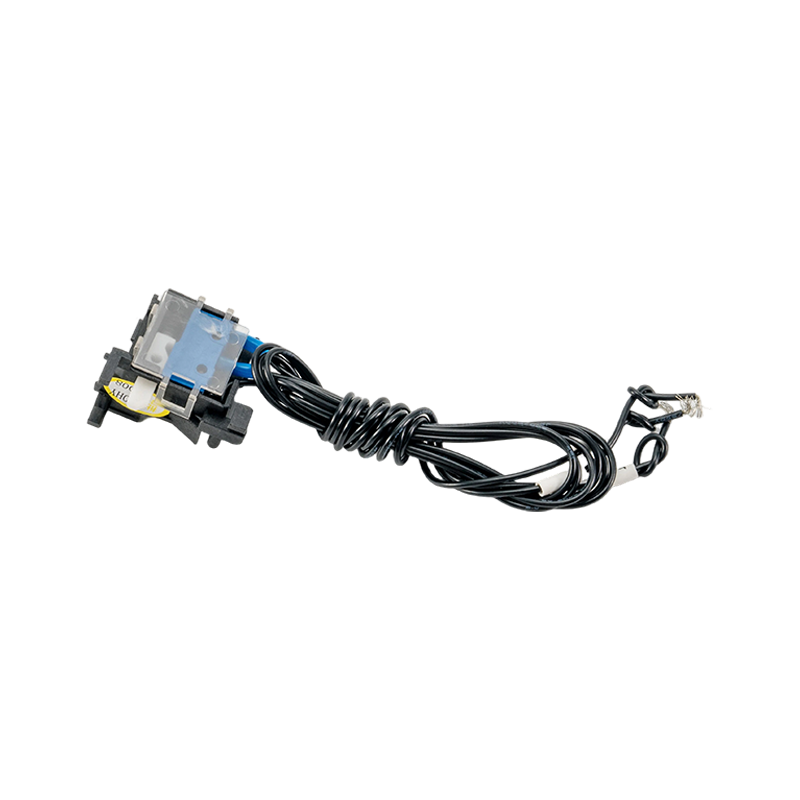
Auxiliary contacts are key components in electrical control systems, widely used with circuit breakers and status indicators. The FC30-63/100/225/400/630/800 auxiliary contact features reliable perfor...
See Details

Copyright @ Kaiyuanfeng Electrical Machinery Manufacturing Co.,Ltd All Rights Reserved.
OEM MCCB Accessories Manufacturer
ISO Certified Circuit Breaker Factory
