 English
 中文简体
 русский
 عربى


1.The circuit breaker provides safety protection, arc extinguishing, and interrupting functions, with defined electrical life and short-circuit withstand capability. 2.Multiple controller options are ...
See Details
Adjustable Circuit Breaker: What It Is and How to Choose the Right Tripping Setting
Content
- 1 What Makes a Circuit Breaker “Adjustable”?
- 2 The Six Adjustable Settings You Must Understand
- 3 How the Trip Unit Controls the Breaker
- 4 Adjustable Circuit Breaker Types: MCCB, ACB, and MCB
- 5 Selective Coordination and Real-World Applications
- 6 Isometric View: Inside an Adjustable MCCB
- 7 How to Set an Adjustable Circuit Breaker Correctly
- 8 Common Mistakes When Using Adjustable Trip Breakers
- 9 Maintenance and Testing Intervals
- 10 Selecting an Adjustable Circuit Breaker for Your Project
- 11 Cost Considerations
- 12 FAQ: Adjustable Circuit Breaker
When you walk through a new industrial distribution panel, the difference between a good design and an average one often comes down to how flexibly the protection devices can be tuned to match the actual load. That is exactly what an adjustable circuit breaker gives you: the ability to change tripping thresholds on site, without swapping hardware. Instead of ordering a single-use fixed-trip breaker and hoping the load profile stays the same for the next ten years, you can dial in long-time pickup, short-time pickup, and instantaneous settings to match motor starting currents, transformer inrush, or generator load steps.
From a manufacturer’s perspective, the growing preference for adjustable breakers is reflected in the wider supply chain. Component makers now offer accessories such as shunt trip units, undervoltage release units, and auxiliary contacts that help contractors and panel builders expand the functionality of a standard MCCB or ACB frame. This guide covers how adjustable breakers are built, which settings matter most, and how to avoid the most frequent coordination mistakes.
What Makes a Circuit Breaker “Adjustable”?
An adjustable circuit breaker is a protective device whose trip threshold and time delay can be changed without replacing the breaker itself. Fixed-trip breakers ship with a defined current rating—say 400 A—and that rating cannot be changed in the field. An adjustable breaker, on the other hand, lets an engineer or technician select the continuous current rating over a range, such as 250 A to 400 A, and also fine-tune how quickly the breaker responds to overloads and short circuits.
In practice, the adjustment is done through a trip unit mounted inside or on top of the breaker. The trip unit processes current signals and decides when the breaker should open. You will encounter two main technologies:
- Thermal-magnetic trip units are traditional, low-cost devices that use a bimetal strip for thermal overload protection and a magnetic coil for short-circuit protection. Adjustment is limited, typically only the magnetic pickup.
- Electronic trip units use current transformers and a microprocessor board to provide precise, independently adjustable long-time, short-time, instantaneous, and sometimes ground-fault protection. Most MCCBs and ACBs above 250 A rely on electronic trip units.
The choice between these two technologies matters more than any other decision you make. If you need true curve shaping for selective coordination with downstream breakers, an electronic trip unit is practically mandatory.
The Six Adjustable Settings You Must Understand
To use an adjustable breaker correctly, you are really managing four protection functions plus one timing function and one mechanical function. Industry practice and manuals such as the well-known “6 Adjustable Tripping Settings” reference group them as continuous amps, long-time delay, short-time pickup, short-time delay, instantaneous pickup, and ground-fault pickup. Here is what each one actually does.
Continuous Amps (Ir)
This is the steady-state current the breaker can carry indefinitely without tripping. It is usually set below the breaker frame rating. For example, a 630 A frame might be adjusted to Ir = 400 A to protect a feeder with a smaller conductor. Always set Ir below the conductor ampacity. The breaker frame rating only tells you the maximum physical capability, not the protection threshold.
Long-Time Delay (LTD)
This setting, combined with Ir, defines how long the breaker can withstand an overload before tripping. A long-time delay of 10 to 30 seconds is common in distribution systems. It prevents nuisance tripping from temporary overloads, such as small motor inrush or transformer energization, while still protecting cables from sustained overcurrent.
Short-Time Pickup (Sd) and Short-Time Delay (STD)
Short-time pickup responds to higher faults, usually 2 to 10 times Ir, and the short-time delay lets you coordinate with downstream breakers. For selective coordination, you can set the upstream breaker to wait 0.2 to 0.5 seconds to see if a downstream breaker clears the fault first. This is a core feature that fixed-trip breakers cannot provide.
Instantaneous Pickup (Ii)
The instantaneous setting is the fastest and highest protection level. If a fault exceeds this threshold, the breaker trips with no intentional delay, typically within 0.05 seconds or less. It protects the circuit from severe short circuits but should be set high enough to avoid tripping on motor starting current.
Ground-Fault Pickup (Ig)
Many modern electronic trip units add ground-fault protection. This function uses a separate sensor or vector-sum method to detect leakage current and trip at lower levels than phase overcurrent protection. It is a critical safety feature for personnel and fire prevention in low-voltage distribution.
As a rule, treat each adjustment as an independent variable. Changing one setting affects the shape of the time-current curve and can easily distort coordination with adjacent breakers. Document every change you make. In a later maintenance session, an undocumented adjustment can cause severe nuisance tripping or, worse, blind spots in protection.
How the Trip Unit Controls the Breaker
The trip unit in an adjustable breaker is the brain of the device. It receives current signals from built-in current transformers, compares them to the user-defined settings, and triggers the mechanical opening when the set thresholds are exceeded.
Thermal-magnetic units use a bimetal strip heated by load current. Because the bimetal bends more as temperature rises, it provides a natural inverse-time curve. Magnetic coils respond instantly to large current spikes. These units are inexpensive and robust, but they come with a downside: limited adjustment range and limited ability to coordinate with downstream breakers. Most modern thermal-magnetic MCCBs only let you adjust the magnetic trip level or, in some cases, nothing at all.
Electronic trip units are different. They sample current many times per second and apply a precise, digitally stored curve. You can often program them with a rotary switch or a small digital interface, and some allow remote monitoring through communication protocols. The precision of electronic units is why they are now the default choice for adjustable breakers in industrial and critical power applications.
From a component supply perspective, the availability of reliable trip units and their supporting accessories determines how well a breaker can be adapted to a given application. For example, a shunt trip release unit (such as the FT-S-1600-6300 series) lets you remotely open the breaker for emergency stop or load shedding, while an undervoltage release unit trips the breaker when line voltage drops below a safe threshold. These are separate components that integrate with the trip unit and the mechanical operating mechanism, which means adjustable breakers are less monolithic than they appear.
Adjustable Circuit Breaker Types: MCCB, ACB, and MCB
Adjustability exists across multiple breaker categories, but the degree of granularity varies a lot.
- MCB (Miniature Circuit Breaker): Usually fixed above 100 A, with minimal or no user adjustment. Thermal and magnetic settings are factory defined.
- MCCB (Molded Case Circuit Breaker): In the 100 A to 800 A range, this is where adjustable trip units become common. Many MCCBs offer adjustable Ir and Ii, and higher-end units add short-time pickup and delay. This is the most practical class for commercial and industrial panelboards.
- ACB (Air Circuit Breaker): Typically above 800 A, ACBs are almost exclusively electronic and offer full adjustment of all six settings, plus communication and advanced protective functions. They also tend to be available in 4-pole versions and are designed for drawout chassis.
| Feature | MCB | MCCB | ACB |
|---|---|---|---|
| Typical current range | 0.5–125 A | 100–800 A | 800–6300 A |
| Adjustable Ir | Usually no | Yes (electronic units) | Yes |
| Adjustable short-time delay | No | Select models | Yes |
| Ground-fault protection | No | Optional | Standard/optional |
| Communication | No | Optional | Yes |
If you are designing a motor control center or a solar inverter feeder, an MCCB with an electronic trip unit often hits the sweet spot: enough adjustability to coordinate with downstream breakers without the higher cost of a full ACB.
Selective Coordination and Real-World Applications
One of the main reasons engineers choose adjustable breakers is to achieve selective coordination. In a typical radial system, you want a downstream breaker to trip before an upstream breaker, so you can isolate the fault locally without shutting down the entire plant. Adjustable short-time delay in the upstream breaker is the key. Without a delay, the upstream breaker may trip at the same instant, which is perfectly safe but not selective.
Adjustable breakers shine in several specific applications:
Motor Protection and Control
Motors draw a heavy inrush current, often 6 to 8 times the full-load current for a few seconds. A fixed breaker set to protect the cable might trip on this inrush. An adjustable breaker can set the long-time pickup well below the inrush and the short-time pickup high enough to ignore it, while still giving fast short-circuit protection.
Solar PV and Energy Storage Systems
PV inverters have current-limiting output and require short-circuit protection that is sensitive enough for inverter faults but tolerant of high ambient temperatures. Adjustable DC/AC breakers allow designers to coordinate protection with inverter specifications, and many modern electronic MCCBs include temperature compensation.
Industrial Process Lines
Conveyor systems, mixers, and compressors often share a common feeder. If one motor trips on an overload, you don't want the whole production line to go down. Selective coordination between adjustable feeders and branch breakers lets you isolate the faulty motor. This is one of the strongest reasons to adopt adjustable breakers across the board.
Isometric View: Inside an Adjustable MCCB
In this simplified isometric view, you can see the position of the trip unit relative to the current-carrying path. The trip unit sits near the top so that adjustments can be made without opening the sealed portion of the breaker. The moving contact and arc chamber are the mechanical parts that interrupt the current. In many MCCBs, the moving contact assembly is a weldable subcomponent that can be replaced separately, which has important supply-chain and maintenance implications.
How to Set an Adjustable Circuit Breaker Correctly
The right setting is a compromise between protection and service continuity. Follow this sequence when you configure a breaker, but always verify against your local electrical code and the breaker’s published time-current curve.
- Determine the design load. Calculate the maximum continuous load current you expect through the breaker.
- Set the continuous current (Ir). This should be slightly above the calculated load, but never above the conductor ampacity. A typical factor is 1.0–1.1 times calculated load.
- Set the long-time delay (LTD). Use the breaker’s curve to select a delay that passes motor starting and transformer inrush. If there are no inrush issues, the shortest delay is usually better.
- Set the short-time pickup (Sd) and delay (STD). Look at the time-current curves of all downstream breakers. Set the upstream Sd above the maximum downstream instantaneous trip level, then set STD to a 0.2–0.4 s coordinating delay.
- Set the instantaneous pickup (Ii). This should be higher than any expected transient load (e.g. motor locked-rotor current), but lower than the available fault current at the breaker location. If you cannot set Ii high enough, you may need a breaker with a shorter short-time delay instead.
- Configure ground-fault protection (if available). Adjust Ig to a value that is less than the phase protection but above the normal system leakage current.
- Document everything. Record the settings on the breaker label and in the maintenance log.
Common Mistakes When Using Adjustable Trip Breakers
Adjustable breakers are powerful tools, but they fail in predictable ways. The most common mistake is setting the breaker too high. People instinctively protect against the risk of nuisance tripping by raising the pickup values, but this can make the breaker useless when a real fault occurs.
- Oversizing the long-time pickup. Setting Ir close to the frame rating defeats the purpose of adjusting. The breaker will not protect a smaller cable, and you will have spent money on a flexible device that behaves like a fixed one.
- Ignoring the time-current curve. Every adjustment changes the curve. If you don’t compare the upstream and downstream curves graphically, you are essentially flying blind.
- Setting the instantaneous pickup too low. This is the opposite mistake—it causes nuisance trips on motor starting or transformer energization. The breaker opens even when there is no fault.
- Forgetting about ambient temperature. Thermal-magnetic trip units are sensitive to ambient temperature. If the breaker is installed in a hot enclosure, it will trip earlier. Electronic units are less affected, but still need proper thermal management.
- Not documenting changes. A technician who changes a setting without recording it can cause mystery faults that cascade across the system. Always label the breaker with its current settings.
Maintenance and Testing Intervals
An adjustable breaker is a mechanical and electrical system. Its mechanism can wear, and its settings can drift. The following schedule is a widely recommended baseline:
- Annual inspection: Check for signs of overheating, loose connections, or cracked housing. Confirm that the trip unit display or dials are readable and not damaged.
- 3–5 year full test: Perform a primary current test to verify that the trip unit trips at the set values. This is the only way to prove that the settings still match the design intent.
- Re-calibration after any fault: If the breaker has interrupted a high-magnitude fault, inspect the contacts and retest the trip unit before returning it to service.
For component-level sourcing, the availability of replacement parts such as contact assemblies and arc chambers is sometimes overlooked. A genuine MCCB moving contact assembly or frame-level arc chamber from a reputable manufacturer can restore performance after interruption, and is far more cost-effective than replacing the entire breaker.
Selecting an Adjustable Circuit Breaker for Your Project
Choosing the right adjustable breaker is about matching the device to the system you are building. Here is a practical checklist.
Frame Size and Current Ratings
Select a frame that can handle the maximum current you will ever need in that circuit. Do not buy a 250 A frame and expect to adjust it to 400 A for a future expansion. The frame rating is the absolute thermal limit, and operating beyond it is unsafe. Instead, choose a 400 A or 630 A frame and set Ir lower than its rating.
Trip Unit Features
Decide early whether you need short-time delay and ground-fault protection. If you do, a thermal-magnetic trip unit will not suffice. An electronic trip unit with programmable curve settings is the only realistic option. For communication and remote monitoring, you will need a networked trip unit and a compatible switchgear interface.
Accessories vs. Built-in Functions
An adjustable breaker is not just a standalone device. It works with a family of accessories to become a complete protection solution. Auxiliary contacts for status indication, alarm contacts for fault signals, shunt trip releases for remote opening, and undervoltage releases for low-voltage protection are all add-ons that can be combined. When you are sourcing these, keep in mind that brand compatibility matters. In the aftermarket, many of these accessories are inexpensive, but a cheaper product may not meet the tripping precision of the original equipment.
Cost Considerations
Adjustable trip breakers are often 15–30% more expensive than the fixed-trip equivalent, but the extra cost pays back quickly if your system design requires coordination or your load profiles can change over time. A fixed-trip breaker that is set too high to avoid nuisance trips can leave your system unprotected. A breaker that is set too low will cause downtime every time the motor starts. The accessible adjustments on an electronic trip unit give you both the precision and the flexibility to correct these problems.
In addition, an adjustable breaker can save you inventory cost. Instead of stocking five different fixed ratings, you can stock one frame size with a range of adjustable ratings. This is especially useful for multi-plant operations where you need to respond to different load demands.
FAQ: Adjustable Circuit Breaker
Q1: What is the difference between fixed and adjustable circuit breakers?
A fixed circuit breaker has a factory-defined current rating that cannot be changed. An adjustable circuit breaker lets you modify trip thresholds such as continuous current, short-time pickup, and instantaneous pickup in the field.
Q2: What are the four main adjustable settings on an MCCB?
The common settings are continuous current (Ir), long-time delay, short-time pickup and delay, and instantaneous pickup. Many electronic trip units also include ground-fault pickup and delay.
Q3: Why is short-time delay important for selective coordination?
Short-time delay lets an upstream breaker wait a set period (e.g., 0.3 s) to see if a downstream breaker clears the fault. This prevents the entire system from shutting down during a local fault.
Q4: Can a thermal-magnetic breaker be fully adjustable?
No. Thermal-magnetic units typically allow only a limited magnetic adjustment. For full parameter adjustment, you need an electronic trip unit, which is standard on most modern MCCBs and ACBs.
Q5: What is the difference between Ir and In on a breaker?
In is the frame rating, the maximum current the breaker can handle. Ir is the adjustable continuous current, which can be set lower than In. For example, an In=630A frame can be set to Ir=400A.
Q6: What is a shunt trip release used for?
A shunt trip release is an accessory that allows remote tripping of a breaker via an external voltage signal. It is used for emergency stop, load shedding, or in remote control systems.
Adjustable circuit breakers are a practical answer to one of the most persistent problems in low-voltage power distribution: how to keep protection precise while the load changes. They bring together an exactly adjustable thermal protection, selective short-circuit coordination, and easy integration with accessories such as shunt trips, undervoltage releases, and communication modules. For panel builders and facility engineers, the priority is to select a frame size large enough for future growth, choose an electronic trip unit if you need any form of coordination, and verify every setting with a time-current curve before energizing. When the moment comes to upgrade or replace, remember to check the availability of certified internal components. The real quality of an adjustable breaker is not only its dials and communication ports—it is the precision of its trip unit and the integrity of the contacts inside the case.
Previous Post
Circuit Breaker Operating Time vs Tripping Time: What They Mean and Why They Matter
Next Post
Identify Circuit Breaker Types: A Practical Guide to Labels and Ratings
Related products
-
-
Used as a disconnector switch in ring main units, ensuring reliable switching.
See Details -
1.The circuit breaker provides safety protection, arc extinguishing, and interrupting functions, with defined electrical life and short-circuit withstand capability. 2.Multiple controller options are ...
See Details -
1. The circuit breaker offers safety protection, efficient arc extinguishing and interrupting, long electrical life, and short-term withstand capability. 2. The circuit breaker is available with a var...
See Details -

Featuring a simple structure with central operation and linkage-type transmission, this mechanism is compatible with three handle styles. It works with 63/100/250/400/630 frame molded case circuit bre...
See Details -
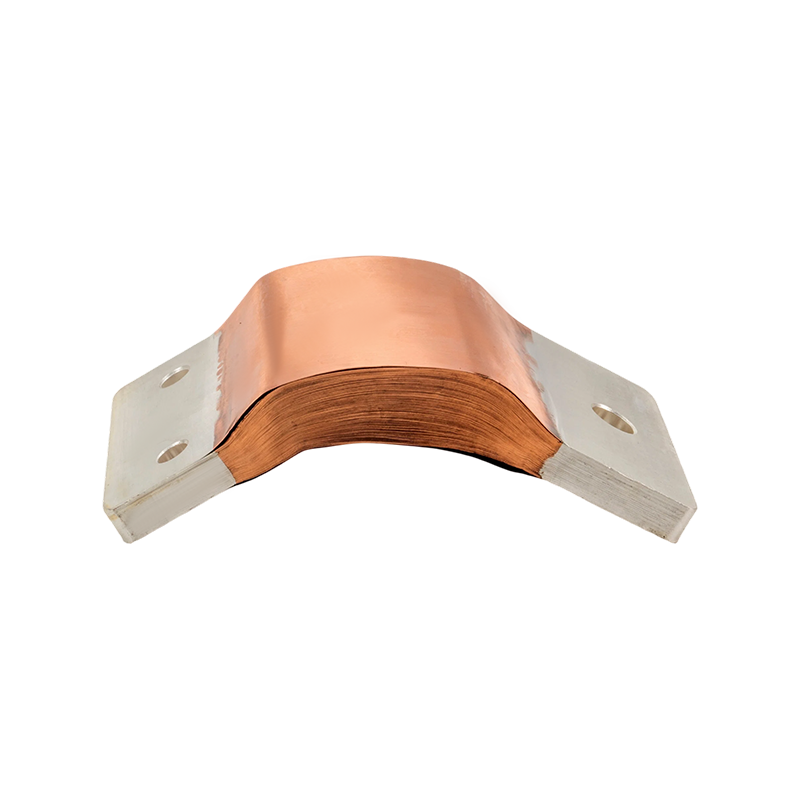
Provides consistent conductivity and flexibility, supporting current transmission in medium and low voltage equipment, with broad installation adaptability. Supports enhanced current carrying capacity...
See Details

Copyright @ Kaiyuanfeng Electrical Machinery Manufacturing Co.,Ltd All Rights Reserved.
OEM MCCB Accessories Manufacturer
ISO Certified Circuit Breaker Factory
