 English
 中文简体
 русский
 عربى


1.The circuit breaker provides safety protection, arc extinguishing, and interrupting functions, with defined electrical life and short-circuit withstand capability. 2.Multiple controller options are ...
See Details
Identify Circuit Breaker Types: A Practical Guide to Labels and Ratings
Content
Suppose you are standing in front of an open distribution board and need to replace a tripped breaker before the shift ends. The fastest way to identify a circuit breaker type is to read the markings on the case, then compare four values: voltage, current, interrupting rating, and trip curve. With those numbers you can place the breaker in its standard family, order the correct spare, or explain your requirement to a component supplier.
Why Correct Identification Matters
A wrong match is not a paperwork issue. If the new breaker has a lower interrupting rating than the available fault current, it may fail to clear a short circuit. If the trip curve does not suit the load, you will see nuisance tripping on motor inrush or delayed tripping on overloads. Either condition creates downtime and a safety hazard.
Compliance is another reason to identify the breaker before you touch it. Tests listed in IEC 60898, IEC 60947-2 and UL 489 are different, so the replacement should serve the same standard as the original. A panelboard that is installed and maintained according to one standard loses its intended protection scheme if a mismatched unit is inserted.
Start With the Nameplate and Molded Markings
The type of a commercial breaker is almost always printed or molded on the side or front of the case. Look for:
- Manufacturer name and catalogue number
- Rated current (In), usually in amperes, e.g. 32 A
- Rated voltage, e.g. 240 V, 400 V or 600 V
- Interrupting rating, e.g. 6 kA, 10 kA, 25 kA at a stated voltage
- Trip curve letter for MCBs, or trip unit designation for MCCBs
- Standard reference, such as IEC 60898 or IEC 60947-2
Real label example: "C60N C32 400V 6000A IEC 60898" means a C-curve miniature breaker, rated current 32 A, rated voltage 400 V, interrupting rating 6 kA. A breaker intended for industrial control may show extra items such as an electronic trip unit, remote signal switch, or undervoltage release terminals.
Figure 3. Isometric view of a molded-case circuit breaker with common identification points.
Compare the Main Circuit Breaker Families
Once you know the ratings, match them to a family table. The table below uses typical values for three low-voltage groups; actual product ranges can differ slightly between manufacturers.
| Type | Current range | Typical interrupting rating | Typical applications | Visual clue |
|---|---|---|---|---|
| MCB | 0.5-125 A | up to 15 kA | lighting, socket outlets, small subcircuits | narrow modular width, DIN rail mount, no adjustable trip |
| MCCB | 16-800 A | 25-70 kA | distribution panels, feeders, motor circuits | compact molded case, thermal-magnetic dial or electronic trip unit |
| ACB | 400-6300 A | 50-120 kA | main switchboards, bus ties | drawout chassis, large frame, electronic display |
The current ranges also help you exclude a family quickly, as shown below.
Figure 1. Typical rated current ranges for MCB, MCCB and ACB (logarithmic scale; boundaries are representative, not catalogue limits).
Decode the Trip Curve Letter
For miniature breakers and many molded-case units, the letter before the ampere value defines the instantaneous trip threshold. The chart below compares the magnetic trip range for B, C and D curves in multiples of rated current.
Figure 2. Instantaneous magnetic trip thresholds for B, C and D curves in multiples of rated current (IEC 60898 / IEC 60947-2).
Use the same logic in reverse: if your load is a motor, a D-curve breaker is usually intended; if it feeds sockets and general power, a C curve covers most cases.
- B curve: 3-5x In - resistive loads and domestic circuits with low inrush.
- C curve: 5-10x In - general distribution, lighting, socket outlets.
- D curve: 10-20x In - inductive loads such as motors and transformers.
Inspect Attachments and Accessories
Beyond the case, the way a breaker is equipped reveals its function. Auxiliary contacts and alarm contacts add small signal terminals, usually at the side of the unit; these terminals feed position and trip-state signals to a PLC or a lamp. A shunt trip adds coil terminals and is used for remote emergency switching. An undervoltage release has a similar small block, but it drops the breaker when the supply voltage falls.
 FC30 Series MCCB Auxiliary Contacts for Status MonitoringThis auxiliary contact module is designed for molded case circuit breakers across current ratings from 63A to 800A. Its compact structure and micro-switch operation provide reliable position and trip signals for PLC or indicator systems, making it a practical choice when adding remote monitoring to existing breaker installations.View Product →
If you are unsure which function is installed, count the terminal blocks and read the label near them. Many molded-case products are built by adding a standardized internal accessory to a basic frame, so the visible terminals at the side or under the cover are a reliable clue. For a visual tour of the internal layout, see what is inside a molded case circuit breaker.
Check the Mounting and Operating Mechanism
Fixed and withdrawable breakers look different around the mounting area. In switchboards, a manual operating mechanism on the door, a rotary handle, or a motor operator is an indication that the breaker was designed for remote or frequent operation. Plug-in and drawout units add metal rails, fork contacts, or a lever for extraction.
 Central Handle Operating Mechanism for MCCBsThis central handle operation mechanism offers a linked drive with three handle styles, suitable for breakers up to 250A. Its simple structure and compact design support frequent or remote switching, with customization options for major brands, making it useful for upgrading or servicing switchboard-mounted breakers.View Product →
If the unit slides out of its cradle with racking gears, it is almost certainly an MCCB or ACB drawout version; if it sits on a DIN rail and occupies one to four modules, it is an MCB. The mounting style also tells you which accessories fit: plug-in bases accept a standard set of terminal inserts, while withdrawable models use a specific moving contact set.
 MZ2 Plug-in Device for Molded Case Circuit BreakersThis plug-in device facilitates drawout or plug-in mounting for MCCBs ranging from 100A to 800A. It is positioned in the context of identifying breaker mounting styles, helping users distinguish between fixed and withdrawable versions and ensuring the correct accessory is selected for racking or maintenance operations.View Product →
Mechanical clues never replace the electrical ratings, but they confirm the family and become useful when the label is painted over or damaged.
When the Type Is Not Obvious
If the case is painted, burn-marked, or the label is gone, follow a safe procedure:
- Measure the frame dimensions and the number of mounting modules (pole width).
- Note the terminal arrangement - line/load connections, wiring size, and whether the breaker is thermal-magnetic or electronic.
- Trace the circuit and load to estimate the required current and curve.
- Photograph the breaker from all angles, including any remaining markings and the panelboard label.
- Contact the manufacturer with photos and dimensions; most suppliers respond with a match for standard frames.
For electrical engineers working with spare parts and retrofits, the same reasoning applies to the internal components: once the frame and ratings are fixed, the compatible contact assemblies, terminal blocks and accessory modules can be selected. Suppliers that specialize in breaker components can usually confirm the fit from photos and drawings if you contact the manufacturer.
Frequently Asked Questions
What do B, C, and D trip curves mean?
They define the instantaneous trip threshold: B trips at 3-5 times rated current, C at 5-10 times, and D at 10-20 times rated current.
Where is the circuit breaker type printed?
On the side or front of the case, usually with the rated current, voltage, interrupting rating, and a standard reference such as IEC 60898 or IEC 60947-2.
What is the difference between MCB and MCCB?
MCB covers about 0.5 to 125 A with a fixed thermal-magnetic trip; MCCB covers 16 to 800 A, offers higher interrupting ratings, and is often adjustable.
How do I choose the correct amp rating?
Match the breaker to wire size and load: 14 AWG copper allows 15 A, 12 AWG allows 20 A, and 10 AWG allows 30 A in most low-voltage installations. Confirm with the panelboard schedule.
How can I tell if a breaker is AFCI or GFCI?
Look for the marked abbreviation on the case and a test button; GFCI breakers often include a white neutral pigtail, and AFCI breakers are labelled with the arc-class or combination type.
Can I replace a breaker with a higher current rating?
Only if the wiring, devices, and enclosure are rated for it. A higher-rated breaker will not protect the existing conductors, so it can become a fire hazard.
Previous Post
Adjustable Circuit Breaker: What It Is and How to Choose the Right Tripping Setting
Next Post
Types of Circuit Breakers Explained: MCB, MCCB, ACB and Internal Components
Related products
-
-
1. The circuit breaker offers safety protection, efficient arc extinguishing and interrupting, long electrical life, and short-term withstand capability. 2. The circuit breaker is available with a var...
See Details -
1.The circuit breaker provides safety protection, arc extinguishing, and interrupting functions, with defined electrical life and short-circuit withstand capability. 2.Multiple controller options are ...
See Details -
Featuring a simple structure with central operation and linkage-type transmission, this mechanism is compatible with three handle styles. It works with 63/100/250/400/630 frame molded case circuit bre...
See Details -
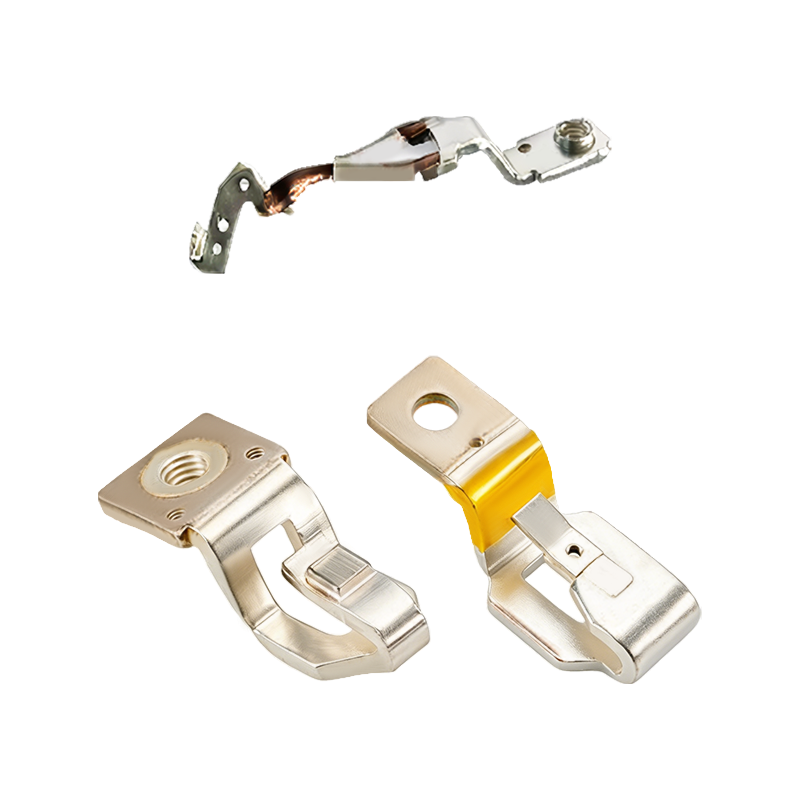
We are equipped with: A full range of welding machines Various riveting equipment Multiple assembly lines Complete testing equipment These assemblies are compatible with products from leading internat...
See Details -
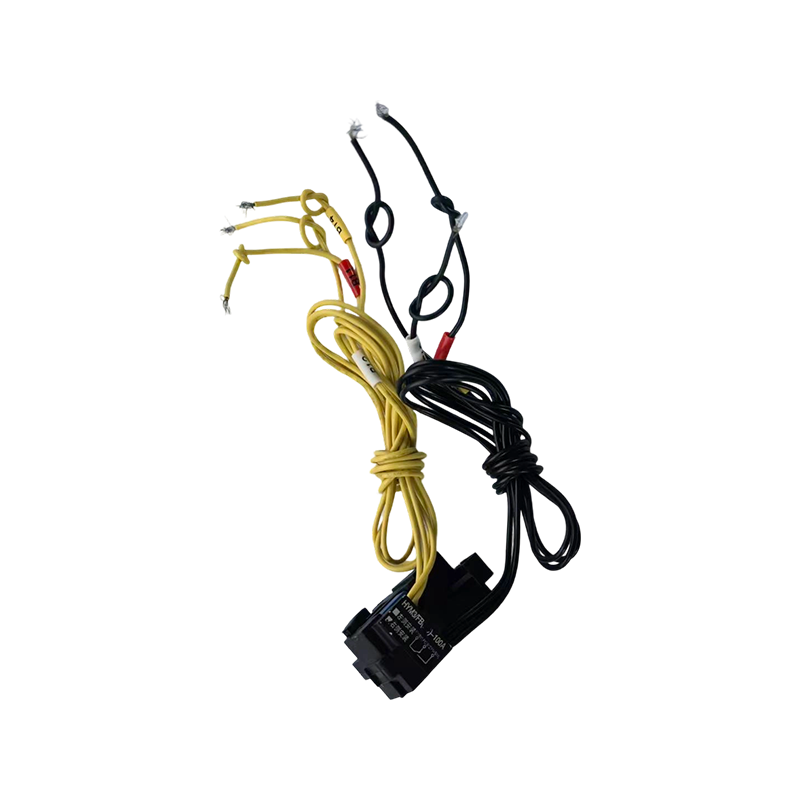
Simple structure with modular design for easy installation.Features micro-switch operation for reliable performance, and supports both left and right mounting positions. It is compatible with 63/100/2...
See Details

Copyright @ Kaiyuanfeng Electrical Machinery Manufacturing Co.,Ltd All Rights Reserved.
OEM MCCB Accessories Manufacturer
ISO Certified Circuit Breaker Factory
