 English
 中文简体
 русский
 عربى


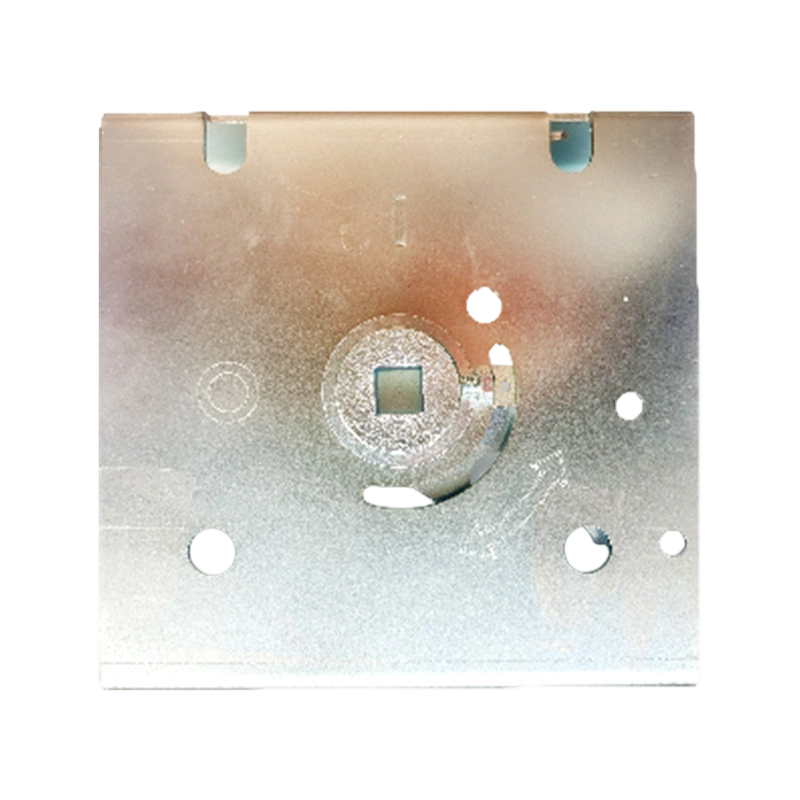
Featuring a simple structure with central operation and linkage-type transmission, this mechanism is compatible with three handle styles. It works with 63/100/250/400/630 frame molded case circuit bre...
See Details
Types of Circuit Breakers Explained: MCB, MCCB, ACB and Internal Components
Content
- 1 What a Circuit Breaker Actually Does
- 2 Circuit Breaker Types by Voltage and Application
- 3 How Trip Mechanisms Differ
- 4 What's Inside a Circuit Breaker?
- 5 Choosing Components for Different Breaker Classes
- 6 Frequently Asked Questions
- 6.1 Q1: What is the difference between MCB and MCCB?
- 6.2 Q2: What does a trip unit mean in a circuit breaker?
- 6.3 Q3: How do I choose the right circuit breaker type for my application?
- 6.4 Q4: What are auxiliary contacts used for?
- 6.5 Q5: Can MCCB components be replaced individually?
- 6.6 Q6: What is the difference between a shunt trip and undervoltage release?
Choosing the wrong circuit breaker rarely stops a machine from running at first. The problem shows up later, after contacts weld, a trip unit mis-times, or a short circuit eventually becomes an arc flash. The more reliable way to avoid that risk is to understand breaker types and the parts inside them, rather than compare only brand names or prices. This guide explains the main categories of circuit breakers, the current ranges they cover, and the components that determine real-world performance.
What a Circuit Breaker Actually Does
A circuit breaker is a protective switching device that automatically opens a circuit when current exceeds a designed threshold. Its real job is to conduct rated current continuously without overheating, survive short-circuit stress, and then open and close reliably under load.
Every breaker performs three core functions: carry normal current, detect abnormal conditions, and interrupt fault current. The specific way it does those tasks depends on voltage rating, current rating, and the protection function it must provide. Those differences create the array of breaker types used across residential, commercial, and industrial systems.
Circuit Breaker Types by Voltage and Application
Engineers most often classify breakers by voltage level and typical current range. This practical grouping also reflects differences in construction, arc-extinguishing medium, and internal complexity.
Miniature Circuit Breakers (MCB)
MCBs cover roughly 1A to 63A and protect final sub-circuits in residential and light commercial panels. They typically use thermal-magnetic trip units, provide one pole per phase, and are normally discarded after a fault. Their compact size and low cost make them the most common breaker type in small installations.
Molded Case Circuit Breakers (MCCB)
MCCBs span the 63A to 800A range in molded-case frames and are widely used in distribution boards, motor control centers, and machine control panels. Inside each MCCB is a complete moving contact assembly, stationary contact assembly, arc chute, and operating mechanism. Because these parts are replaceable sub-assemblies, MCCB component sourcing has become an active part of the electrical supply chain.
Air Circuit Breakers (ACB)
ACBs are built for heavy-duty low-voltage applications from 800A up to 6300A. They protect incoming feeders, bus tie circuits, and large motor or transformer secondary circuits. Air breakers use air as the arc extinguishing medium, with multi-chamber arc chutes and spring-operated mechanisms. Their replacement parts include copper busbar assemblies, plug-in contact assemblies, moving contact systems, and closing electromagnets.
Vacuum and SF6 Circuit Breakers
Vacuum circuit breakers operate in medium-voltage networks, usually between 630A and 3150A, where the arc is quenched inside a sealed vacuum interrupter. SF6 gas breakers use sulfur hexafluoride as the quenching medium in a similar medium-to-high-voltage range. Both appear in substations and switchgear panels, and their contact sets, arc chambers, and operating mechanisms are either sealed modules or repairable assemblies depending on the design.
How Trip Mechanisms Differ
The trip mechanism determines how a breaker responds to overload and short-circuit conditions. This choice directly affects coordination with upstream and downstream protective devices.
Thermal-magnetic units are standard in MCBs and many MCCBs. A bimetallic strip handles overload with a delayed trip, while a magnetic coil provides instantaneous short-circuit protection. They are simple and cost-effective but have limited adjustability.
Electronic trip units are common in MCCBs and ACBs. They measure current through current transformers, compare values against user-defined curves, and offer a wide range of delay and instantaneous settings. This gives more flexible selectivity and better coordination with sensitive loads.
Hydraulic-magnetic units are used in environments where temperature variations affect protection accuracy. Since they do not rely on bimetal heating, they perform consistently in outdoor enclosures and high-temperature manufacturing facilities.
Special-function breakers also fit into this framework. GFCI breakers detect earth-leakage currents in residential and commercial circuits, while AFCI breakers detect arc faults that can cause electrical fires. These are most common at ratings below 100A and are usually factory-sealed units.
What's Inside a Circuit Breaker?
The real performance of any breaker comes from its internal components. In MCCBs, the critical parts include the moving contact assembly, stationary contact assembly, arc chute, insulated base frame, trip unit, and operating mechanism. Moving and stationary contacts are usually made from copper or silver-alloy materials that withstand both melting at high current and electrical wear from repeated switching.
The arc chute is another essential structure. When contacts separate under load, an electric arc forms between them. The arc chute's steel plates split, lengthen, and cool that arc until it is extinguished. A poorly manufactured arc chute can lead to contact erosion, carbonization, and even breaker failure during a short-circuit event.
Accessories also affect functionality. Auxiliary contacts transmit open or closed status to a control system, alarm contacts signal trip events, and shunt trip or undervoltage release units allow remote or automatic tripping. For more on how these parts fit together, see our article on what is inside a molded case circuit breaker.
 Moving Contact Welding Assembly for MCCB 125-800A FramesThis welded moving contact assembly is designed for molded case circuit breakers in the 125A to 800A range, providing a compact contact structure for reliable switching and replacement in MCCB maintenance.View Product →
Choosing Components for Different Breaker Classes
MCCBs and ACBs have different component requirements, and buyers should verify the specific part types before sourcing. MCCBs in the 125A to 800A range need compact moving contact assemblies, stationary contact welding, arc chute modules, and insulating frames. ACBs in the 1600A to 6300A range require bridge-type contact assemblies, larger arc chutes, copper busbar systems, and motorized operating mechanisms.
| Component | MCCB (63-800A) | ACB (800-6300A) |
|---|---|---|
| Contact structure | Single moving and stationary pair | Bridge-type contacts, multi-finger parallel |
| Arc chute | Compact steel slat module | Multi-chamber, large arc-gap design |
| Operating mechanism | Manual or motor-integrated | Spring energy storage mechanism |
| Trip unit | Thermal-magnetic or electronic | Electronic, multi-stage adjustable |
Auxiliary contacts are a common MCCB add-on for remote monitoring. They are available in 100A to 800A frame variations and deliver status signals to PLCs or remote indicator panels.
 Auxiliary Contacts for 63-800A MCCB FramesThese auxiliary contacts are available for MCCBs from 63A to 800A, featuring modular design and micro-switch operation to transmit open/closed status to control systems for remote monitoring.View Product →
The bridge contact assembly is a key spares item for larger ACB platforms. At 1600A to 4000A ratings, these multi-contact structures distribute current across several contact fingers and must be replaced when arc erosion reduces contact pressure.
 Bridge-type Contact Assembly for ACB 1600-4000A FramesThis bridge-type contact assembly is a key spare part for air circuit breakers in the 1600A to 4000A range, using multiple contact fingers to distribute current and needing replacement when arc erosion reduces contact pressure.View Product →
If you are evaluating a supplier for these components, our company history and manufacturing capabilities can help you understand the experience and quality controls behind the parts.
Frequently Asked Questions
Q1: What is the difference between MCB and MCCB?
MCBs are rated up to about 63A and protect final sub-circuits. MCCBs cover the 63A to 800A range with molded-case frames and higher interrupting ratings.
Q2: What does a trip unit mean in a circuit breaker?
The trip unit is the sensing section that detects overload or short circuit and commands the operating mechanism to open the contacts.
Q3: How do I choose the right circuit breaker type for my application?
Match the breaker's continuous current, voltage, interrupting rating, and protection curve to the load and to upstream and downstream coordination requirements.
Q4: What are auxiliary contacts used for?
Auxiliary contacts provide a remotely readable signal of the breaker's open or closed state, allowing PLCs, relays, and indicators to monitor status.
Q5: Can MCCB components be replaced individually?
Yes. Moving contacts, arc chutes, trip units, and external accessories are commonly replaceable sub-assemblies, which keeps MCCB servicing practical.
Q6: What is the difference between a shunt trip and undervoltage release?
A shunt trip opens the breaker when a control signal is applied. An undervoltage release trips automatically when supply voltage drops below a set threshold.
Previous Post
Identify Circuit Breaker Types: A Practical Guide to Labels and Ratings
Next Post
Overcurrent Protection for MCCB and ACB Systems: A Complete Practical Guide
Related products
-
-
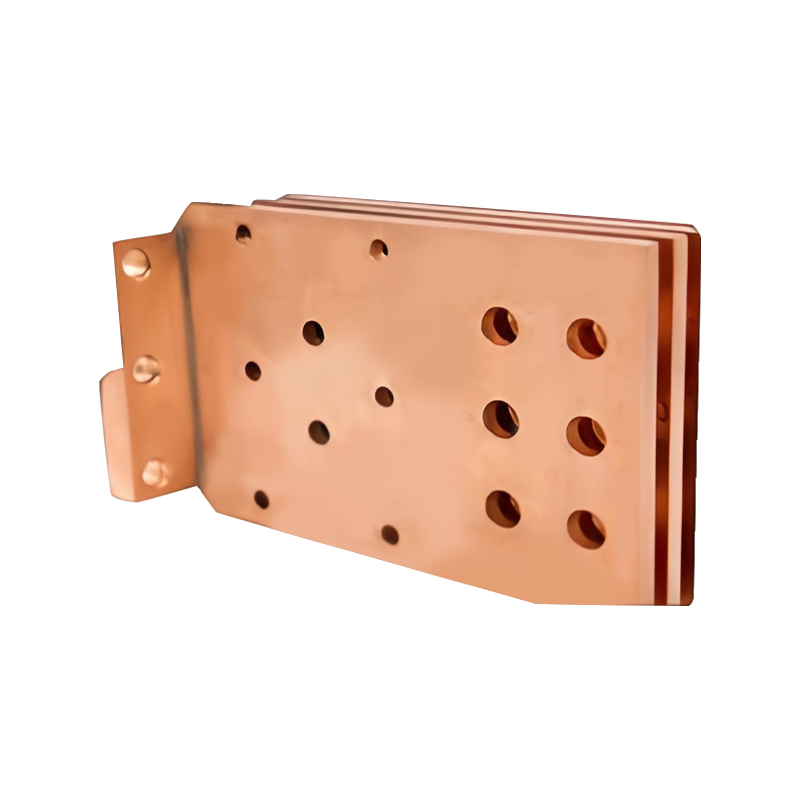
Precision cutting and processing ensures uniform conductivity, making it suitable for horizontal and vertical wiring of corresponding ACB switchgear models.
See Details -
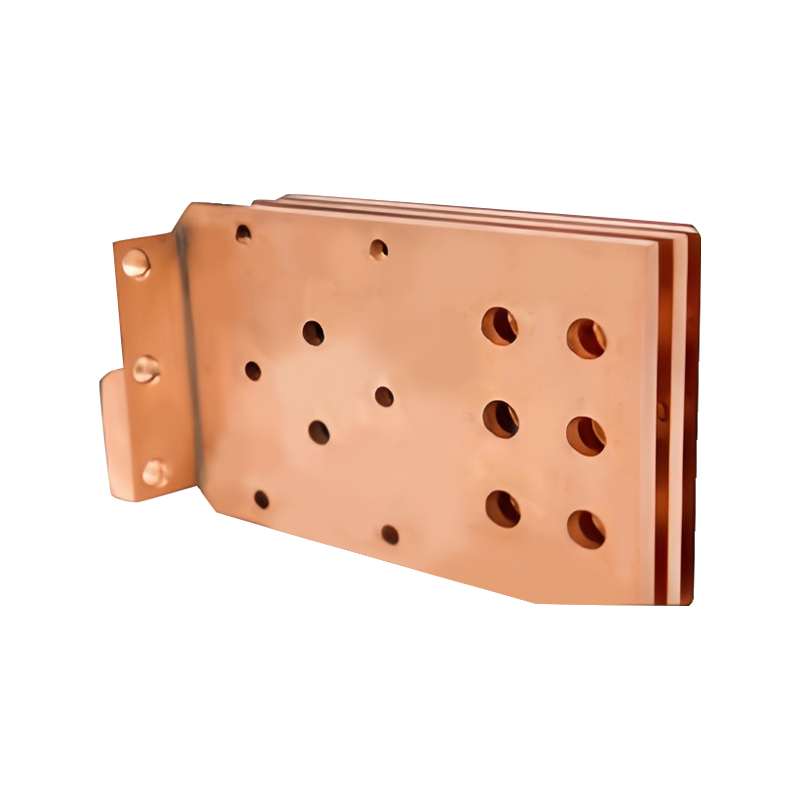
Precision cutting and processing ensures uniform conductivity, making it suitable for horizontal and vertical wiring of corresponding ACB switchgear models.
See Details -
Precision cutting and processing ensures uniform conductivity, making it suitable for horizontal and vertical wiring of corresponding ACB switchgear models.
See Details -
Precision cutting and processing ensures uniform conductivity, making it suitable for horizontal and vertical wiring of corresponding ACB switchgear models.
See Details -
Precision cutting and processing ensures uniform conductivity, making it suitable for horizontal and vertical wiring of corresponding ACB switchgear models.
See Details

Copyright @ Kaiyuanfeng Electrical Machinery Manufacturing Co.,Ltd All Rights Reserved.
OEM MCCB Accessories Manufacturer
ISO Certified Circuit Breaker Factory
