 English
 中文简体
 русский
 عربى


1.The circuit breaker provides safety protection, arc extinguishing, and interrupting functions, with defined electrical life and short-circuit withstand capability. 2.Multiple controller options are ...
See Details
Why Does the Circuit Breaker Keep Tripping? Causes, Diagnosis, and Component Checks
Content
- 1 The trip pattern is the diagnosis
- 2 The four causes, in the order they are usually found
- 3 Run the tests in this order
- 4 Match the trip curve to the load
- 5 When the fault is inside the case
- 6 Where each part sits
- 7 What panel builders should verify before blaming the breaker
- 8 Frequently asked questions
- 8.1 Q1. Why does my breaker keep tripping with nothing plugged in?
- 8.2 Q2. How do I know if the breaker is faulty or the circuit is faulty?
- 8.3 Q3. What is the difference between an MCB and an MCCB when it comes to tripping?
- 8.4 Q4. How can I tell an overload from a short circuit?
- 8.5 Q5. Can a loose terminal make a breaker trip?
- 8.6 Q6. Should I replace a breaker that keeps tripping?
A 32 A breaker in a small workshop panel trips every time the compressor starts, yet it holds perfectly when the welder runs on the same circuit. Same panel, same wiring, opposite result. That single detail already rules out most of the usual explanations: the breaker is not weak, it is responding to two different conditions.
Repeat tripping falls into four groups: sustained overload, a short circuit or earth fault, a command from an accessory such as a shunt trip or undervoltage release, or a breaker that has genuinely aged. The pattern — when it trips, how fast, and what was running — narrows the group faster than any meter.
Below is how to read that pattern, the order in which to run the tests, and, for panel builders and OEM buyers, which internal components are usually responsible once the wiring has been cleared.
The trip pattern is the diagnosis
Record three things before opening the panel: how long after switch-on the breaker trips, whether it stays reset, and whether any load was running. Those three answers map onto the table below.
| What you observe | Most likely cause | First check |
|---|---|---|
| Trips after minutes or hours of running; panel feels warm | Sustained overload | Clamp-meter current against rating and cable size |
| Trips instantly on reset, even with all loads disconnected | Short circuit or earth fault | Insulation resistance, water ingress, damaged cable |
| Trips at random, days apart, at any load | Loose terminal or failing joint | Thermal scan; re-torque to the stated figure |
| Trips only when one particular motor starts | Inrush above the magnetic threshold | Tripping curve (B, C, D, K) versus starting current |
| Trips with the panel energised and no load switched on | Shunt trip or undervoltage release command | Accessory coil wiring and control voltage |
| Trips below rating; case hot to the touch | Worn contacts or degraded thermal element | Contact resistance; breaker replacement |
Two rows deserve emphasis. A breaker that trips with nothing plugged in is rarely an overload — with no current flowing, no thermal element can heat. And a breaker that will not stay reset is reporting a fault downstream; it is doing its job, and swapping it out hides the fault without removing it.
The four causes, in the order they are usually found
1. Overload — slow, repeatable, load-dependent
A 16 A circuit carrying 19 A will hold for many minutes before the bimetal bends far enough to latch the trip bar. That delay is why overload trips look random but always happen under load. Sizing practice keeps continuous load at 80% of the breaker rating (NEC 210.20), a useful sanity check on any circuit that fails mid-shift rather than at start-up.
2. Short circuit or earth fault — instant, often loud
A dead short drives the magnetic element and clears in milliseconds, usually with a bang and a scorched smell. Earth faults are quieter: moisture in an outdoor socket, a failed heating element or a nail through a cable can leak enough current to trip an RCD or RCBO without ever drawing full short-circuit current.
3. Accessory commands — the breaker is only obeying
A shunt trip coil held energised by a miswired contactor, or an undervoltage release watching a phase that sags during motor start, will drop a perfectly healthy breaker. IEC 60947-2 requires an undervoltage release to open the breaker between 70% and 35% of rated voltage and to hold at 85% or above; behaviour inside that window is correct, not a fault.
4. The breaker itself — after everything else is cleared
Pitted contacts raise resistance, a joint dissipating a few watts inside a sealed case warms the bimetal from behind, and a mechanism that has cleared hundreds of faults drifts out of calibration. This is the last explanation to test, not the first.
Run the tests in this order
Sequence matters: each step removes a group of causes so the next one means something.
- Isolate the circuit and confirm dead at the load, not at the panel.
- Reset once with every load disconnected. If it trips immediately, stop — the fault is in the fixed wiring.
- If it holds, reconnect loads one at a time and compare measured current with the rating and the cable cross-section.
- Insulation-test line-to-line and line-to-earth. Healthy light-commercial wiring normally reads in the high megohms; a reading near or below 1 MΩ needs investigation before the breaker goes back in.
- Inspect terminals for discolouration and re-torque to the manufacturer's figure — loose lugs are among the most common causes of repeat trips that mimic overload.
- Finally substitute a known-good breaker of identical rating and curve. If the new unit trips at the same point, the circuit is at fault; if it holds, the original has aged out.
Match the trip curve to the load
Many "nuisance" trips are correct trips caused by the wrong curve. IEC 60898-1 and IEC 60947-2 define the magnetic threshold as a multiple of rated current, so a motor with eight times inrush sits inside a C-curve window and outside a B-curve one.
Read the chart as a window, not a single number. If a motor's starting current falls inside the band, the breaker may or may not trip on start depending on ambient temperature and tolerances — exactly the behaviour reported as "it trips only sometimes". Move up a curve rather than up an ampere rating when the cable already complies.
When the fault is inside the case
If insulation tests clean and the breaker still trips below its rating, the problem is thermal or mechanical inside the case. Three parts account for most of it, and our earlier walkthrough of what is inside a molded case circuit breaker shows where each one sits.
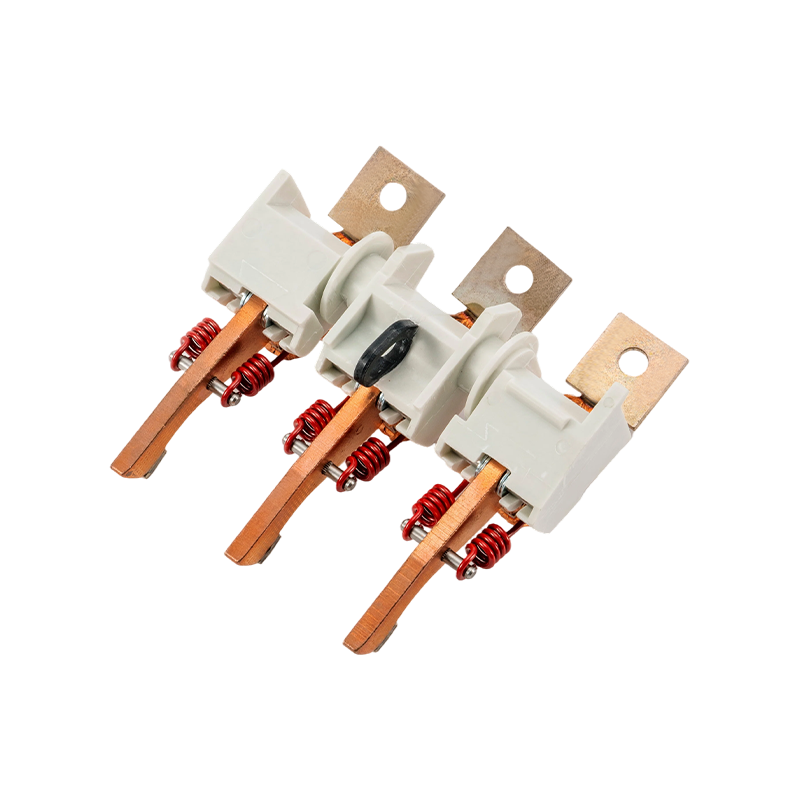 KYM-125/250/400/630/800 MCCB Moving Contact AssemblyOEM moving contact assembly for 125–800 frame MCCBs, supplied for breaker manufacturing and component replacement when contact erosion is suspected.View Product →
Contacts that have already been hot
Every trip arcs at the contact tips. After enough of them the silver alloy erodes, contact resistance climbs and the joint becomes a small heater inside a sealed housing. The result is a breaker that trips earlier than its rating suggests and warms up at modest load — a pattern often misread as an undersized breaker.
 KYM MCCB Arc Chute Assembly for 125–800 FramesOEM arc chute assembly for 125–800 frame MCCBs, relevant when slow clearing or scorching near vents points to arc-chute wear.View Product →
An arc chute that no longer quenches
Splitter plates cool and divide the arc so it extinguishes within milliseconds. Eroded or clogged plates lengthen arcing time and ionise the gas inside the case, degrading a little further on every operation. If a breaker clears more slowly than it used to and looks scorched near the vents, the chute is a stronger suspect than the bimetal.
 QT38 MCCB Undervoltage Release, 63–800 ModelsModular undervoltage release for 63–800 MCCB models, offered with AC 400V and AC 230V options and left- or right-side mounting.View Product →
An accessory that trips on voltage, not current
Undervoltage releases are specified by hold and dropout windows, not by current. Wired to a phase that dips when a large motor starts, they open the breaker on every start and send maintenance hunting for an overload that does not exist. Checking which phase feeds the release coil costs five minutes.
Where each part sits
The stack below is not a manufacturing drawing. It shows the order in which the current path fails: heat is generated at the contacts, the arc is extinguished above them, and the trip command travels through the release mounted beside the mechanism.
What panel builders should verify before blaming the breaker
For OEMs and panel assemblers, repeat tripping is often a component consistency issue rather than one failed unit. Three checks pay for themselves:
- Contact resistance measured per batch, not per sample — a joint that drifts upward after a few hundred operations shows up as field tripping long after goods are accepted.
- Arc chute plate spacing and alignment, which decide whether the arc splits cleanly or restrikes between plates.
- Trip unit voltage windows and wiring polarity, especially where a shunt trip and an undervoltage release share a control circuit.
Ask for IEC 60947-2 type-test evidence with the delivery, and match the component to the frame size it was designed for: a 125 A moving contact assembly and an 800 A one share a family name but not a thermal duty.
Frequently asked questions
Q1. Why does my breaker keep tripping with nothing plugged in?
Usually not overload. With no load, look for a short or earth fault in the fixed wiring, moisture in an outdoor socket, a miswired shunt trip, or a breaker that has failed internally. An insulation resistance test separates these in minutes.
Q2. How do I know if the breaker is faulty or the circuit is faulty?
Substitute a known-good breaker of the same rating and curve. If the new one trips at the same point, the circuit is at fault; if it holds, the original has degraded.
Q3. What is the difference between an MCB and an MCCB when it comes to tripping?
An MCB to IEC 60898 is sealed and fixed. An MCCB to IEC 60947-2 usually has an adjustable thermal and magnetic trip unit and accepts accessories such as shunt trips and auxiliary contacts, which is why industrial panels use them.
Q4. How can I tell an overload from a short circuit?
Timing. Overload trips after seconds to minutes of running and the case is warm; a short circuit trips instantly, often with a bang, and will not reset. A clamp meter confirms the first case in one reading.
Q5. Can a loose terminal make a breaker trip?
Yes. A loose lug adds resistance, heats the terminal and warms the thermal element from behind, so the breaker trips below its rating while cable insulation quietly degrades. Re-torquing often ends the problem.
Q6. Should I replace a breaker that keeps tripping?
Only after the circuit has been tested. A breaker that trips is reporting a condition; replacing it without finding that condition hides the fault and leaves the risk in place.
If you are chasing a repeat trip on a panel you build or maintain, describe the pattern — timing, load and reset behaviour — and our engineers will tell you which part of the current path to inspect first. Contact the Kaiyuanfeng technical team with the frame size and accessory list, and we will match the component rather than the whole breaker.
Previous Post
Generator Circuit Breaker Guide: Ratings, Internal Structure, and Sourcing
Next Post
On-Site Circuit Breaker Testing: Field Diagnostics That Find Component Faults
Related products
-
-
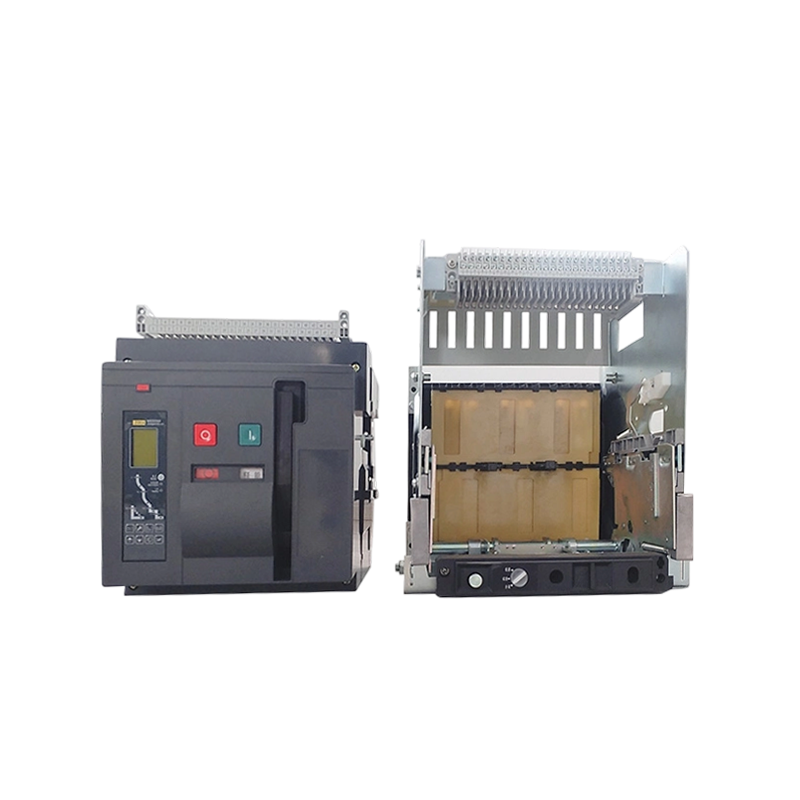
1.The circuit breaker provides safety protection, arc extinguishing, and interrupting functions, with defined electrical life and short-circuit withstand capability. 2.Multiple controller options are ...
See Details -
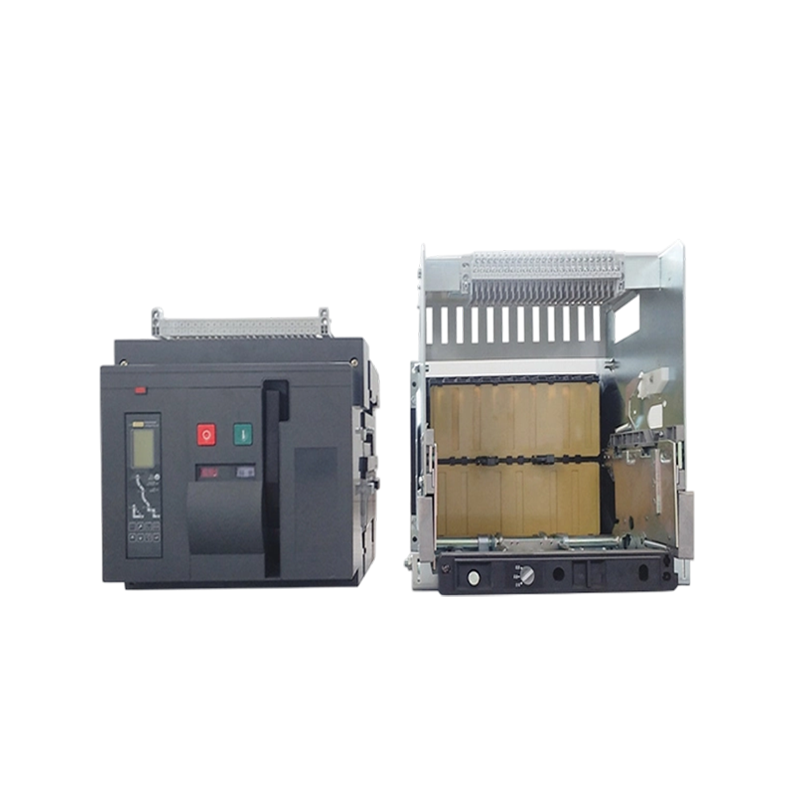
1. The circuit breaker offers safety protection, efficient arc extinguishing and interrupting, long electrical life, and short-term withstand capability. 2. The circuit breaker is available with a var...
See Details -
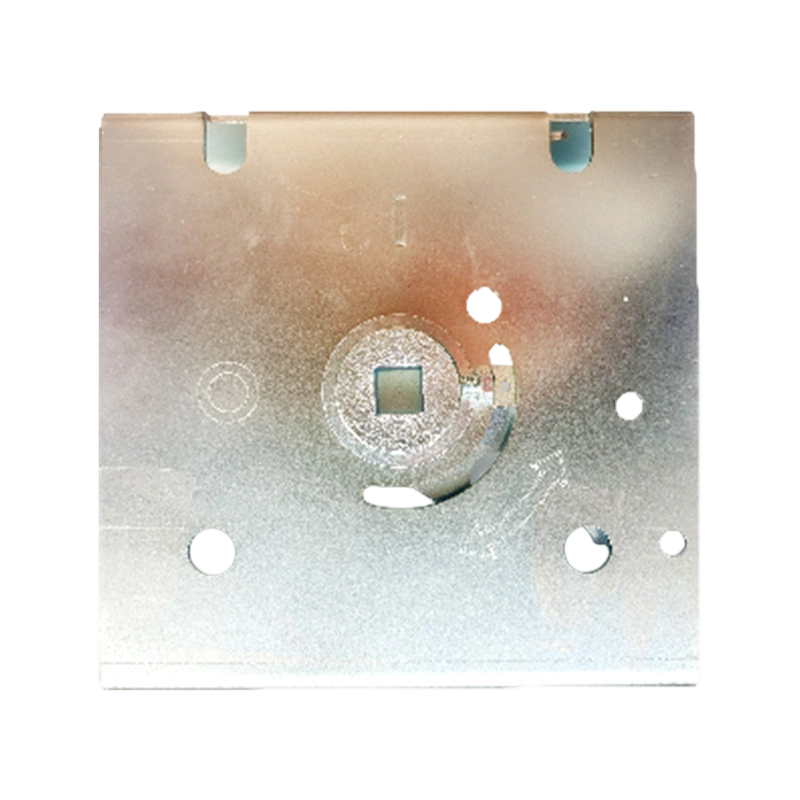
Featuring a simple structure with central operation and linkage-type transmission, this mechanism is compatible with three handle styles. It works with 63/100/250/400/630 frame molded case circuit bre...
See Details -
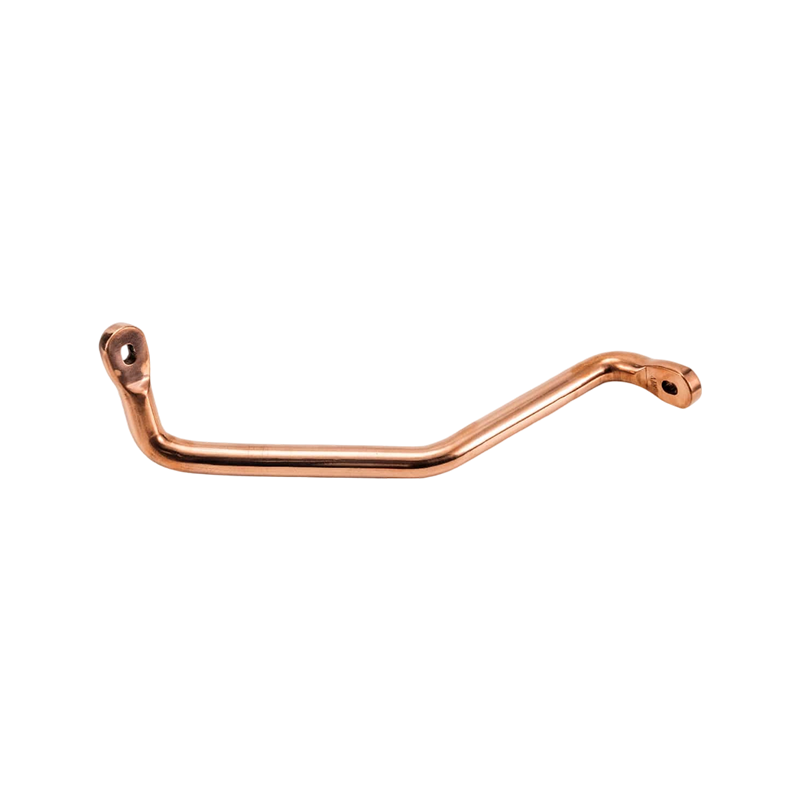
High-purity copper substrate can be processed into conductive connectors or support components.
See Details

Copyright @ Kaiyuanfeng Electrical Machinery Manufacturing Co.,Ltd All Rights Reserved.
OEM MCCB Accessories Manufacturer
ISO Certified Circuit Breaker Factory
