 English
 中文简体
 русский
 عربى


1.The circuit breaker provides safety protection, arc extinguishing, and interrupting functions, with defined electrical life and short-circuit withstand capability. 2.Multiple controller options are ...
See Details
Generator Circuit Breaker Guide: Ratings, Internal Structure, and Sourcing
Content
Two 1,250 A breakers stand side by side in the same switchroom. One feeds a distribution board; the other sits at the terminals of a 1 MW diesel generator, less than three metres from the alternator. From the front they look interchangeable. Only one is built to clear a terminal short circuit while the current is still heavily offset.
That is the practical reason generator circuit breakers are specified differently. The selection is driven by the shape of the fault current, not just the nameplate ampere rating. A breaker chosen on current alone can pass a factory test and still erode its contacts far faster than expected in service.
Why Generator Faults Are Harder to Interrupt
Close to a generator, the impedance between the machine and a fault is dominated by the machine's own subtransient reactance. The fault current is large, highly inductive and asymmetric: an AC component that decays as the field demagnetises, plus a DC offset that decays with the armature time constant.
In a low-voltage distribution network that offset has usually gone within 30 to 50 ms. At a generator terminal it can persist well beyond 100 ms. IEEE C37.013, the standard written for generator circuit breakers, is organised around exactly this condition: the breaker must demonstrate interruption at a specified DC time constant, not only at a symmetrical RMS current.
DC component remaining relative to the initial peak, calculated as a simple exponential decay for two time constants.
The curves above are plain exponential decay. At 100 ms the 130 ms curve still holds about 46% of its initial offset; the 60 ms curve is down to roughly 19%. That gap is the difference between a comfortable interruption and a punished arc chute.
| Parameter | Distribution breaker | Generator circuit breaker |
|---|---|---|
| Typical DC time constant | 30 to 50 ms | 100 to 130 ms or longer |
| Interrupting test basis | Mainly symmetrical current | Asymmetrical current with defined DC |
| Reference standard | IEC 60947-2 or IEEE C37.13 | IEEE C37.013 or IEC 62271-100 |
| Continuous current | Up to about 6300 A | Often above 6300 A |
| Mechanical endurance | Moderate | High, frequent start-stop duty |
Two further duties matter. The breaker may have to carry reverse power from the grid and survive out-of-phase switching, and it operates far more often than a distribution breaker because generating sets start and stop with demand.
Where the Breaker Sits in the Power Train
Generator breakers turn up in four common arrangements: at the terminals of a utility generator before the step-up transformer, on industrial captive-power sets, on data-centre standby generators that must transfer load quickly, and on marine or renewable installations where the source is inverter-assisted.
Simplified arrangement: the generator breaker sits between the machine terminals and the step-up transformer, with the arc chute, contact system and operating mechanism inside one cubicle.
Position changes what the breaker sees. A unit on the generator side carries the machine's full fault contribution and the longest DC time constant. A unit on the high side of the transformer sees a smaller current but a different X/R ratio. The arrangement should be fixed before the breaker rating is, because the same generator can require two quite different devices depending on where the cubicle sits.
The Internal Parts That Absorb the Duty
The rating is proved on paper; the work is done by a small group of parts.
The arc chute absorbs the energy. In a generator application the arc is longer and hotter than in distribution duty, so splitter plates, arc runners and the gas flow path have to be matched to the current wave. A chute that saturates early will transfer the problem to the contacts.
Contact assemblies carry load current and survive the arc at separation. In frame-size breakers the bridge-type contact assembly and the moving and stationary contact pairs are the parts most often replaced during overhaul, and their silver content, welding quality and alignment set the service life.
 KYW Bridge-Type Contact Assembly for 1600–4000 Frame MCCBsOEM bridge-type contact assembly for 1600–4000 frame MCCBs, positioned for overhaul and contact replacement work where welding quality and alignment matter.View Product →
The conductive path is just as critical. Copper busbars, terminal blocks and plug-in contact assemblies must carry thousands of amperes with temperature rise inside the standard's limits, and they must do it after years of thermal cycling. A joint that measures well cold can still run hot at rated current.
 High-Purity Copper Bars for ACB Busbar and Contact SystemsOEM copper bar product using a high-purity substrate for conductive connectors or support parts, suited to inquiries on ACB busbar and moving-contact assemblies.View Product →
Accessories decide how the breaker behaves in a scheme: shunt trip units for remote opening, undervoltage releases that trip when voltage collapses, auxiliary and alarm contacts for status signalling, and motor or manual operators for charging and isolation.
Setting Protection and Operation
Protection settings are only half of the commissioning job. The operating mechanism has to deliver the required sequence, for example O-0.3 s-CO-3 min-CO, without drift, and the closing coil must pick up reliably at the lowest control voltage the station can produce.
On the closing side, an undervoltage or sagging battery is a common cause of refused closes. The closing electromagnet should be selected against the actual control voltage range and the mechanism's charging time, not against a nominal 220 V figure alone.
 BH(S)-1600~6300 Closed Electromagnet for Circuit BreakersOEM closing electromagnet for circuit breaker applications, including custom mining breaker series; compact, low-power design with customization for major international brands.View Product →
On smaller standby sets, a moulded case breaker with a motor operator, shunt trip and undervoltage release can do the job, provided its tested breaking capacity covers the asymmetrical current and the lower mechanical endurance is acceptable.
A Short Selection Checklist
- Confirm system voltage and the highest voltage the breaker will see.
- Calculate generator-terminal fault current and its DC time constant.
- Check rated short-circuit breaking current against the asymmetrical value.
- Verify peak withstand and dynamic stability at the installation point.
- Match the operating sequence and mechanical endurance to the duty cycle.
- Confirm accessories, control voltage and secondary wiring interfaces.
Sourcing Components Without Breaking the Type Test
Component sourcing is where type-tested performance is most easily lost. A change of copper grade, a thinner silver layer, a different welding parameter or a revised contact spring can move temperature rise and contact life outside the tested envelope, even when the drawing number stays the same.
Buyers should ask for material certificates, plating thickness records and dimensional reports against the drawing, and should keep test reports tied to the specific revision. A supplier that documents its process is easier to audit than one that only quotes a price. Reviewing the supplier's manufacturing scope before approving a first article is a sensible first step, and this overview of the company's production background shows what to look for. For a closer look at how these parts sit inside a moulded case frame, this breakdown of MCCB internal construction is a useful reference.
Frequently Asked Questions
Q1. What is a generator circuit breaker?
A switching device installed between a generator and the rest of the system, rated to interrupt fault current that contains a large, slowly decaying DC component. It also carries load current continuously and provides isolation for maintenance.
Q2. What is the difference between a generator circuit breaker and an ACB?
An air circuit breaker is a construction type; a generator circuit breaker is an application rating. A generator breaker is often built on an air or vacuum platform but is tested to IEEE C37.013 or an equivalent specification, with a defined DC time constant and higher mechanical endurance.
Q3. What rated current do generator circuit breakers use?
Low-voltage units commonly range from 630 A to 6300 A; medium-voltage generator breakers go higher, with 6300 A and 10000 A classes available for large machines. The rating follows the generator's stator current plus a margin for over-excitation.
Q4. Why does the DC time constant matter so much?
It sets how much DC offset remains when the contacts part. A longer time constant means a harder interruption, more arc energy and a higher risk of contact erosion. Testing at the wrong time constant gives a false sense of safety.
Q5. Can a moulded case circuit breaker be used on a generator?
Sometimes, for small standby sets at 400 to 690 V, if the MCCB's tested breaking capacity covers the asymmetrical fault current and the application allows the lower endurance. Above roughly 1 MW, purpose-built generator breakers or frame-size units with generator ratings are the safer choice.
Q6. How often should generator breaker contacts be inspected?
Inspect after every short-circuit trip, and on a schedule that follows the manufacturer's endurance curve. Sets used for peak shaving or frequent black-start duty accumulate operations quickly, so contact thickness and arc chute condition should be checked at least annually.
A generator circuit breaker is a system decision before it is a catalogue number. Fix the fault signature, the duty cycle and the component supply chain together, and the breaker will keep clearing faults long after the nameplate current has stopped being the interesting part of the specification.
Previous Post
No previous article
Next Post
Why Does the Circuit Breaker Keep Tripping? Causes, Diagnosis, and Component Checks
Related products
-
-
1.The circuit breaker provides safety protection, arc extinguishing, and interrupting functions, with defined electrical life and short-circuit withstand capability. 2.Multiple controller options are ...
See Details -
1. The circuit breaker offers safety protection, efficient arc extinguishing and interrupting, long electrical life, and short-term withstand capability. 2. The circuit breaker is available with a var...
See Details -
Featuring a simple structure with central operation and linkage-type transmission, this mechanism is compatible with three handle styles. It works with 63/100/250/400/630 frame molded case circuit bre...
See Details -
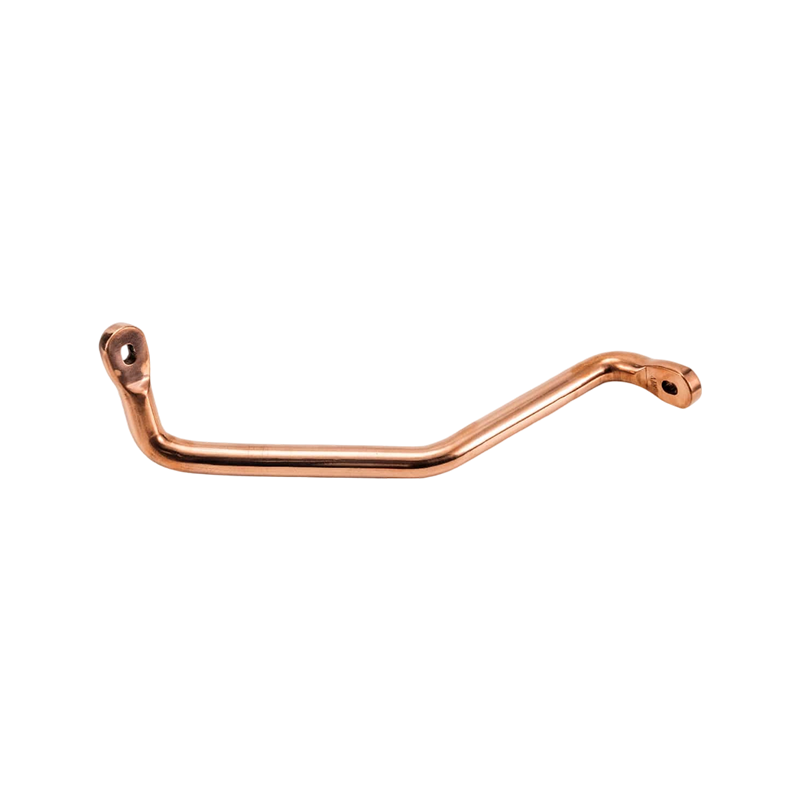
High-purity copper substrate can be processed into conductive connectors or support components.
See Details

Copyright @ Kaiyuanfeng Electrical Machinery Manufacturing Co.,Ltd All Rights Reserved.
OEM MCCB Accessories Manufacturer
ISO Certified Circuit Breaker Factory
